Introduction
From tools that help us align our mounts to apps that sharpen stars and reduce noise, technology has made astrophotography more accessible than ever. And now, with the rise of AI, things are changing fast—some tools don’t just improve your images, they generate completely synthetic space photos that were never captured by any telescope.
As a deep-sky astrophotographer, I’m all for innovations that lower the barrier to entry. But I also believe that planning, capturing, and spending time under the stars is what makes this hobby truly meaningful.
In this article, I’ll explore the full spectrum—from helpful automation and AI-assisted editing, to tools that create entirely fake images. The real question is: how far is too far? Where do we draw the line between useful innovation and artificial imitation?
Step 1: Automation—The Foundation of Modern Astrophotography
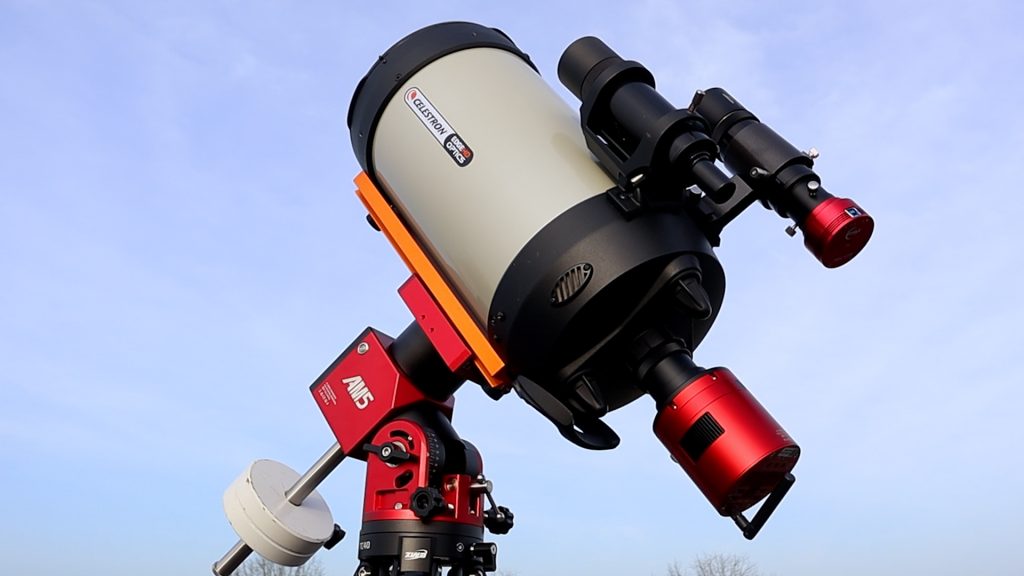
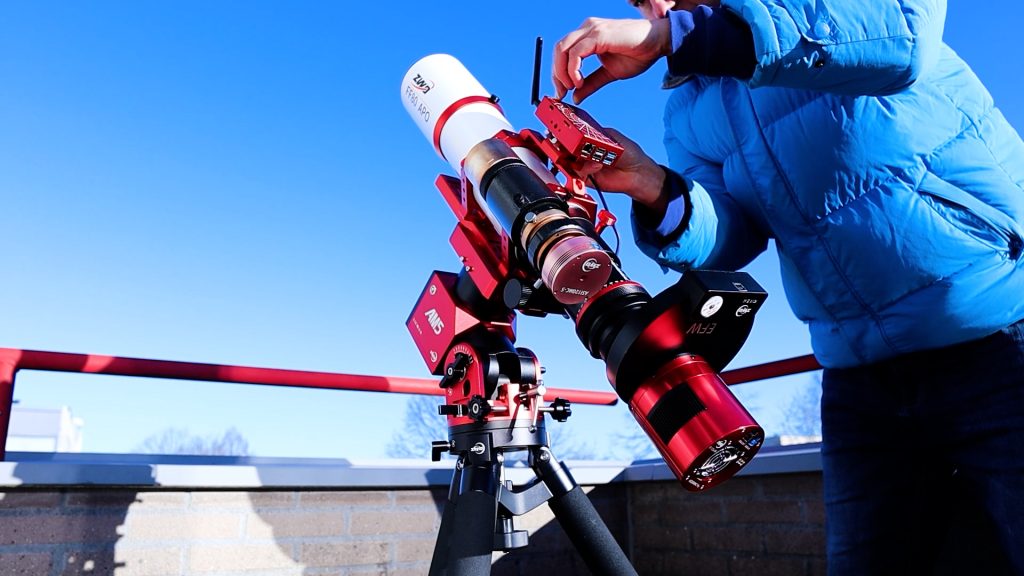
Astrophotography has come a long way in the past decade, largely thanks to automation. What used to involve hours of manual alignment and fiddly adjustments can now be controlled through software—run on a PC, a laptop, or a dedicated device like the ZWO ASIAIR Plus.
At the heart of many setups is a motorized equatorial mount, which rotates to match the movement of the night sky. With the help of software, users can now polar align their mount by following on-screen instructions and camera feedback—making it much easier to achieve accurate tracking.
Another major step forward is plate solving. Instead of manually finding your deep-sky object (DSO) through a finder scope or star-hopping, the system takes a quick photo of the stars, compares it to a star map, and tells the mount exactly where it is—then slews to your chosen object automatically.
To maintain sharp tracking during long exposures, most astrophotographers use autoguiding. This involves a small guidescope and guide camera, which lock onto a reference star and make continuous, tiny adjustments to the mount—keeping your object perfectly centered for minutes at a time.
Additional tools like electronic autofocusers and rotators add even more precision. These automatically adjust focus as the temperature shifts or at set time intervals throughout the night, and rotate your camera to frame your deep-sky object exactly the way you want—so you don’t have to get out of bed to do it manually at 2 a.m.
Together, these tools form a highly automated workflow that’s become the norm in advanced amateur astrophotography. But it’s important to be clear: this is still automation, not artificial intelligence. These systems follow programmed instructions. They don’t learn, adapt, or generate anything new—they just make it far easier to get high-quality results.
Smart Telescopes and Remote Imaging: The New Frontier
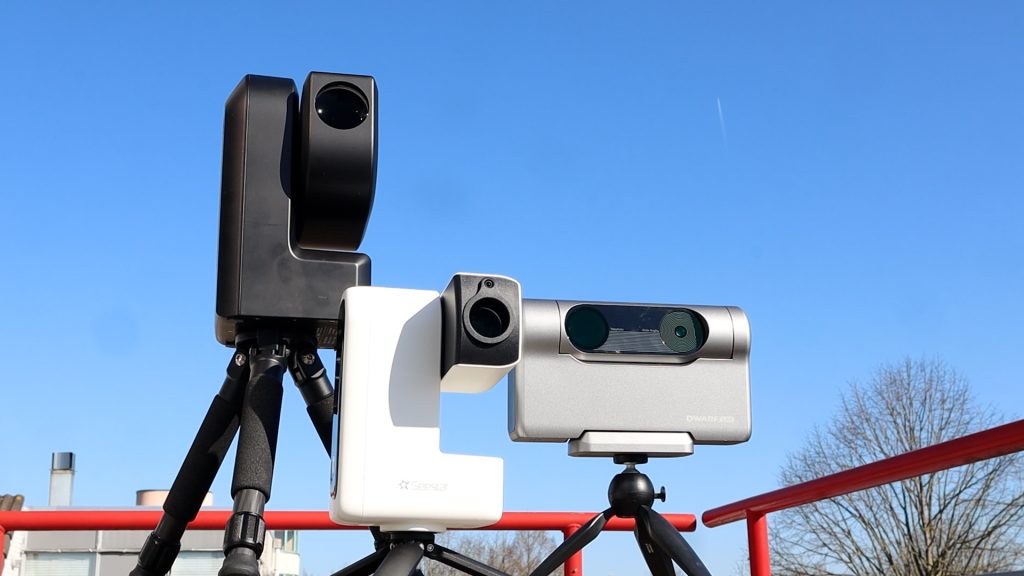
A newer wave of automation is coming from smart telescopes. Devices like the ZWO Seestar, DwarfLab Dwarf III, and Vaonis Vespera connect wirelessly to your phone or tablet, come preloaded with star catalogs, and automatically slew, image, and live-stack deep-sky objects in real time. These are fully integrated systems, combining a telescope, camera, and motorized mount into a compact, app-controlled unit—no need to assemble separate components. With almost no technical setup required, they make astrophotography more accessible than ever. While they currently can’t match the image quality and flexibility of more advanced gear, that gap is shrinking—and could vanish in the near future.
At the high end, remote imaging has opened new frontiers. Observatories like Starfront in Texas and E-EyE in Spain let astrophotographers send their gear to pristine Bortle 1 skies, far from city lights. These remote sites offer services like high-speed internet, round-the-clock access, and full automation—allowing users to operate their equipment and capture top-tier data without ever stepping outside.
Alternatively, platforms like Telescope Live give you access to professional-grade observatories in Chile, Spain, and Australia—without the need to own any equipment. You can rent time on these systems, schedule sessions remotely, and download RAW data captured by high-end telescopes and cameras under world-class skies—a dream for anyone imaging from light-polluted suburbs.
Still, remote imaging comes with a trade-off. It can feel a bit detached from the hands-on experience of working with your own gear under familiar skies. There’s something irreplaceable about the process: aligning your mount, hearing the motors move, and seeing an object appear on your screen knowing you captured it from your own backyard or balcony. That physical connection is, at least in my opinion, part of the magic of astrophotography.
Step 2: AI Optimization—Tools That Elevate What You’ve Captured
Where artificial intelligence does start to appear in astrophotography is during post-processing—after the data has been captured by a real telescope under the night sky.
Most astrophotographers stack multiple sub-exposures to improve signal-to-noise ratio. Tools like DeepSkyStacker or PixInsight’s Weighted Batch Preprocessing (WBPP) use statistical methods to align, calibrate, and integrate those frames. These aren’t AI-powered, but they do apply optimization algorithms that can evaluate image quality, reject poor subs, and produce a cleaner stacked image.
For more advanced astrophotographers, a new class of AI-assisted post-processing tools has become widely adopted in the past two years—most notably the suite from RC Astro, which includes BlurXTerminator, NoiseXTerminator, and StarXTerminator. These PixInsight plugins are built on neural networks trained on astronomical images and simulations, and they apply localized adjustments based on what the algorithm has learned from real astrophotography data.
- BlurXTerminator can reduce star bloating and improve the appearance of slightly out-of-focus or poorly guided stars, using deconvolution techniques enhanced by machine learning.
- NoiseXTerminator applies context-aware noise reduction that retains fine nebular detail while cleaning up the background.
- StarXTerminator can isolate stars from the rest of the image, allowing separate processing of stars and deep-sky structures—something that previously required more manual techniques.
Interestingly, smart telescope brands like ZWO and DwarfLab have also started incorporating basic AI-based enhancements into their companion apps. For example, the ZWO Seestar includes automatic denoising features that clean up your image during or after live stacking. DwarfLab also offers AI-based sharpening and noise reduction tools within its built-in Stellar Studio. While still relatively limited in control and customization, these features are designed to make image improvement more accessible to casual users—without requiring external software.
Crucially, these tools operate on real telescope data. They do not invent new features or fabricate details that weren’t captured. Instead, they help improve what’s already there—correcting small issues that even experienced imagers encounter.
This is where AI can genuinely help without crossing a line. It doesn’t replace the captured data, and it doesn’t remove the need for skill or artistic judgment. But it can accelerate and simplify the editing process, making it easier to bring out the full potential of your image—provided it’s used carefully.
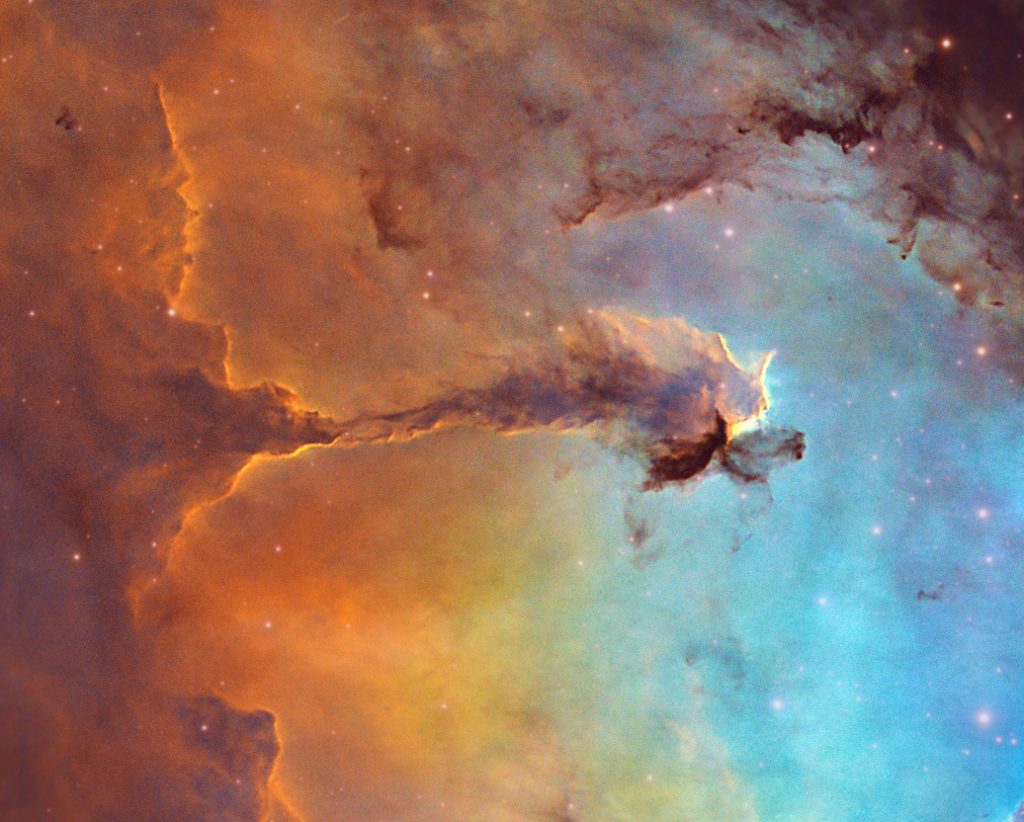
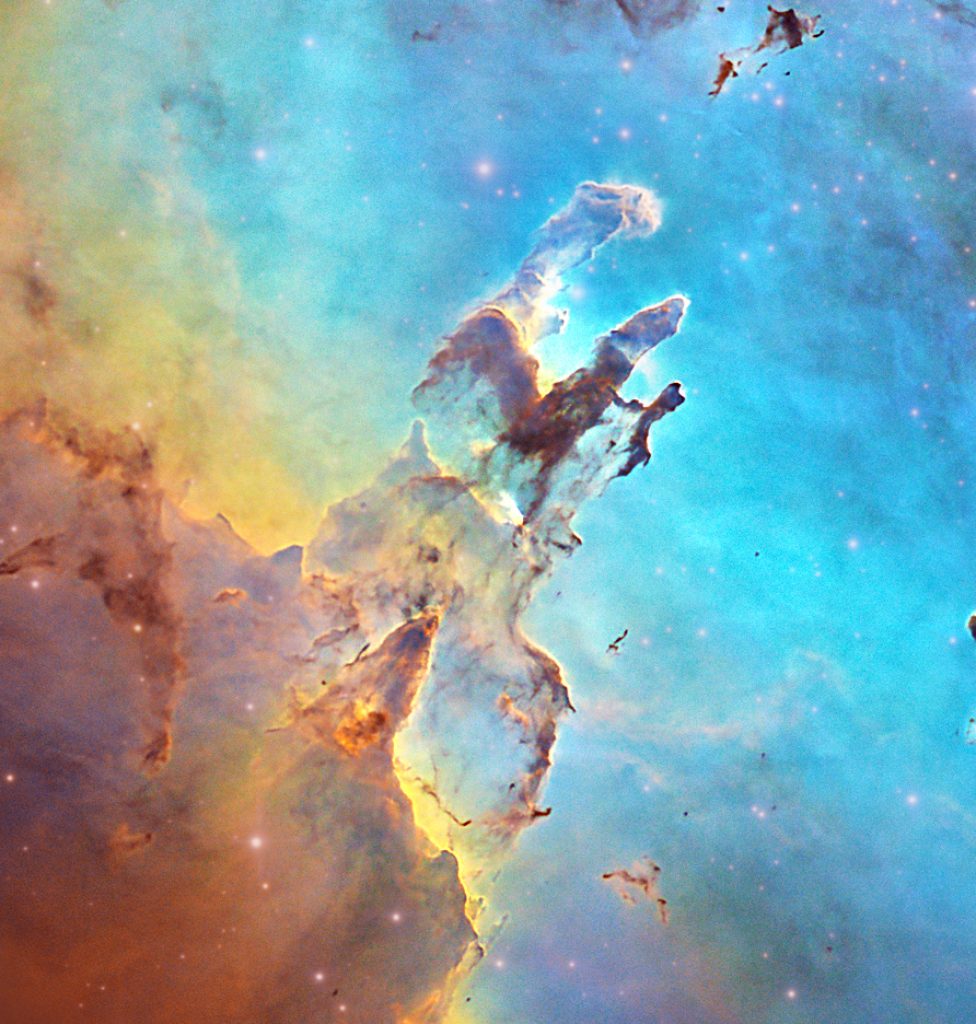
Step 3: Generative AI—When Images Are No Longer Captured
The latest and most controversial development in astrophotography is the rise of generative AI. Tools like OpenAI’s Sora, Google’s Veo, and other image-generation models are now capable of producing stunning, photorealistic images of galaxies, nebulae, and fantasy-style deep-sky scenes. These visuals are often modeled on real astrophotographs—captured by amateur and professional astrophotographers alike—but the results are entirely synthetic.
This is where the distinction becomes critical.
Generative AI doesn’t process sub-exposures, doesn’t require a telescope, and doesn’t interact with the night sky at all. It mimics the visual language of real astrophotography by using datasets—often scraped from online sources—to learn how space “should” look. It then creates entirely new, imaginary images based on text prompts, not photons.
There is no planning, no polar alignment, no guiding, no stacking—just a few words typed into a box. And yet, the results can be strikingly similar to real astrophotography, often shared online without any disclosure that they were generated, not captured.
This raises not only ethical concerns—especially regarding the uncredited use of real astrophotographers’ work to train these models—but also practical ones. What happens when synthetic images flood social media and compete with real work? When the public starts expecting every nebula to look like a masterpiece that no actual telescope has ever seen?
The danger is a shift in perception: that these artificially generated scenes become the new visual standard, while the skill, dedication, and learning curve behind true astrophotography fades into the background. Newcomers might feel discouraged when their first stacked image looks nothing like what they saw on Instagram—unaware that what they admired wasn’t even real.
Generative AI may have creative potential in digital art or fantasy illustration. But in the context of astrophotography—a discipline grounded in science, observation, and technical achievement—it risks undermining the very essence of what makes this hobby meaningful.
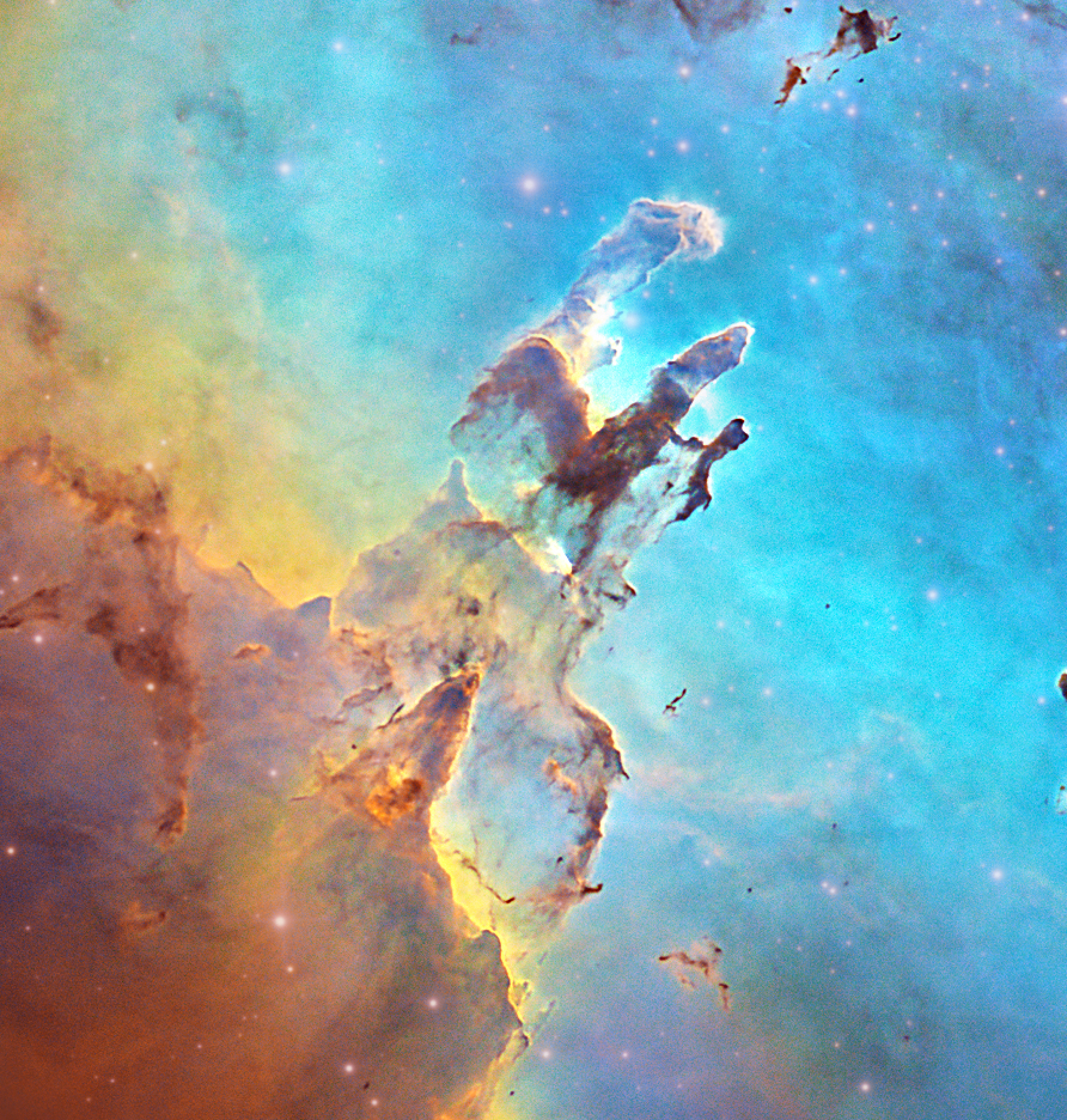
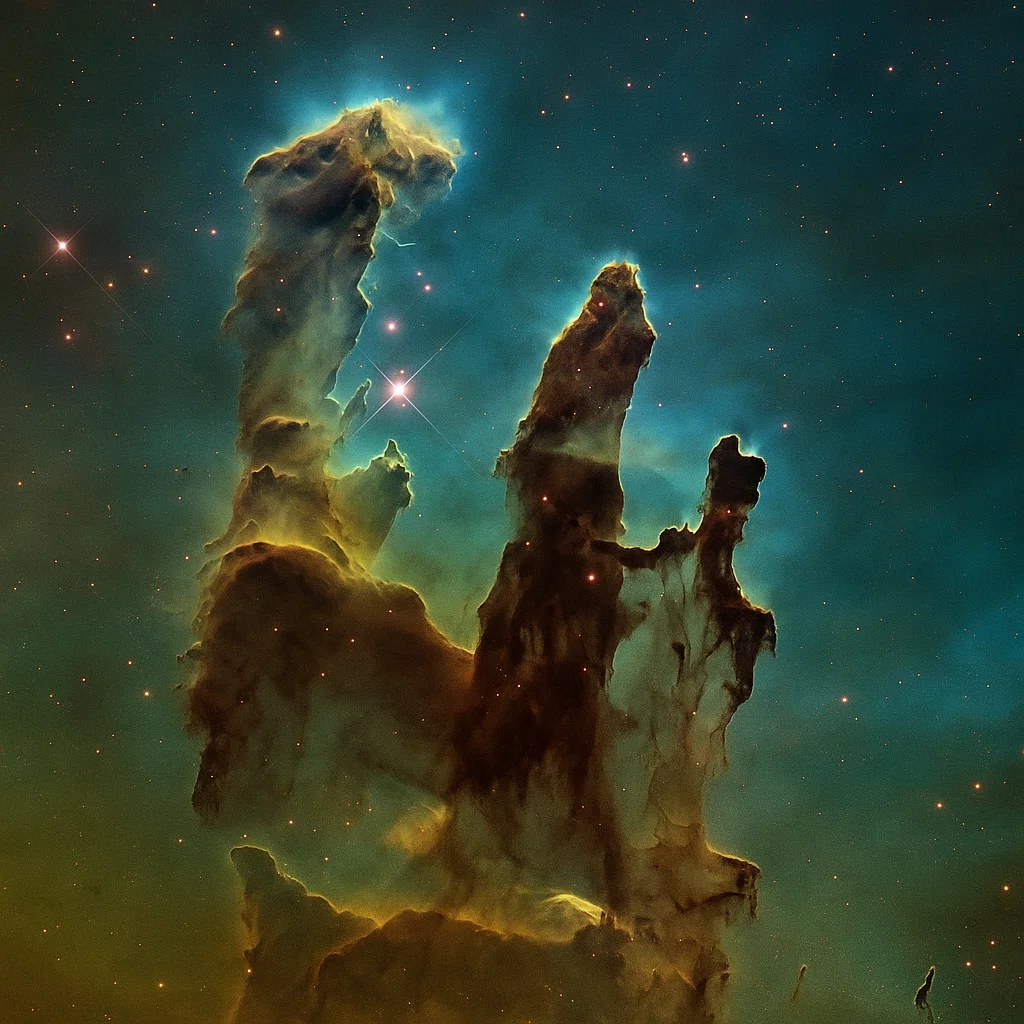
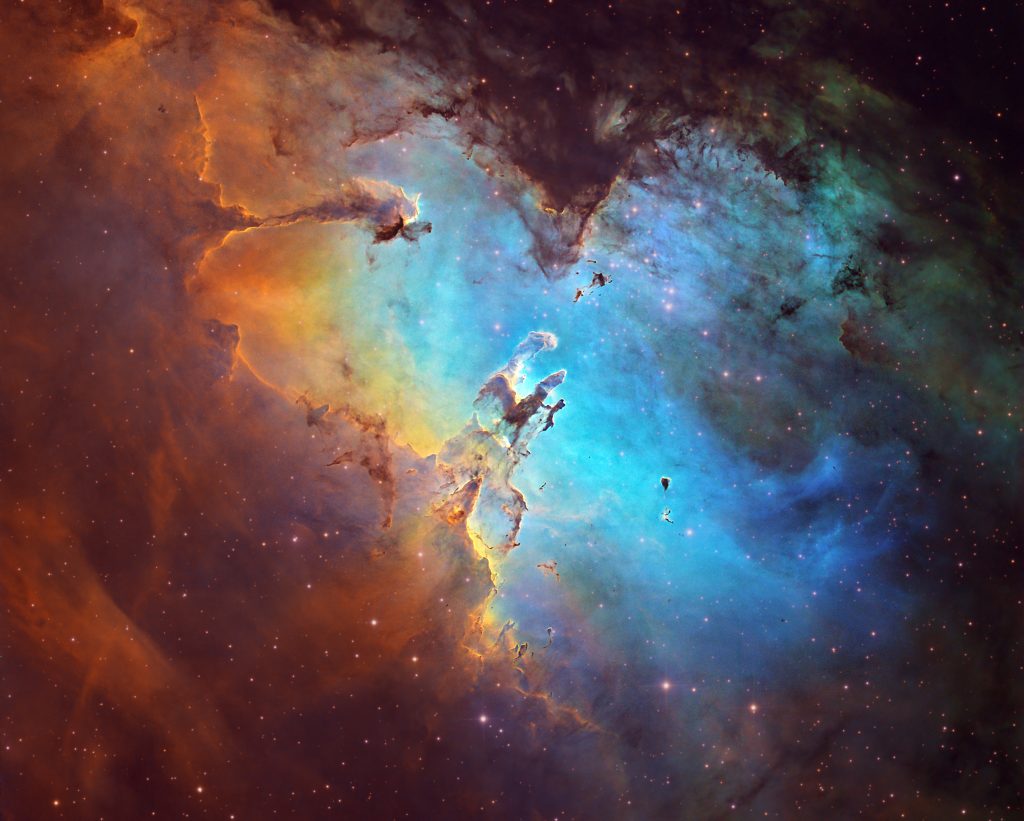
Right: AI-generated image (Sora), based on the left photo, using a prompt to “create a photorealistic image of the nebula shown in the astrophoto”
Conclusion: Where I Draw the Line
I’m all for making astrophotography more accessible. Automation has been a blessing, and I embrace AI tools that help me bring out the best in the data I’ve collected. These advances mean more people can enjoy the incredible feeling of capturing their first galaxy or nebula—and maybe even be inspired to learn more about the cosmos.
But I do draw the line at generative AI that builds upon the work of astrophotographers without credit or effort. It feels like borrowing from the best while bypassing the journey that makes this hobby so rewarding. There’s a difference between enhancing reality and faking it entirely.
Astrophotography is about connection—to the universe, to the science, to the story behind every image. The real magic happens when you learn about an object, plan your session, capture it yourself, and gradually improve your skills. Seeing that first image appear live on your screen is a thrill that no instant AI image can replicate.
In the end, the sky is not just something to look at—it’s something to experience. And for me, that’s what keeps astrophotography grounded in meaning, even as the digital tools around it continue to evolve.
But what about you? Where do you draw the line?
I’d love to hear your thoughts—especially as more AI tools enter the field. Are they helping, hurting, or something in between? Let me know in the comments.
One Reply to “From Telescopes to Text Prompts – How AI Is Changing Astrophotography”