What advanced telescope mount is best suited to carry heavy, long focal length telescopes with reliable, sub-arcsecond tracking? If you decide to go with a time-tested classic equatorial mount, the Sky-Watcher EQ6-R Pro is still one of the best and most affordable options available. The iOptron GEM45 with its lightweight design and the Celestron CGX with its 25 kg (55 lbs) payload capacity are good alternatives. When looking into hybrid and harmonic drive mounts, the ZWO AM5N is the most popular mount with its smooth +/-10″ periodic error, powered dual saddle, and compatibility with the broader ZWO ecosystem. Good alternatives are the Pegasus Astro NYX-101 with its massive 20 kg (44 lbs) payload capacity and the Sky-Watcher Wave 150i.
By Wido Oerlemans
✨ Top 3 Traditional Equatorial (GEM) Mounts
An absolute structural tank. For around $2,000, nothing touches its 20 kg (44 lbs) physical capacity and whisper-quiet belt-driven tracking. It remains the reigning gold standard for fixed backyard piers and heavy astrophotography rigs.
Boasts an incredible strength-to-weight ratio for a traditional mount. The premium CNC-machined head weighs only 7.2 kg (15.8 lbs) but securely controls a full 20 kg (45 lbs) payload utilizing a unique quick-lock drive engagement assembly.
Built specifically to handle massive optical tubes like heavy 11″ and 14″ Schmidt-Cassegrain (SCT) scopes with a massive 25 kg (55 lbs) payload capacity. Its low-backlash belt system manages high-torque loads with ease and syncs natively with advanced CPWI software controls.
🚀 Top 3 Modern Strain Wave Mounts
The ultimate mobile powerhouse. It hits the perfect sweet spot by smoothing out periodic error down to ±10 arcseconds and routing power/USB lines directly through the saddle—completely eliminating standard travel cable snags.
A dual-axis strain wave titan carrying massive 20 kg (44 lbs) imaging packages with zero counterweight or balance requirements. Features a flawless anodized aerospace frame running driverless, cross-platform ASCOM Alpaca network integration.
Sky-Watcher’s refined entry into the harmonic market. Natively manages a 15 kg (33 lbs) load counter-free, routes cables internally through the chassis frame, and crucially keeps a handset connection port for tactile astronomy setups.
At some point, every dedicated astrophotographer experiences “aperture fever” and yearns for a telescope mount that can support larger, heavier optics than the typical beginner limit. If you are shopping for a mid-sized refractor, a large Schmidt-Cassegrain, or a hefty Newtonian telescope, you are looking for an intermediate astrophotography mount. For this guide, we are focusing specifically on heavy-duty, future-proof platforms capable of handling a 15 to 30 kg (33 to 66 lbs) maximum payload capacity, with price tags falling strictly in the $1,500 to $3,500 range. If you are looking for lighter beginner mounts capable of carrying 8 kg to 15 kg (such as the Sky-Watcher HEQ5 Pro or Celestron AVX), please check out my dedicated beginner astrophotography mount guide.
Because we are looking exclusively at serious astrophotography platforms, every mount selected for this guide has a strict baseline of mandatory “must-haves.” To make the cut, all mounts in this overview feature:
- Full computerized GoTo targeting functionality.
- A dedicated autoguiding port or software interface.
- Universal ASCOM/INDI connectivity to seamlessly bridge with external mini-computers, smart controllers, or laptops.
- Native Equatorial (EQ) tracking capability to completely eliminate field rotation during long-exposure imaging.
Furthermore, this guide is limited to mainstream intermediate mounts that are actively supported, warrantied, and sold by major astronomical retailers across the US and the EU (such as High Point Scientific, Agena Astro, and Astroshop). If you are a risk taker looking for ultra-cheap, unbranded Chinese imports or generic AliExpress strain wave clones that lack local dealer support and long-term warranties, please check out my blog post about sub-$1000 strain wave mounts.
Classic Equatorial, Strain Wave (Harmonic), and Hybrid Drive mounts
Finding an advanced, future-proof mount used to be a straightforward choice between classic German Equatorial Mounts (GEMs) or iOptron’s Center-Balanced Equatorial Mounts (CEMs). Today, the telescope market has completely transformed thanks to the robotic revolution of Dual-Axis Strain Wave Gear (Harmonic Drive) mounts. Utilizing flexible internal metal cups that deflect inside an outer ring, strain wave drives boast incredible mechanical reduction ratios and massive torque. This engineering allows a featherweight 5 kg mount head to safely carry over 15 kg of advanced imaging gear without requiring heavy steel counterweights or tedious physical telescope balancing routines.
Bridging the gap between these two worlds are Hybrid Equatorial Mounts (HEMs), pioneered primarily by iOptron. These clever systems utilize a high-torque strain wave gear on the Right Ascension (RA) axis—where immense, unbalanced payload leverage is most punishing—combined with a traditional, smooth worm-and-belt drive on the Declination (DEC) axis. This dual-architecture design delivers the lightweight, counterweight-free benefits of a strain wave mount while significantly lowering manufacturing costs and providing an open, hollow core for streamlined internal cable-management saddles.
Skip to Section
Are You Ready to Go Strain Wave or Stick with a Classic GEM?
Choosing between these styles comes down to matching your imaging environment with the specific structural trade-offs of each design. Some astrophotographers remain hesitant to abandon traditional German Equatorial Mounts, and their reasoning is entirely valid. Because classic GEMs are physically heavy and dense, their sheer mass acts as an excellent natural dampener against wind gusts and vibrations. Furthermore, their classic worm drives deliver a smooth, highly predictable native periodic error (PE) curve that can be trained out with PEC algorithms, and their mechanical clutches allow users to freely unlock the axes to balance the scope smoothly by hand. For permanent backyard piers or rolling roll-out tripods where equipment is rarely broken down, a classic belt-driven GEM offers rock-solid reliability at a highly accessible price point.
In contrast, going with a modern dual-axis strain wave mount trades mechanical mass for ultimate portability and effortless setup. These compact, lunchbox-sized mount heads are incredibly easy to pack into a travel case for remote dark-sky trips. While strain wave gears do produce steeper native periodic error curves with rapid frequency spikes, real-world field usage has thoroughly proven that running a standard 1-second autoguiding loop in software like PHD2 handles these spikes effortlessly, easily keeping final guiding tracking well below 1.0 arcsecond. However, buyers should remember that these ultra-lightweight mounts create a highly top-heavy center of gravity when fully loaded, requiring a much stiffer tripod and often requiring a stone bag or ballast weight at the tripod base—not for telescope balancing, but simply to keep the entire rig from tipping over in high winds. Ultimately, whether you choose the immovable mechanical stability of a classic GEM or the revolutionary grab-and-go freedom of a strain wave drive, both architectures are fully capable of delivering the sub-arcsecond tracking accuracy required to capture stunning deep-sky images.
Advanced German Equatorial Mounts
In the price range of $2000 to $3500, there are five classic German Equatorial mounts that have been leading the market of advanced astrophotography mounts for several years. These mounts include the SkyWatcher EQ6-R Pro and its AZ-EQ6 variant, the iOptron CEM40, and GEM45, as well as the Celestron CGEMII. Out of these mounts, the SkyWatcher EQ6-R Pro has been the most popular among astrophotographers who share their images on Astrobin. However, each of the other mounts is well-known among the astrocommunity as well, and are reliable telescope mounts for many astrophotographers in the field. Let’s discuss each of these mounts in greater depth.
SkyWatcher EQ6-R Pro
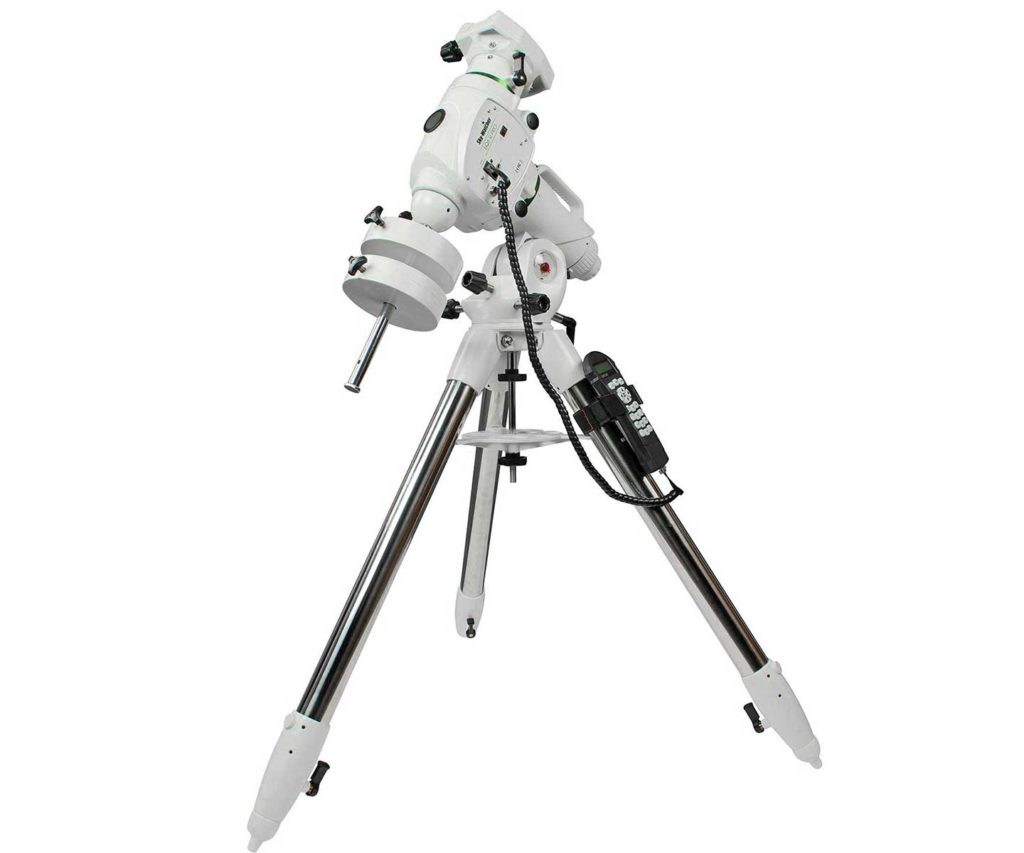
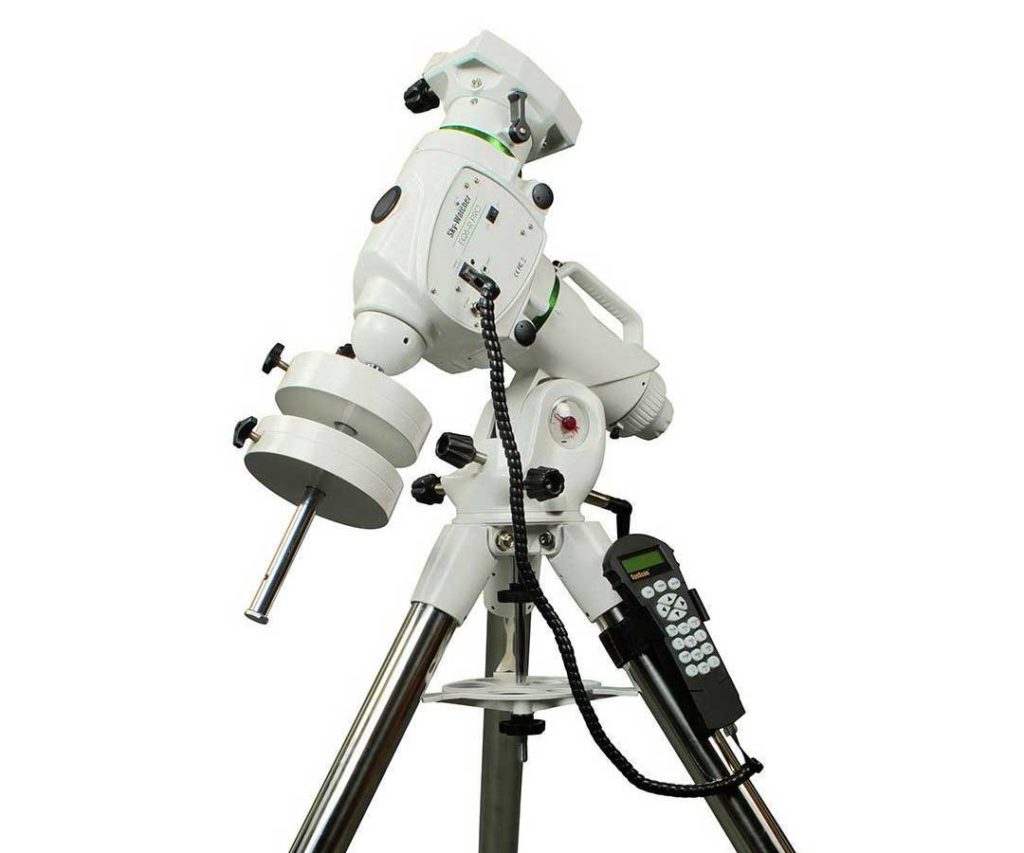
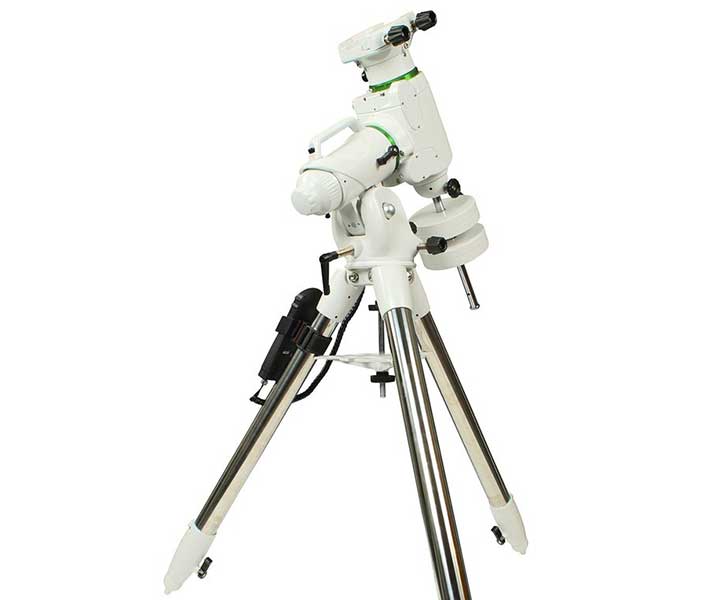
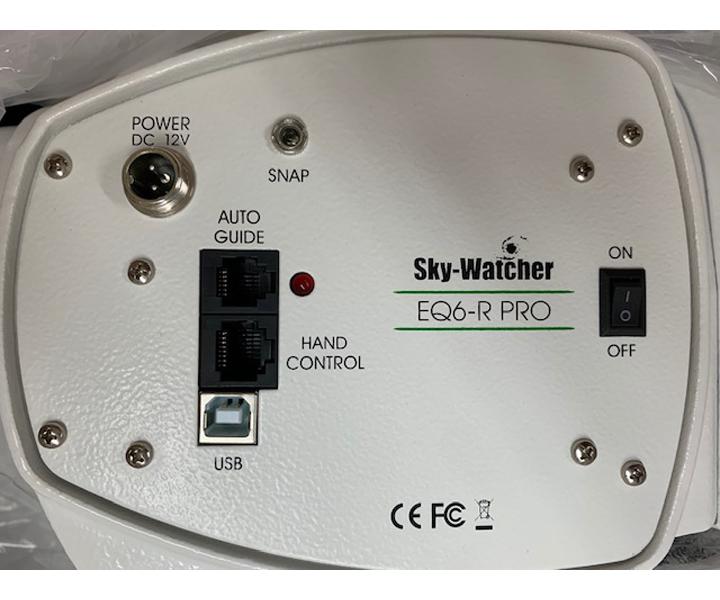
The Sky-Watcher EQ6-R Pro Equatorial GoTo Mount is highly respected by astrophotographers due to its remarkable tracking abilities and its impressive weight capacity of 20 kgs (44lbs). As an owner myself, I have written a comprehensive review which can be found here. The mount comes with a SynScan hand controller, offering precise GoTo functionality with access to over 42,000 celestial objects. The USB port allows for easy connectivity to a PC or other controller, while the illuminated polar scope simplifies polar alignment. I usually control the mount using the dedicated USB port, connecting it directly to a standalone computer with a USB cable with the ASCOM driver which enables me to control the mount remotely with astrophotography software, instead of using the hand controller. The belt drive and stepper motors operate quietly, and the mount has an extra ST-4 autoguider port for a guide camera (although I connect my guide camera directly to my computer via USB). With autoguiding enabled – I personally use PHD2 with multi-star guiding at 1 second intervals – the EQ6-R pro tracks the night sky well within one arcsecond (0.3 to 0.8 arcseconds is my experience). The mount also includes Permanent Periodic Error Correction (PEC) to train out the worm gear’s periodic errors. The mount can support large telescopes and imaging accessories up to its weight capacity, using two independent 5 kg (11 lb) counterweights and a retractable counterweight shaft for balance. The mount head weighs 17 kg (38 lbs) and features a built-in carrying handle, which helps to carry and transport the mount. The included saddle accommodates both Losmandy and Vixen-style dovetails, so any type of telescope can be mounted on the EQ6-R Pro.
SkyWatcher AZ-EQ6 Pro
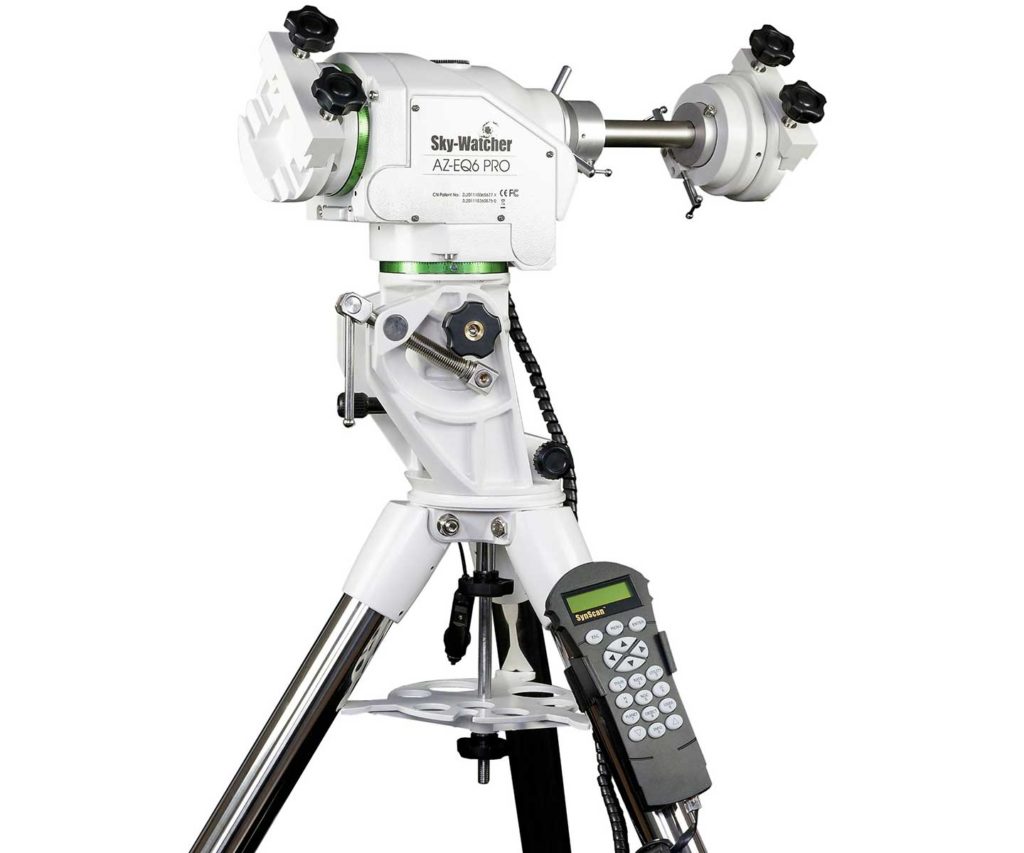
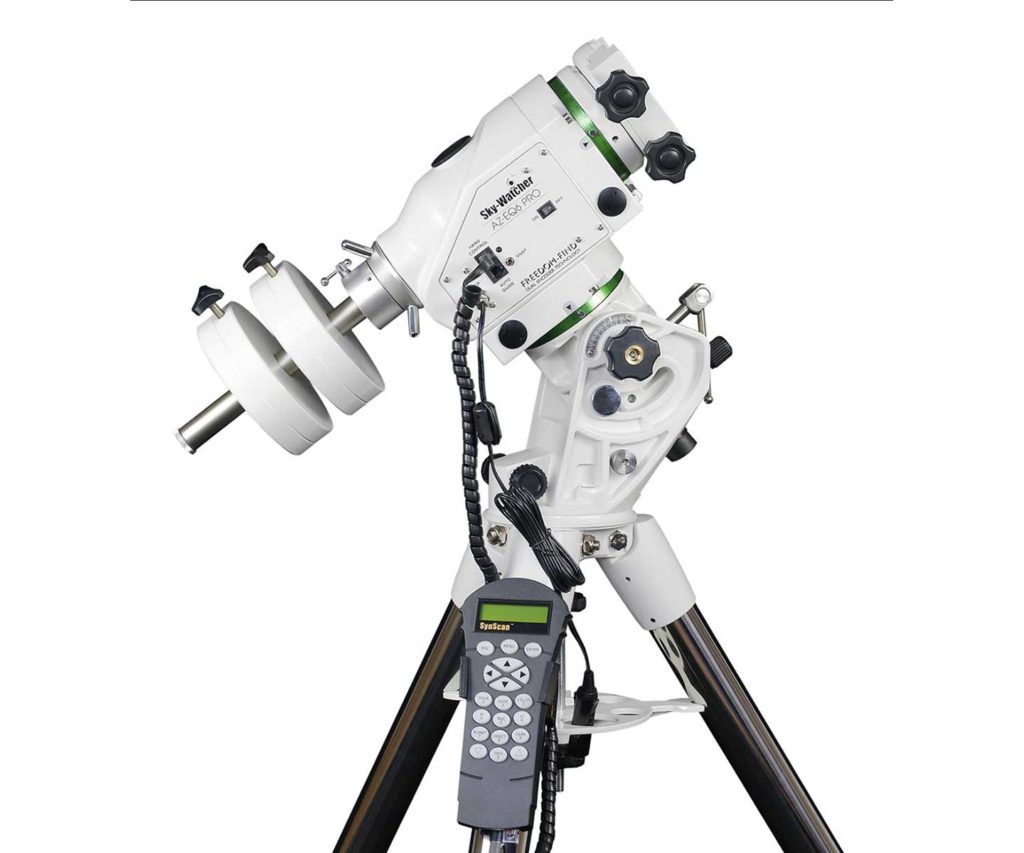
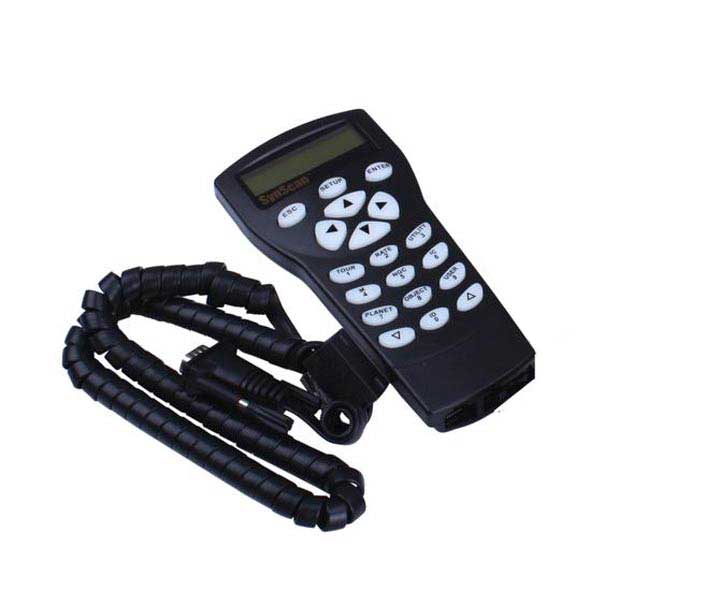
The Sky-Watcher AZ-EQ6 Pro mount is very similar to the EQ6-R Pro. It is a versatile and heavy-duty mount, that combines the benefits of both an EQ and AZ mount. With a payload capacity of 44 pounds, it can handle a variety of big aperture, long focal-length telescopes for imaging and visual applications. In EQ mode, the mount is suitable for long exposure, deep-sky imaging, while in Alt-Az mode, it’s perfect for visual observations. The mount is equipped with ultra-quiet stepper motors and belt drives on both RA and Dec axis, reducing backlash and allowing for precise tracking and guiding. The AZ-EQ6 Pro also features Sky-Watcher’s Freedom Find encoder system, which allows for disengaging clutches and manually moving the mount while maintaining initial alignment for the ultimate visual tracking mount. The mount has the capability to mount two separate optical systems on each side of the RA axis using the included secondary mounting saddle. This dual mode is great for solar imaging, outreach, educational purposes, and using two different telescopes such as a wide and narrow field configuration. The AZ-EQ6 Pro also has a built-in USB-B port for easy PC connection and control. The Sky-Watcher SynScan Pro hand controller provides access to a database of over 42,000 objects in the night sky. The mount includes an illuminated polar finderscope with a circular grid reticle for the northern hemisphere and constellation Octans for the southern hemisphere, allowing for polar alignment even without a clear view of Polaris. The mount also features built-in periodic error correction training for astrophotographers to reduce periodic errors. Overall, the Sky-Watcher AZ-EQ6 Pro is a reliable and flexible mount suitable for a wide range of astronomical applications.
iOptron CEM40
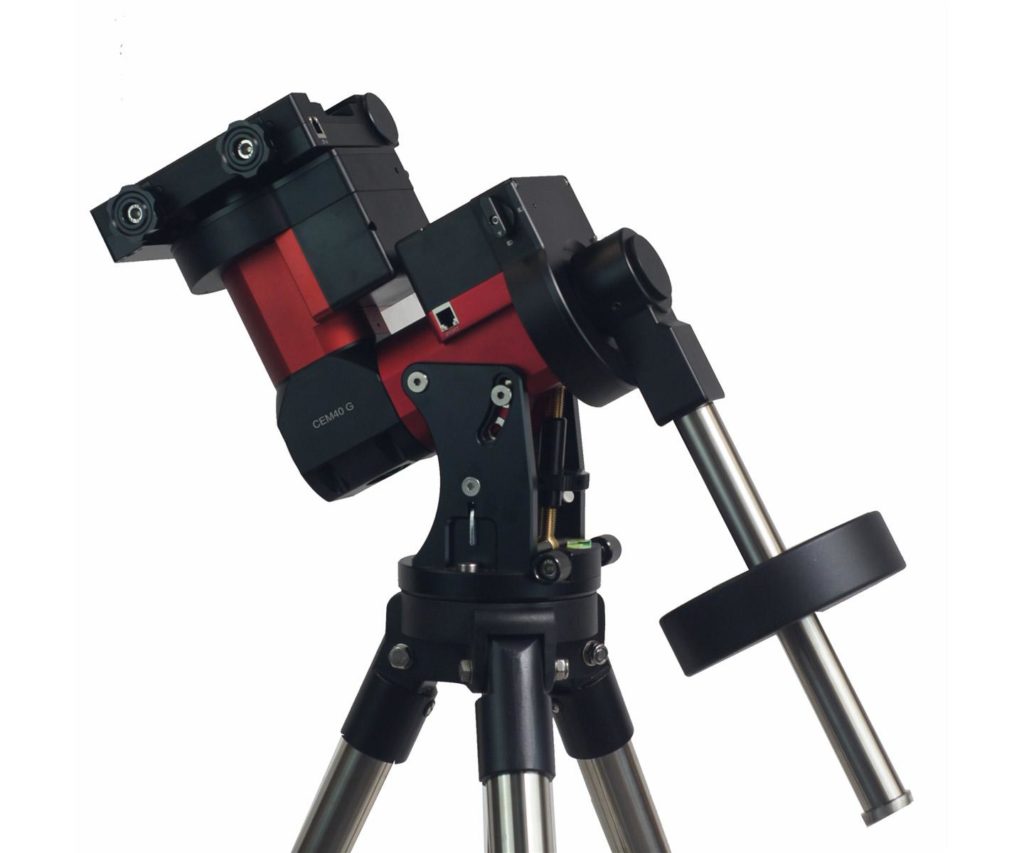
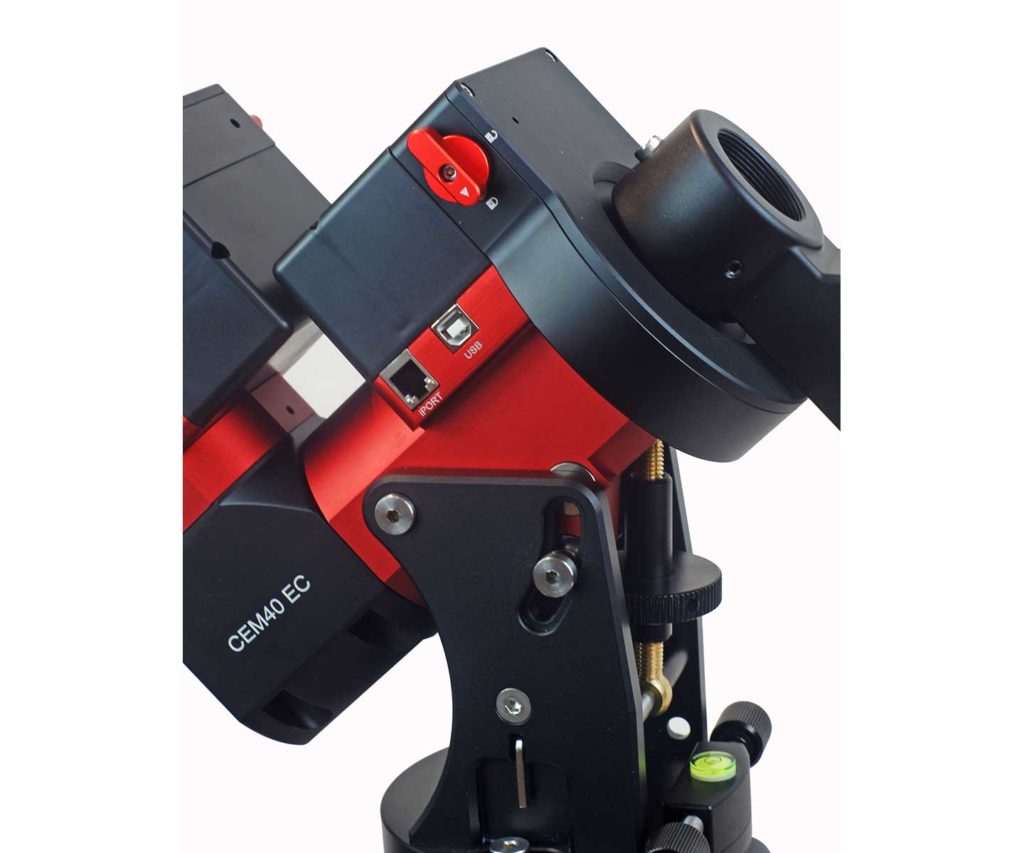
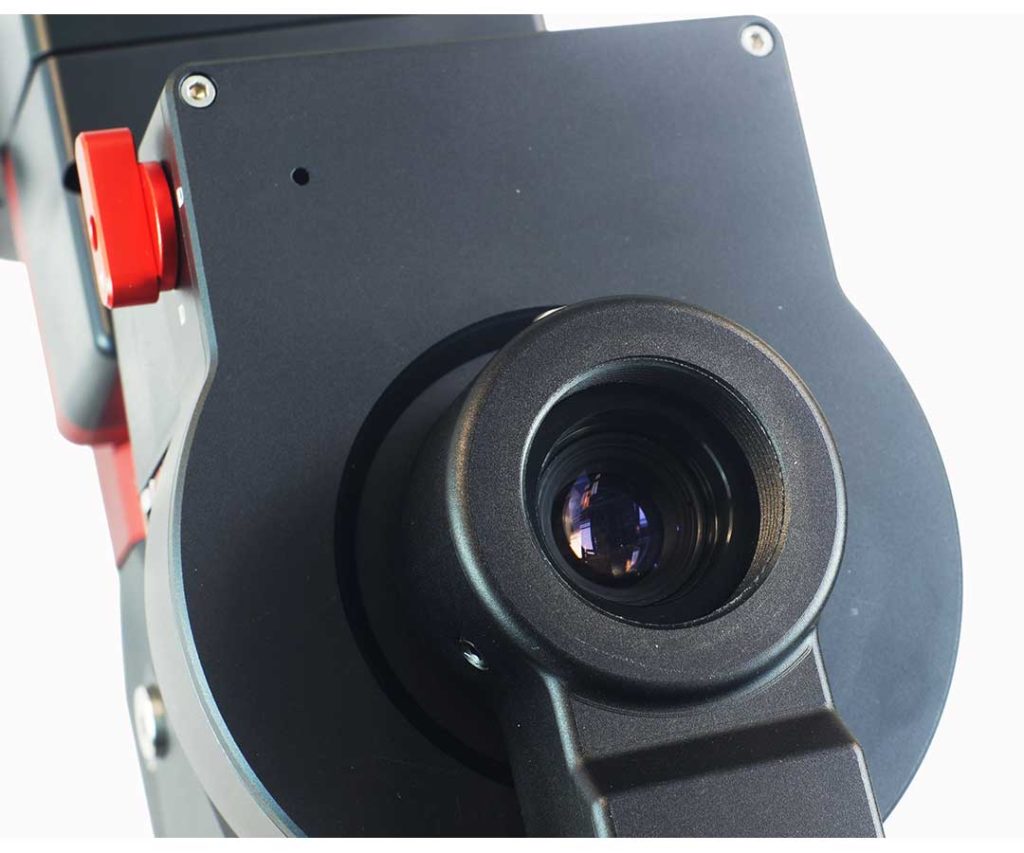
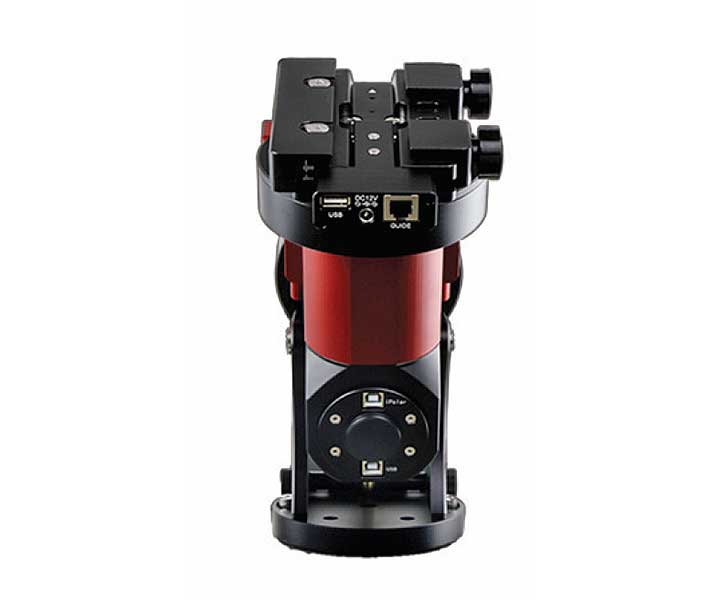
The iOptron CEM40 mount is a center-balanced equatorial mount that is designed to be both visually appealing and functional. With a weight of only 7.9 kg (17.4 lb), this mount can support a payload of up to 18 kg (40 lb), making it an incredibly versatile and powerful mount. One of the key features of the iOptron CEM40 mount is the optional iPolar electronic polar finder scope. This tool helps to ensure the accurate alignment of a telescope, even when the pole star is not visible. The mount also includes large levers on the quick-lock drive engagement system, which makes it easy to snap the gears into place. The CEM40 has a dual saddle that can accommodate Losmandy and Vixen-style dovetail plates. It uses iOptron’s ultra-quiet, low-power consumption stepper motor drive system to provide precise tracking. Additionally, the mount is equipped with the Go2Nova® 8410 hand controller, which offers an extensive 212,000+ object database and advanced GOTONOVA® GOTO technology. The iOptron CEM40 mount is an ideal tool for both visual observation and astrophotography. It features a low periodic error of less than ±7.5 arc seconds, permanent periodic error correction (PPEC), and an integrated ST-4 autoguiding port. The mount also includes a 32-channel Global Positioning System (GPS), USB communication port, and cable management system. The CEM40 mount is all metal, CNC machined with red/black anodized finish, and comes with a standard 1.5-inch heavy-duty stainless steel tripod (5kg) and a 5 kg (11 lb) counterweight. Additionally, optional WiFi is available for mount control via Smartphone/Tablet/Computer. Overall, the iOptron CEM40 mount is an impressive mount that offers exceptional performance and ease of use.
iOptron GEM45
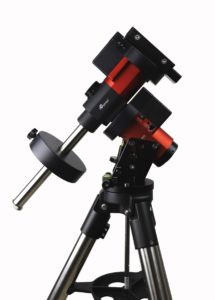
The iOptron GEM45 is a next-generation German equatorial mount that combines innovative ideas with a time-tested design. This mount features a sharp-looking CNC body that exudes quality in both form and function. With experiences gained from developing the CEM series, unnecessary bulk has been removed, resulting in an incredible 2.5 payload-to-mount weight ratio. Despite its compact 7 kg (17.5 lb) weight, it can precisely track with up to 20 kg (45 lb) of gear onboard and is capable of precise GOTO (Go To Object) functionality. Its optional integrated electronic polar scope, known as the iPolar, ensures easy and accurate polar alignment, even when the pole star is obscured. The mount has large levers on the quick-lock drive engagement system, making it easy to snap the drive gears into place even while wearing gloves. The advanced cable management system helps avoid cable snags, and the 6″ dual dovetail saddle can accommodate both Losmandy and Vixen-style dovetail plates. The mount uses reliable stepper motor drive systems with low power consumption technology. A 212,000+ object library with star identification, GPS, and Wi-Fi (with an optional iStarFi adapter) are great features on the GEM45 mount. Other features of the GEM45 include a low periodic error of less than ±7.5 arc seconds, permanent periodic error correction (PPEC), an auto-guiding port, a USB communication port, and a 32-channel Global Positioning System (GPS). The mount also includes the Go2Nova® controller with Advanced GOTONOVA® GOTO Technology and a built-in heater. The all-metal CNC-machined body is red and black anodized for durability and aesthetics. Additionally, the mount can be ordered with a new LiteRoc 1.75″ tripod that delivers rock-solid stability in a lighter, more compact package. An optional WiFi feature is available for mount control via smartphone, tablet, or computer. This mount is ideal for both visual observation and astrophotography, making it a versatile mount for any astronomer.
Celestron CGEMII
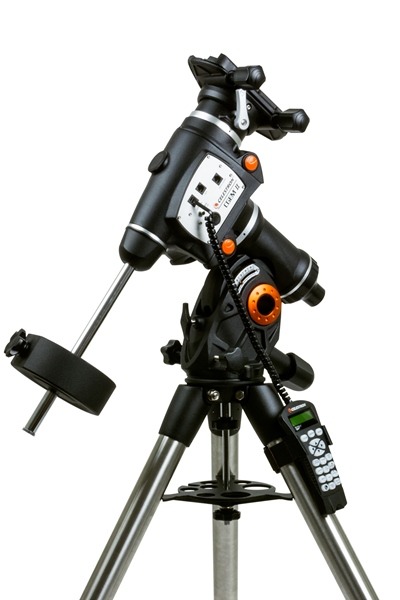
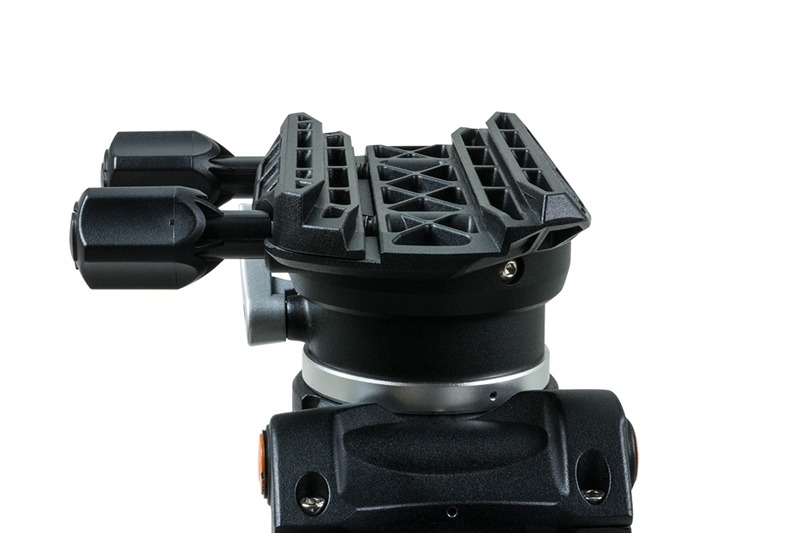
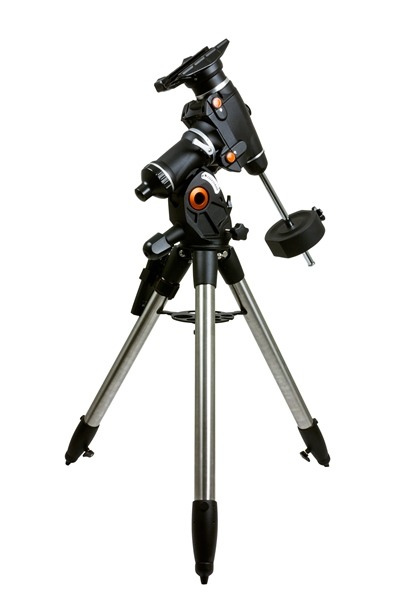
The CGEM II mount is an update to the CGEM series, capable of securely holding larger telescopes (e.g. SCTs) up to 11″ for imaging and visual observation. With a payload capacity of 18 kg (40 lb) and a 5° per second slewing speed, you can easily point to any celestial object in the database. The mount is designed with large altitude and azimuth adjustment knobs for easy polar alignment, and its internal RA and DEC motor wiring creates a clean, trouble-free setup. The CGEM II also features Celestron’s innovative All-Star Polar alignment procedure, which allows for accurate polar alignment using any star, even when the celestial pole cannot be seen.
For astrophotographers, the mount also includes Permanent Periodic Error Correction (PEC) to train out the worm gear’s periodic errors while retaining the PEC recordings. Additionally, the CGEM II can track well past the Meridian for uninterrupted imaging of objects near the Meridian. The mount comes with a database of over 40,000 objects, 100 user-defined programmable objects, and enhanced information on over 200 objects. The mount’s dual saddle plates accommodate both CG-5 and CGE-style dovetails. The CGEM II is compatible with Celestron’s Starry Night Special Edition Software and SkyPortal app. The mount head weighs 18 kg (40 lb), and the tripod weighs 9 kg (20 lb), with a height adjustment range of 1346mm – 1651mm (53″ – 65″) and a latitude adjustment range of 15° – 70°. It includes an accessory tray, 1 x 17 lbs counterweight, NexStar+ Hand Controller, DC Power Cable, and Hand Control Holster.
Celestron CGX
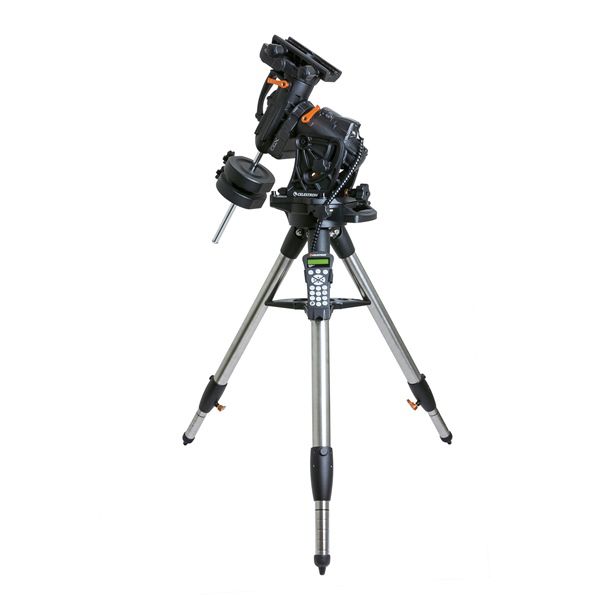
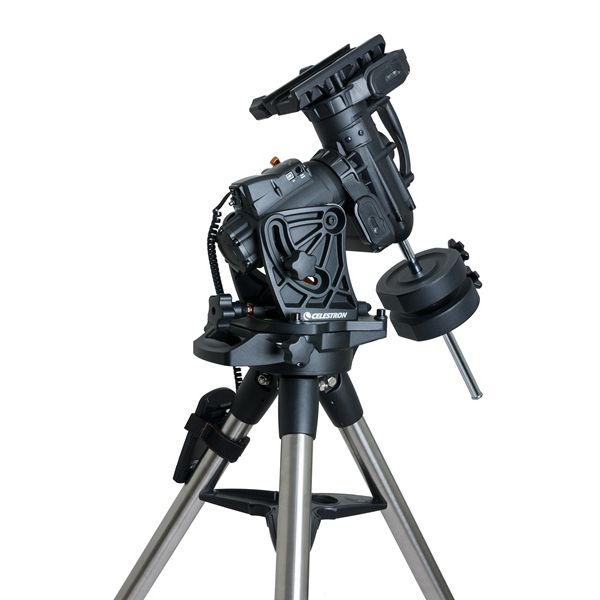
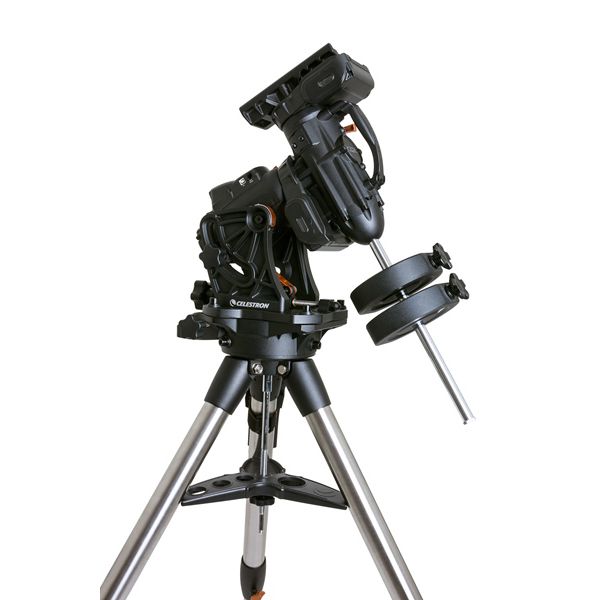
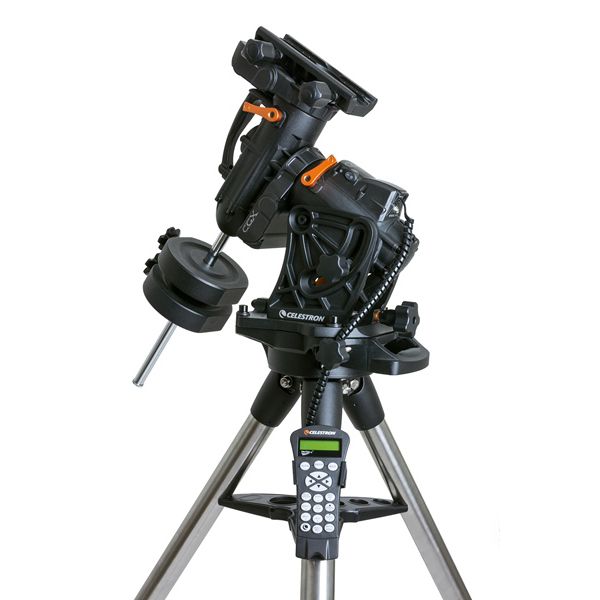
For the past eight years, Celestron’s CGEM mount series has served as the backbone for German Equatorial mounts, accommodating telescopes ranging from 6 to 11 inches in aperture. As backyard telescope technology has advanced, more astro-imagers and planetarium-controlled setups have emerged. Leveraging their expertise, Celestron’s engineering team developed the CGX EQ, integrating years of experience and advancements in technology, value, and usability.
The CGX boasts a sturdy design with increased load capacity, supporting up to 25 kg (55 lbs). With a mount head weight of 20 kg (44 lbs), and a tripod of 8.7 kg (19.2 lbs), it is not the lightest telescope mount. However, high quality motors and a belt-drive system provide precise slewing and tracking, even under heavy loads. Innovative features such as internal cabling, adjustable EQ head position, and an ergonomic latitude adjuster further enhance its functionality. With its comprehensive set of features and specifications, including a wide tripod stance for improved stability and compatibility with various accessories, the CGX offers professional-level performance for astrophotography.
Of course, the Celestron CGX comes equipped with fundamental features like Periodic Error Correction, autoguiding, USB connectivity through the hand controller, and ASCOM control. Additionally, Celestron provides distinctive control software such as CPWI Telescope Control, Celestron Starry Night Special Edition, and the SkyPortal App.
My Top Picks
✨ Top 3 Traditional Equatorial (GEM) Mounts
An absolute structural tank. For around $2,000, nothing touches its 44-lb physical capacity and whisper-quiet belt-driven tracking. It remains the reigning gold standard for fixed backyard piers and heavy astrophotography rigs.
Boasts an incredible strength-to-weight ratio for a traditional mount. The premium CNC-machined head weighs only 15.8 lbs but securely controls a full 45-lb payload utilizing a unique quick-lock drive engagement assembly.
Built specifically to handle massive optical tubes like heavy 11″ and 14″ Schmidt-Cassegrain (SCT) scopes. Its low-backlash belt system manages high-torque loads with ease and syncs natively with advanced CPWI software controls.
Advanced Hybrid Mounts
What is a hybrid mount?
To understand the engineering behind iOptron’s HEM (Hybrid Equatorial Mount) series, it helps to look at exactly what a “hybrid” layout solves for astrophotographers. Traditional pure strain wave mounts utilize expensive, high-torque harmonic gear systems on both axes. iOptron realized that while a strain wave gear is absolutely vital on the Right Ascension (RA) axis to handle immense, heavily imbalanced telescope loads without any counterweights, the Declination (DEC) axis doesn’t face the same mechanical demands because a telescope can simply be slid forward or backward in its saddle to find its own balance. By pairing a strain wave RA axis with a traditional, backlash-free worm and belt-driven DEC axis, iOptron successfully built a mount that retains the lightweight, grab-and-go portability of a strain wave system while significantly lowering production costs. Furthermore, because a hollow-shaft worm gear structure is much easier to route wires through than a solid strain wave cog, this hybrid architecture allowed iOptron to integrate an advanced, stationary internal cable-management saddle. The primary trade-offs of this specialized design are the exclusion of Alt-Azimuth versatility—rendering the HEM series strictly equatorial—and the field requirement to manually balance the telescope along the Declination axis. Forum users note that while this balancing act is simple, the mount’s compact saddle can make balancing a rear-heavy imaging train slightly finicky if you are using short stock dovetail bars. Finally, due to the central placement of the high-torque Right Ascension motor housing, the internal channel required for a traditional optical polar scope is completely obstructed, necessitating the use of digital or software-based polar alignment methods.
⚠️ Beware of the Strain Wave Tax: Don’t forget that Strain Wave Mounts are often sold as mount heads only. Between a rock-solid tripod ($350) and an optional counterweight kit ($100–$150), you need to budget an extra $400 to $500 above the base price to safely run your rig!
iOptron HEM27 EQ
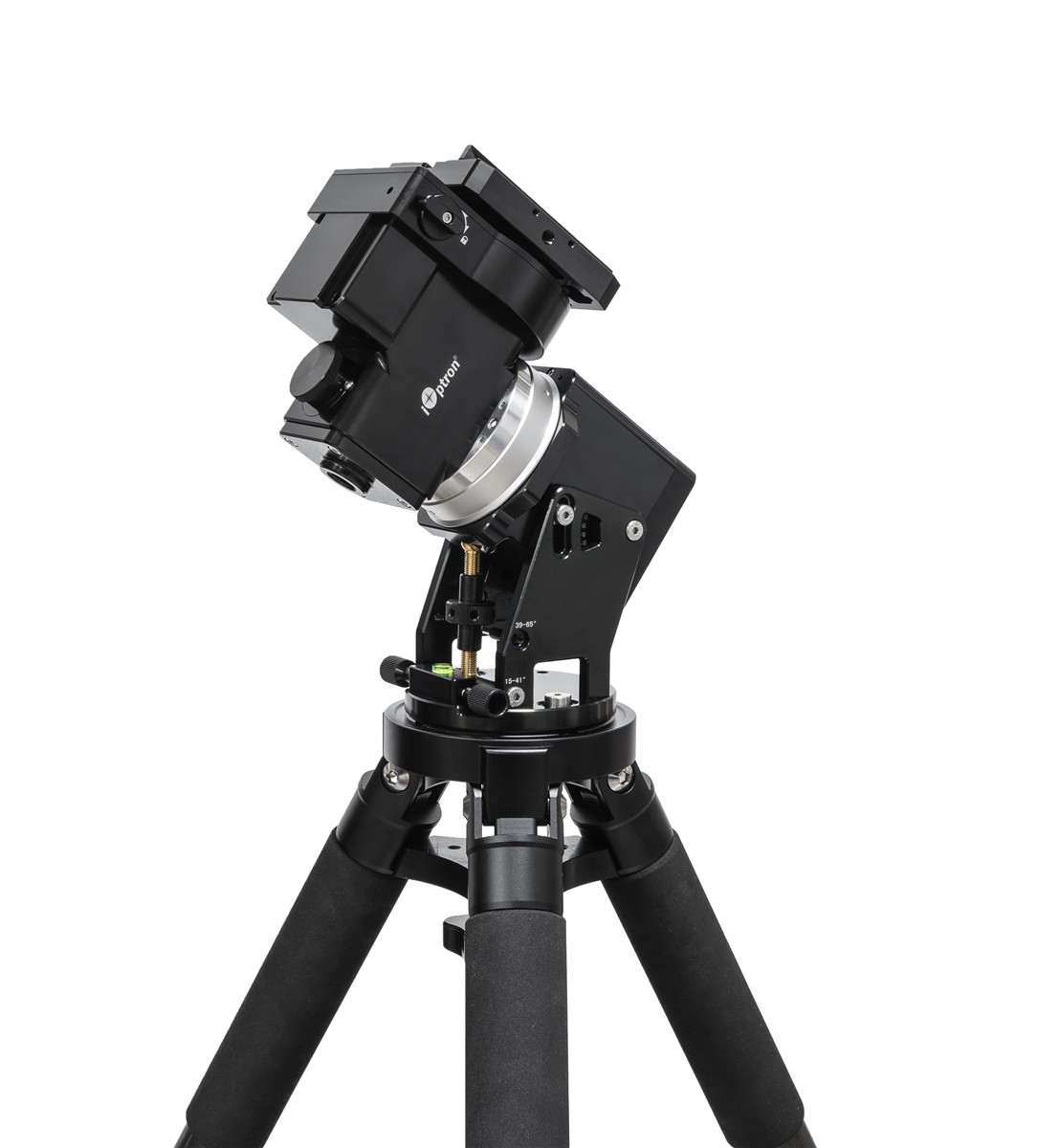
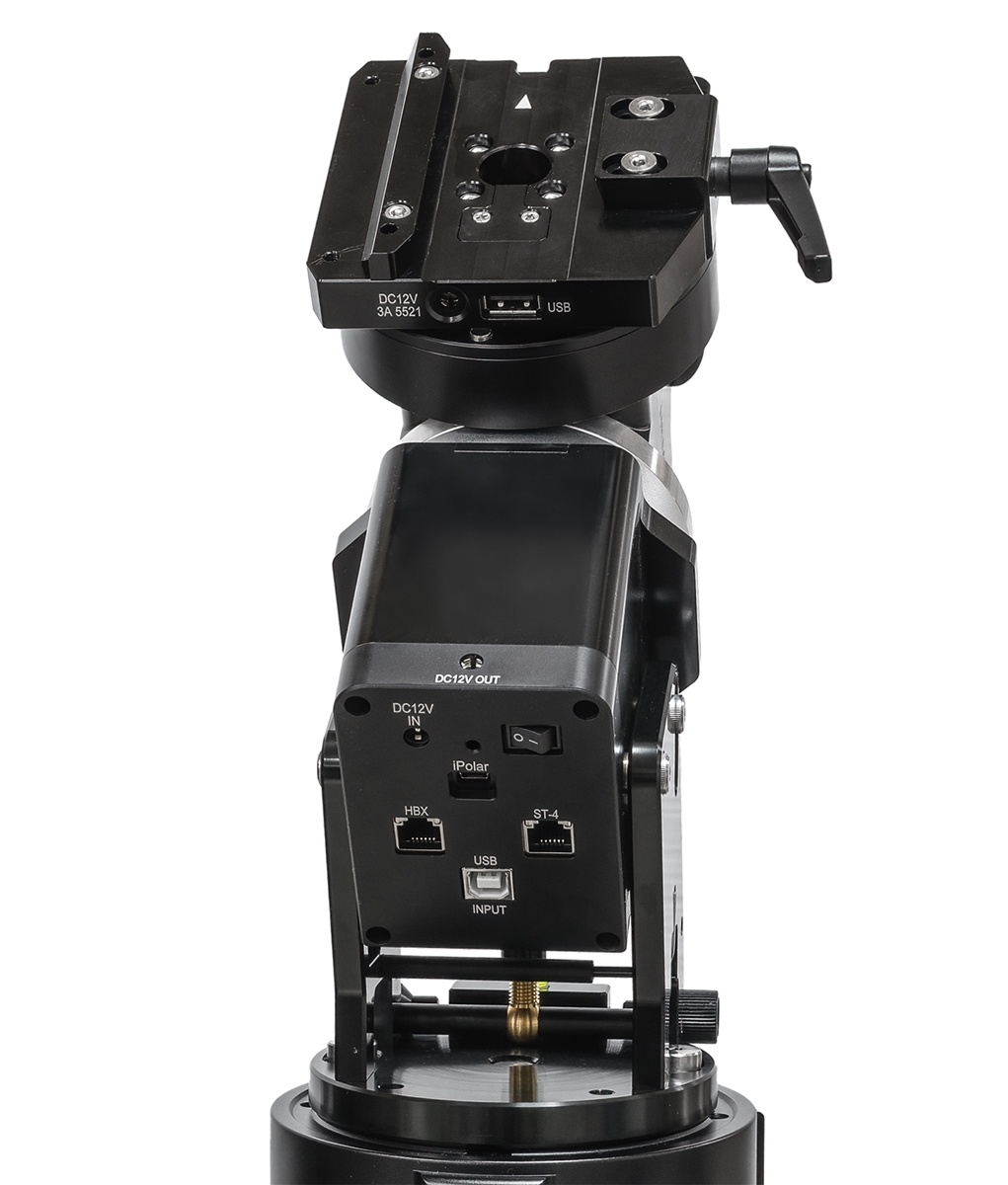
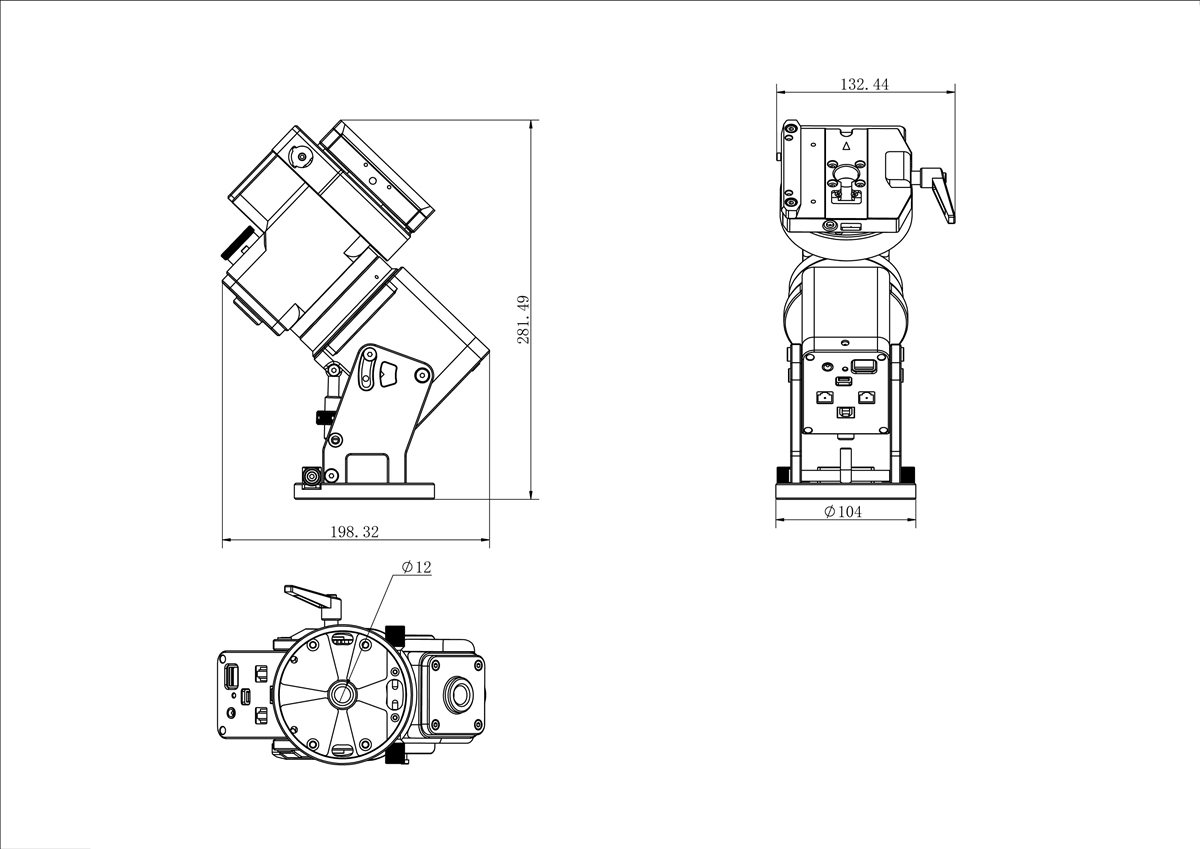
The iOptron HEM27 is widely celebrated across the astrophotography community as an innovative, lightweight hybrid titan. Unlike pure strain wave mounts, this unique configuration utilizes a precision strain wave gear on the Right Ascension (RA) axis featuring a 480:1 reduction ratio, paired with a traditional backlash-free worm and belt drive system on the Declination (DEC) axis. This hybrid design allows the compact 3.7 kg (8.15 lbs) mount head to effortlessly handle an impressive 13.5 kg (29.7 lbs) payload without a counterweight, and up to 20 kg (44 lbs) with an optional counterweight setup. Imagers highly value this hybrid approach because it provides the immense weight-bearing, balance-free benefits of a strain wave RA axis while keeping the cost down and utilizing a tried-and-true, easily balanceable DEC axis. It features a reliable electronic friction brake to prevent telescope damage during sudden power drops, built-in cable management, and internal Wi-Fi via its Go2Nova hand controller, making it an exceptionally streamlined and versatile platform for nomadic astrophotographers.
While user experiences on community forums highlight its fantastic portability, owners have noted a couple of specific hardware quirks unique to the HEM27 platform. First, multiple users have shared that because the mount lacks an integrated optical polar scope channel, achieving quick polar alignment in the field can be quite a chore if you purchase the version without the built-in iPolar camera, forcing users to rely on computerized software loops that can complicate a simple “grab-and-go” setup. Second, some owners note that the mechanical connection at the mount-to-tripod baseplate can feel a bit loose or “wobbly” during heavy-duty azimuth adjustments, occasionally requiring users to swap out the stock alignment bolts to ensure their polar alignment numbers don’t shift when locking everything down. However, when it comes to long-exposure autoguiding performance, the hybrid configuration completely shines. Once dialed in with short-exposure guide intervals (0.5 to 1.5 seconds) in software like PHD2 to tame the sudden periodic error spikes of the strain wave RA axis, imagers consistently document highly respectable real-world guided RMS tracking figures holding steadily between 0.4 and 0.8 arcseconds. Ultimately, these minor mechanical nuances are easily managed with standard field adaptations, leaving a solid consensus that the HEM27’s hybrid architecture offers an exceptional balance of price, weight capacity, and guided tracking precision.
iOptron HEM44 EQ
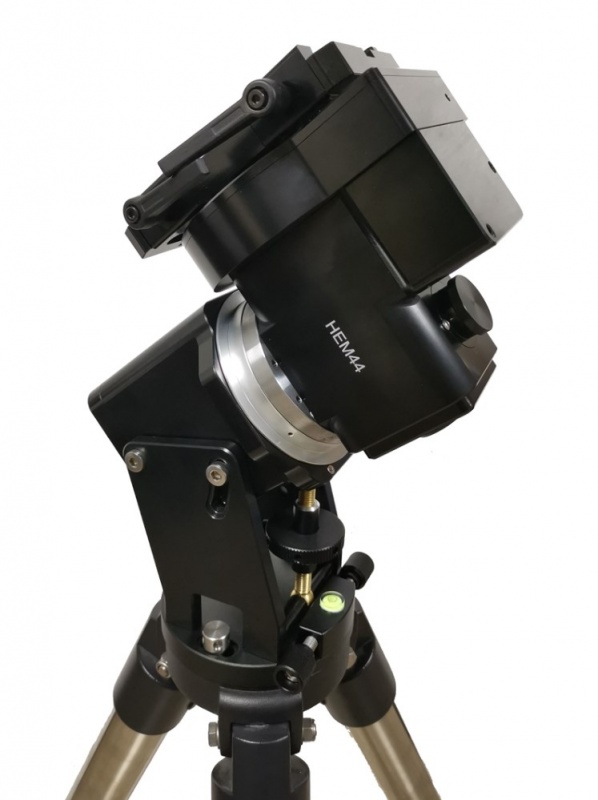
The HEM44 is one of iOptron’s latest hybrid strain wave drive mounts. It is designed to deliver a revolutionary astronomy experience free from cumbersome counterweights and shafts. With a compact and lightweight design, this advanced payload mount can handle up to 20 kg (44 lb) of weight without requiring a counterweight or shaft. Built with precision and expertise gained over decades, the HEM44s utilize advanced strain wave drive technology for the RA movement and a backlash-free DEC worm/belt drive design to deliver unparalleled weight to payload efficiency.
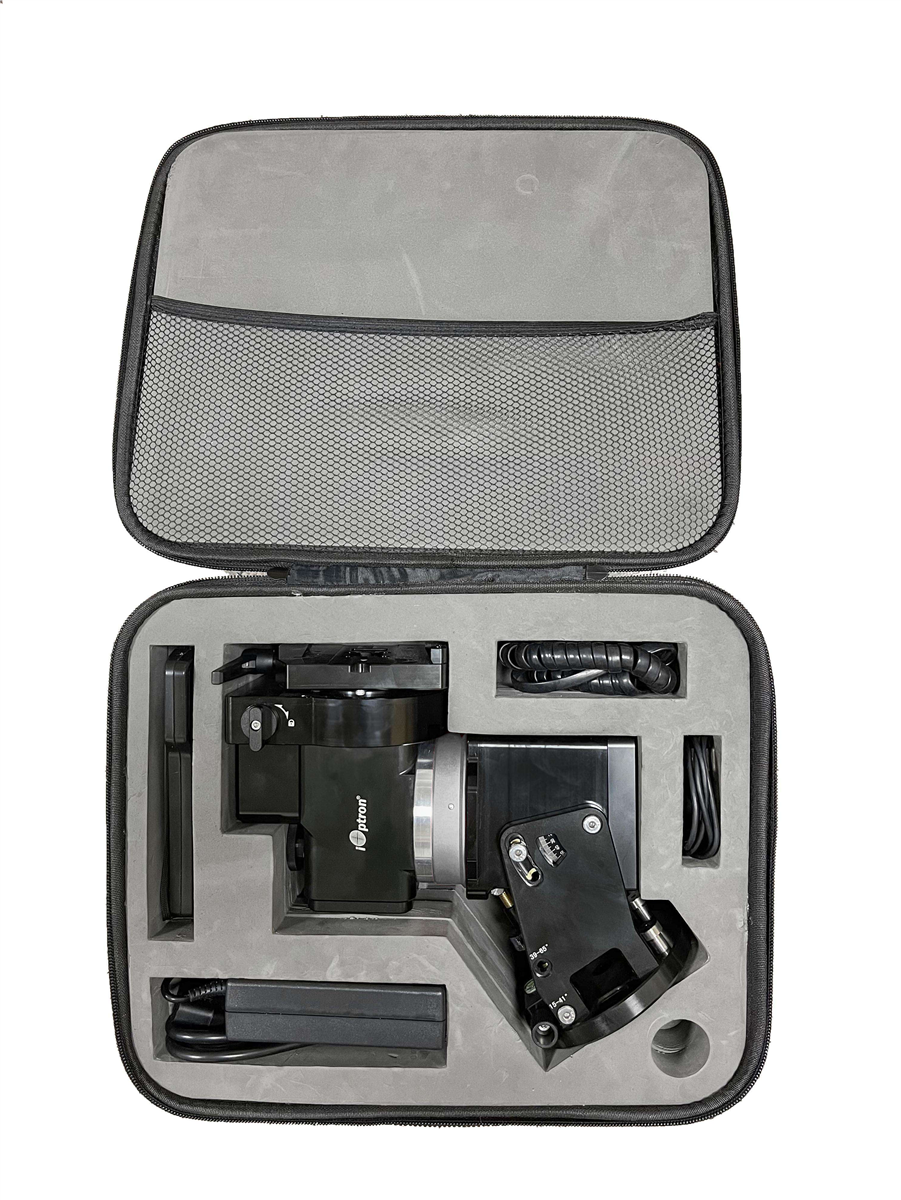
The mount’s black anodized all-metal CNC machined body is rugged and aesthetically appealing. It comes equipped with an electronic friction brake and power-down memory, allowing the mount to safely stop and resume a GoTo slew or continue tracking after an abrupt power loss without needing to realign from scratch. The HEM44 mount can be controlled by a computer via ASCOM/Commander for Windows PC, a third-party INDI driver for MacOS software, a smartphone/tablet via iOptron Commander Lite or an app like SkySafari, or a Raspberry Pi device via INDI driver. Other features of the HEM44 mount include a 270-second gear period, a Go2Nova hand controller with a database of approximately 212,000 objects, a cable management system that eliminates hanging exterior cables to moving parts, a dual saddle that accommodates Vixen and Losmandy-D styles, a built-in zero position search and locator, an integrated ST-4 auto-guiding port, built-in Wi-Fi via the hand controller, a USB port for firmware upgrades and computer control, and an aluminum carrying case.
Full Harmonic Drive Mounts
Introduction
To understand the engineering behind Dual-Axis Strain Wave Gear (Harmonic Drive) mounts, it helps to examine how completely they depart from traditional German Equatorial Mounts (GEMs). By integrating high-torque harmonic gears into both the Right Ascension (RA) and Declination (DEC) axes, these mounts offer an unprecedented payload-to-weight efficiency for astrophotographers. This unique mechanical leverage allows a featherweight 5 kg mount head to safely carry over 15 kg of advanced telescope gear. Because the high-torque internal gears natively handle immense off-center loads, this design completely eliminates the need for heavy steel counterweights that are normally mandatory to balance a telescope payload. Furthermore, users can completely skip the time-consuming process of performing physical telescope balancing routines before every imaging session. The internal mechanics also completely eliminate traditional gear meshing, freeing owners from the tedious chore of long-term gear adjustments and maintenance. Additionally, the unique teeth mesh tightly enough to boast zero mechanical backlash, which means the mount changes tracking directions instantly without any lag. Finally, these systems offer dual Alt-Azimuth and Equatorial versatility, allowing you to easily switch between casual visual stargazing and tracking deep-sky astrophotography objects.
However, this design introduces unique compromises. Because a strain wave gear relies on a flexible metal cup deflecting inside an outer ring, the system inherently produces a steep periodic error (PE) curve with rapid, short-term frequency spikes. Real-world field testing has proven that deploying a standard 0.5 to 1-second autoguiding loop in software like PHD2 easily handles these spikes, consistently keeping the final tracking error well below one arcsecond. Furthermore, the compact, central placement of the RA motor housing completely obstructs the internal hollow channel required for an old-school optical polar scope, forcing an absolute reliance on computerized alignment software. Additionally, because these mounts are incredibly lightweight but can carry massive telescope loads, they create a highly top-heavy center of gravity. This requires a much stiffer, highly stable tripod class, and imagers often have to add a heavy weight or stone bag to the tripod base—not for telescope balancing, but simply to keep the entire rig firmly grounded against tip-over risks in high winds. Finally, due to the complete lack of physical balancing resistance, these mounts must incorporate internal electronic or mechanical safety brakes to prevent a catastrophic telescope “back-drive” collision with the tripod legs if the power cord is accidentally unplugged in the middle of the night.
iOptron HAE29C AZ/EQ
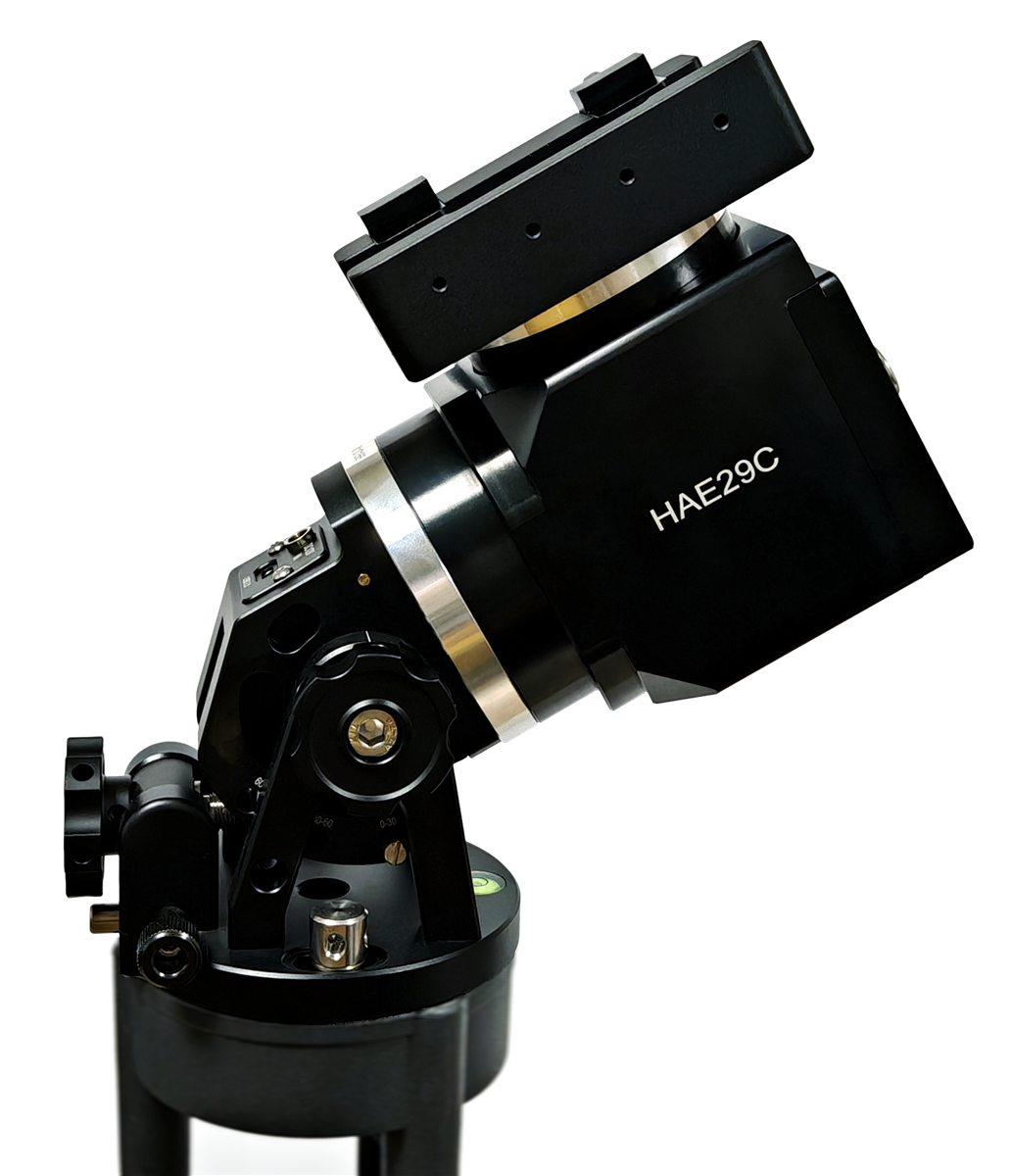
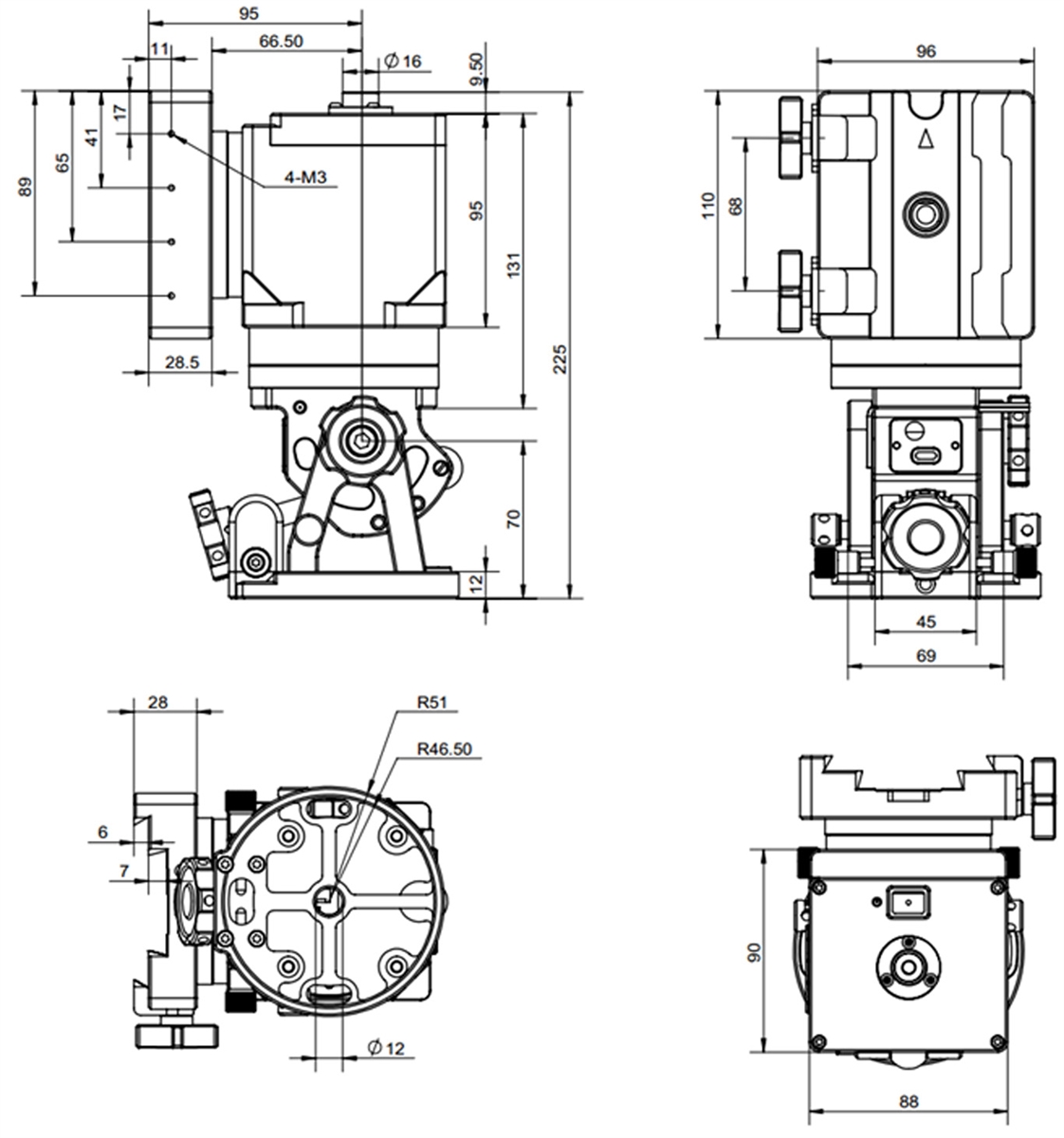
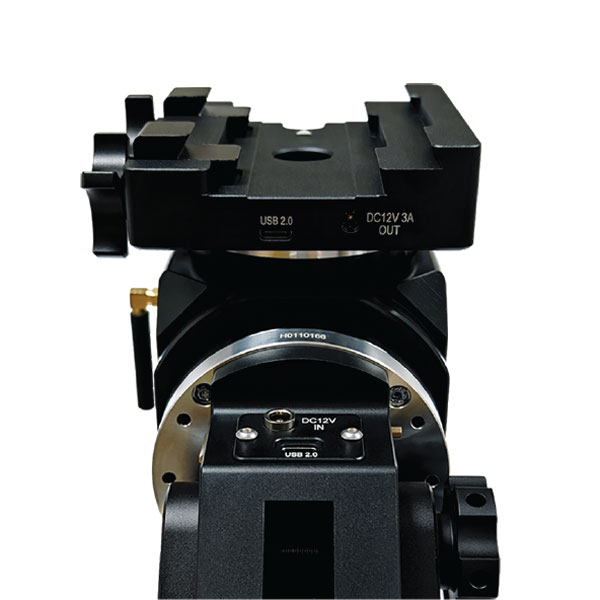
The iOptron HAE29C is widely praised across the astrophotography community as an exceptional, highly modern grab-and-go mount. By utilizing precision strain wave gear technology on both axes, it drastically maximizes efficiency, boasting a tiny 3.7 kg (8.15 lbs) mount head that can support a massive 13.5 kg (29.7 lbs) payload without a counterweight, and up to 18 kg (40 lbs) with an optional counterweight setup for heavier gear. Powering this impressive mechanical leverage are two high-torque stepper motors utilizing a hybrid reduction drive system—incorporating a quiet, vibration-dampening toothed synchronous timing belt as a pre-reduction step before feeding into the primary strain wave cogs to achieve an final reduction ratio of 480:1 on the RA axis and 360:1 on the DEC axis. Users love its dual AZ/EQ versatility, allowing it to seamlessly switch between Alt-Azimuth visual tracking and precise Equatorial astrophotography. The latest “C” model also adds a streamlined USB-C interface and a smart cable-management saddle that routes 12V power and USB ports directly to your telescope, effectively eliminating cable snags. Complete with internal Wi-Fi and electronic friction brakes that protect your optical tube during unexpected power drops, it represents a massive leap forward in ultra-portable, observatory-grade precision.
While user experiences on community forums are overwhelmingly positive, some owners note minor quirks, such as the push-pull azimuth alignment bolts feeling a bit imprecise during polar alignment, and somewhat finicky latitude range limiter bolts. Additionally, because the hybrid drive mechanics rely on a tensioned rubber timing belt tightly packed inside the housing, it does mean that long-term owners might eventually face standard belt wear over several years of heavy use. However, when it comes to actual imaging performance, real-world forum reports consistently praise its guided tracking capabilities. Once configured with standard fast-exposure settings in autoguiding software like PHD2, astrophotographers regularly achieve excellent real-world guided RMS tracking figures between 0.4 and 0.8 arcseconds. These minor ergonomic and mechanical nuances are easily managed with a little field practice, and the clear consensus is that the mount’s superb guided accuracy, rock-solid stability at full capacity, and incredible portability make it a game-changing asset.
ZWO AM5N
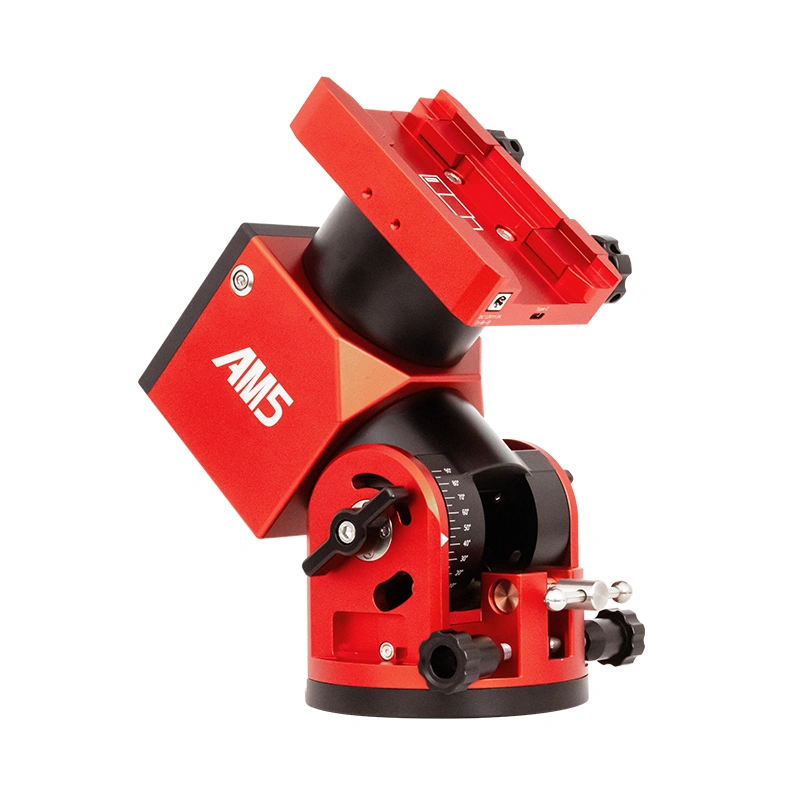
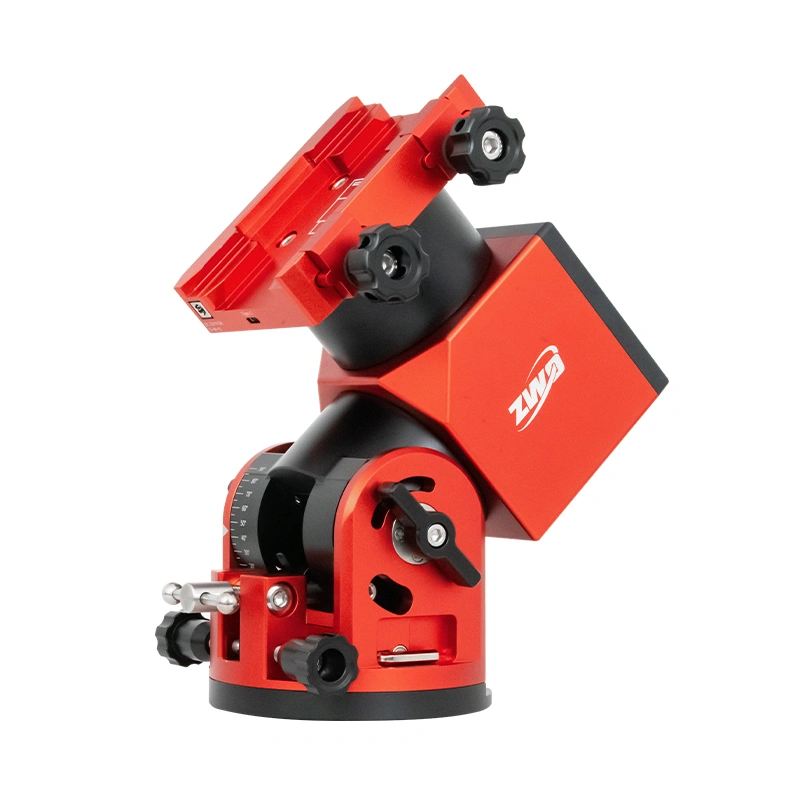
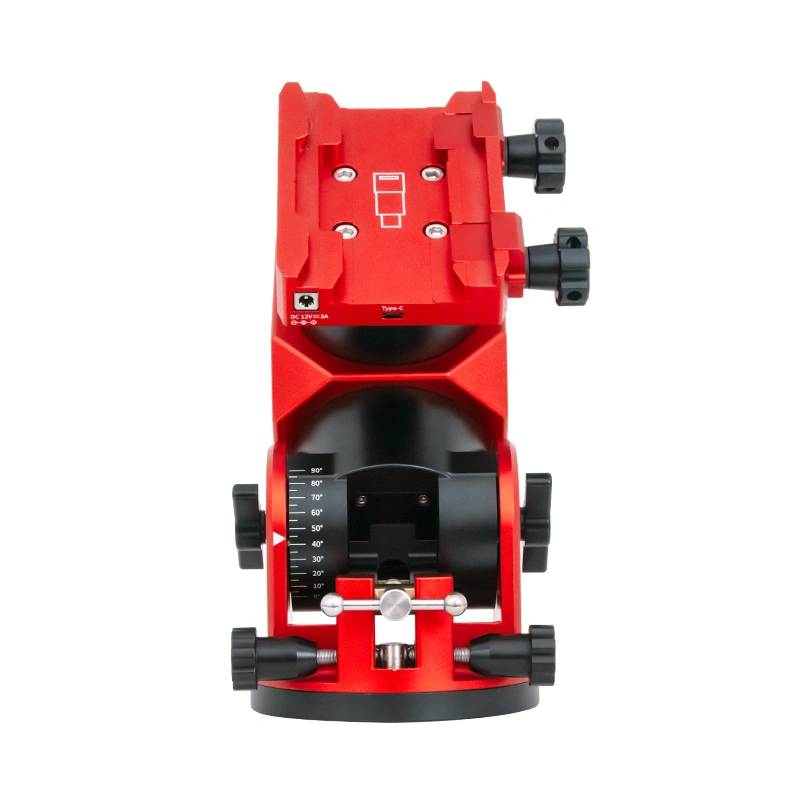
The ZWO AM5N is highly celebrated across the astrophotography community as an incredibly capable, hyper-portable powerhouse that builds perfectly on the success of its predecessor. Utilizing precision strain wave gear technology on both axes, this ultra-lightweight 5.5 kg (12.1 lbs) mount head can effortlessly support an impressive 15 kg (33 lbs) payload without a counterweight, and up to 20 kg (44 lbs) with an optional counterweight setup for heftier optical tubes. This mechanical leverage is driven by a high-torque hybrid system that utilizes a synchronous timing belt drive pre-reduction coupled with a specialized strain wave gear, yielding an excellent overall reduction ratio of 300:1 on both axes. True to its modern “N” designation, the mount introduces a brilliant internal cable-management solution that routes an integrated 12V DC power output and a USB-C port directly to the declination saddle, allowing for a full 360-degree rotation without any nightmarish cord tangles or snagging. Paired with an internal mechanical gear brake for reliable power-failure protection, it offers stellar grab-and-go convenience without sacrificing premium observatory performance.
While real-world user reviews are exceptionally positive, owners have highlighted a couple of minor hardware quirks. First, multiple users have pointed out that the mount’s Wi-Fi module is still technically housed inside the plug-in hand controller rather than the main mount chassis, meaning the controller must remain plugged in and dangling if you want a wireless connection to your phone or tablet. Second, because the system is so incredibly light, several owners note that the matching TC40 carbon fiber travel tripod can feel a bit top-heavy and sensitive to wind under heavier telescope loads, often requiring you to heavily weigh down the included tripod stone bag to ensure complete peace of mind. However, when it comes to actual imaging performance, real-world forum logs show a massive step up from the original model due to its drastically reduced ±10 arcsecond periodic error. When dialed in with standard fast-exposure autoguiding via software like PHD2, astrophotographers regularly achieve remarkable real-world guided RMS tracking figures tightly floating between 0.3 and 0.8 arcseconds. Ultimately, these minor quirks are easily managed, and the overwhelming consensus remains that the AM5N’s superb guided accuracy, vastly improved cable layout, and incredible payload-to-weight ratio make it a top-tier choice for mobile astrophotographers.
ZWO AM7
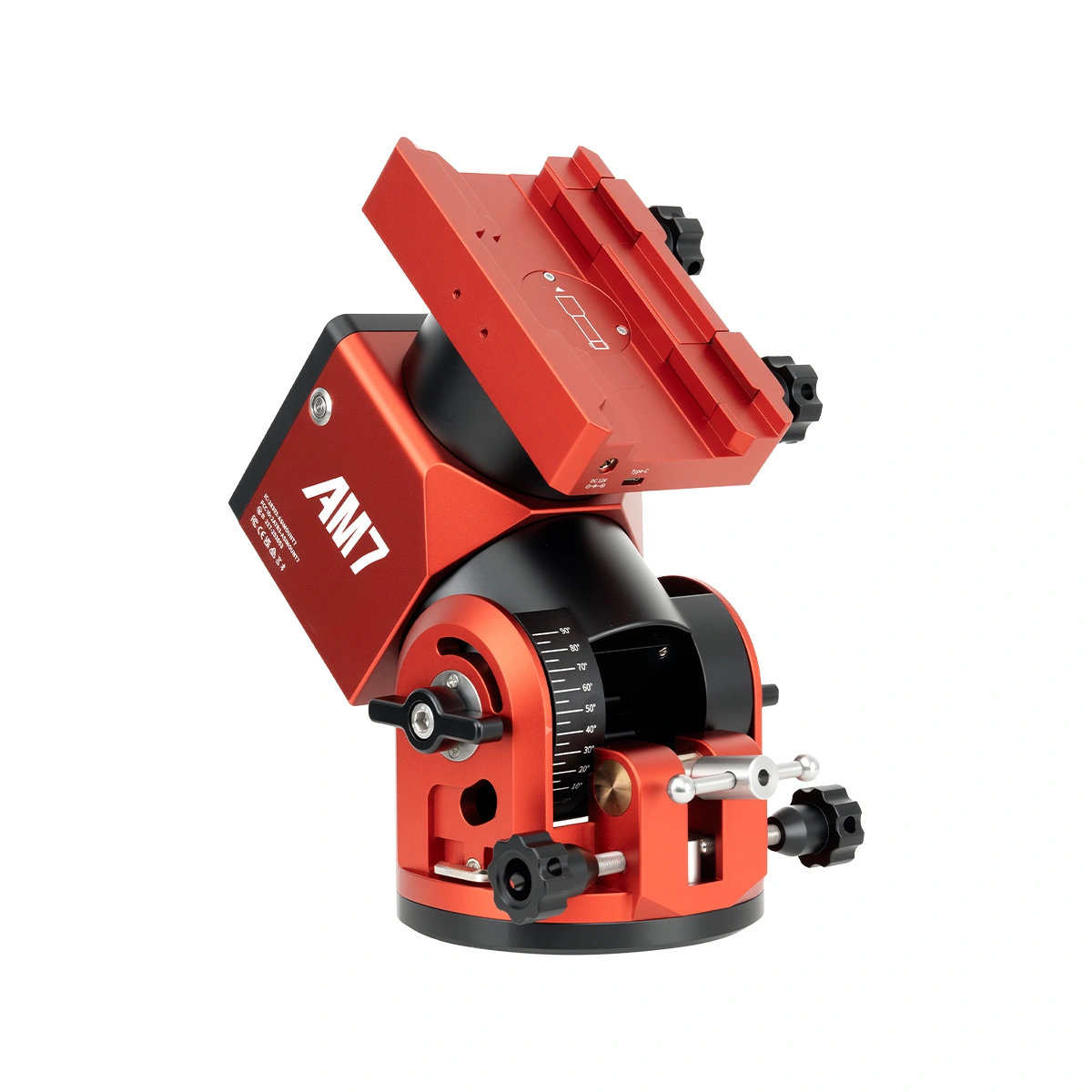
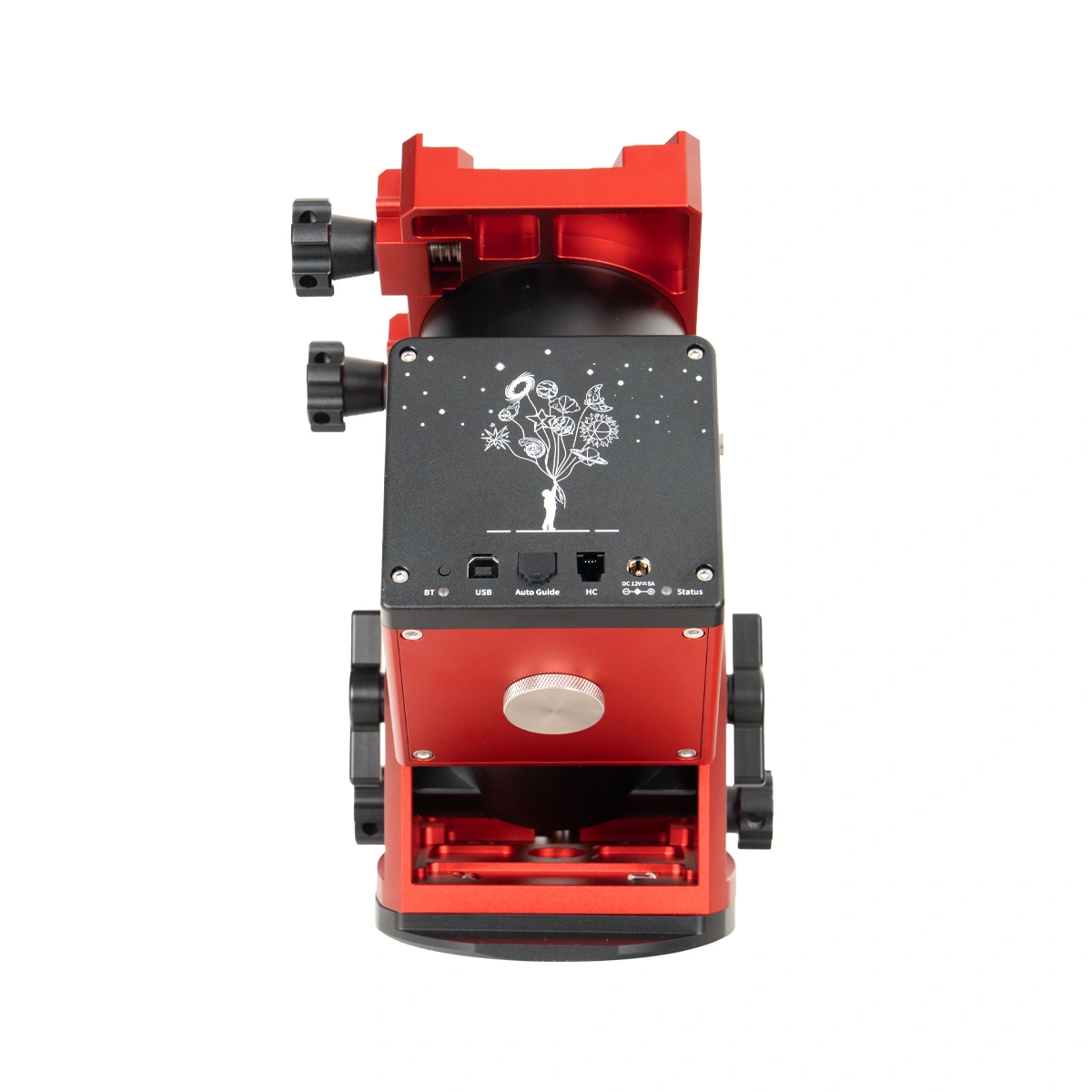
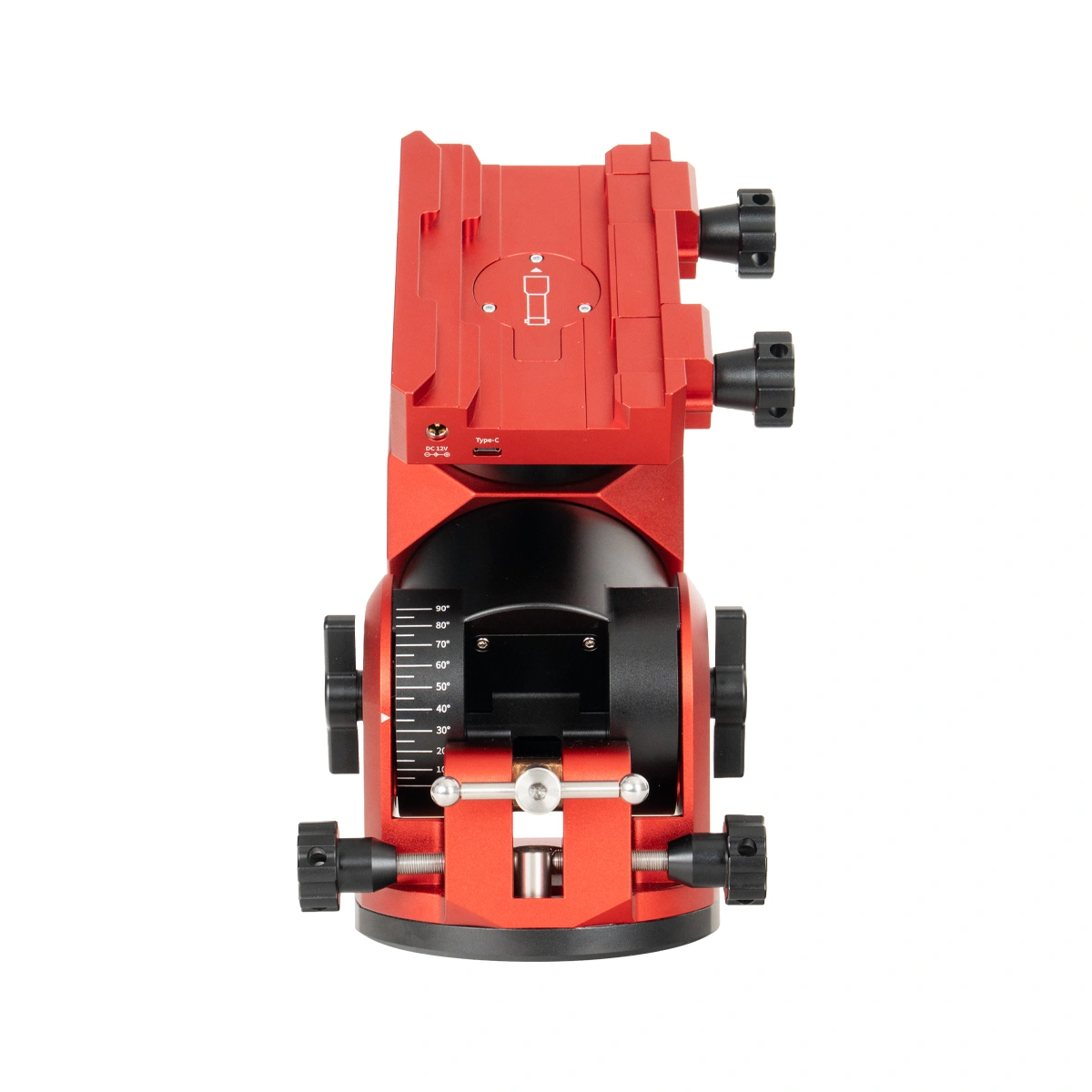
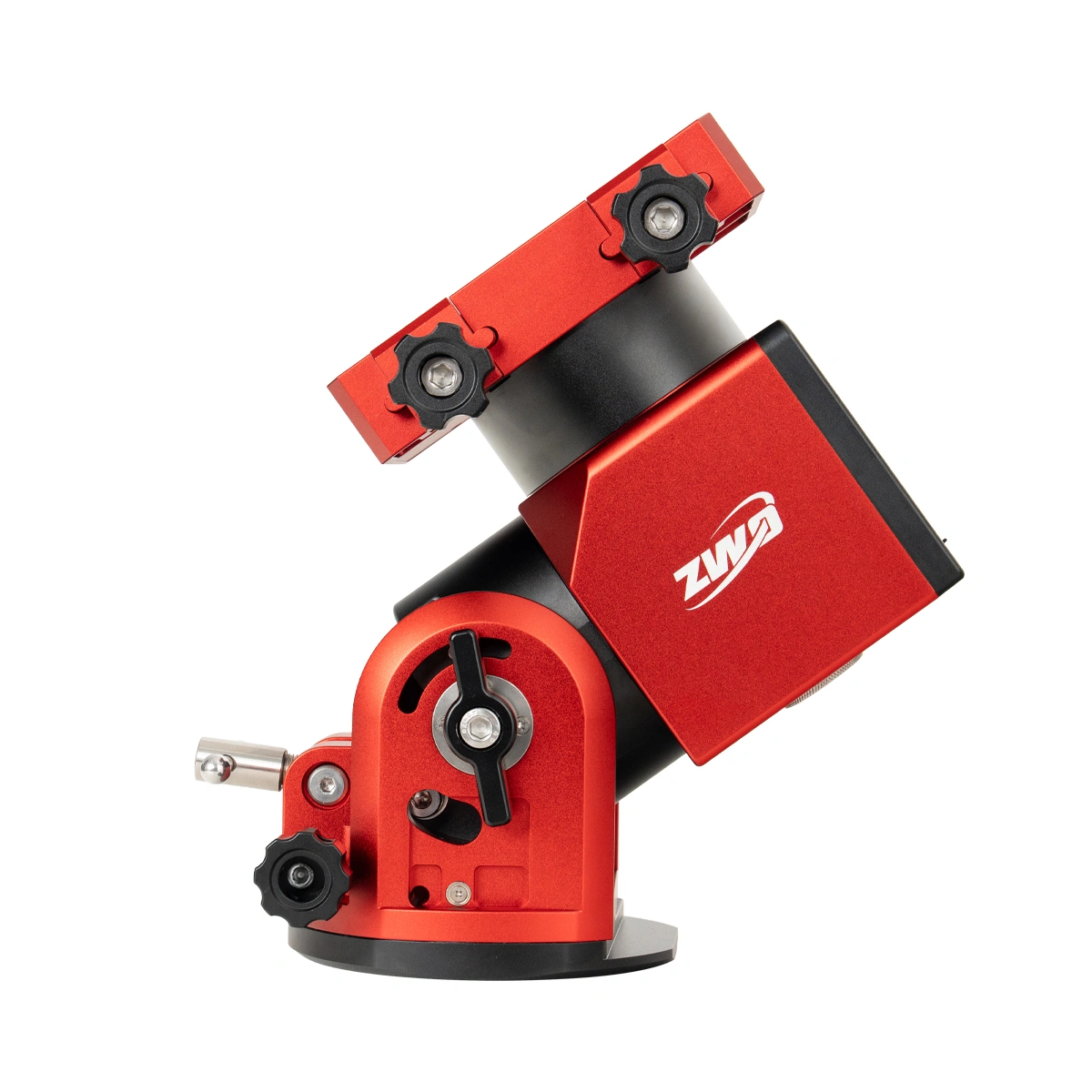
The ZWO AM7 is highly celebrated across the astrophotography community as a heavy-hitting, exceptionally robust mobile powerhouse that scales up the brand’s popular strain wave architecture for demanding setups. Utilizing high-torque internal strain wave gears paired with a 300:1 pre-drive synchronous timing belt reduction on both axes, this 6.75 kg (14.9 lbs) mount head can effortlessly command a massive 20 kg (44 lbs) payload without a counterweight. If you intend to fly larger, long-focal-length optical tubes like a heavy 10-inch or 11-inch Schmidt-Cassegrain rig, adding an optional counterweight setup securely bumps its maximum payload capacity up to 30 kg (66 lbs). True to its versatile dual-mode designation, it easily transitions between intuitive Alt-Azimuth visual tracking and precise Equatorial tracking. It also comes standard with ZWO’s individual periodic error (PE) testing—guaranteeing its baseline error remains within a tight $\pm10$ arcseconds. Furthermore, it incorporates a highly appreciated smart cable-management saddle with integrated USB-C and 12V DC power outputs right at the dovetail plate. This drastically reduces dangling cords, eliminating any risk of catastrophic cable snags during wide tracking slews or automatic meridian flips.
While first-hand user experiences on forums like Cloudy Nights and Stargazers Lounge are highly enthusiastic, early adopters have highlighted a couple of real-world quirks when handling such massive payloads on a compact frame. First, several owners emphasize that because strain wave mounts undergo significant and sudden load shifts when slewing heavy, unbalanced setups, it is absolutely imperative to clamp the altitude locking levers completely down—with some users even utilizing Allen keys on the lever sockets to prevent the altitude play from subtly throwing off a precise polar alignment. Second, experienced imagers note that because the mount head is so small relative to its immense lifting power, placing it on standard lightweight carbon fiber travel tripods can feel unnervingly top-heavy, making a heavily weighted stone bag or a much wider, stiffer tripod choice critical for total stability in high winds. However, when it comes to long-exposure autoguiding performance, the AM7 completely delivers. Once paired with rapid 0.5 to 1.5-second exposure intervals in guiding software like PHD2 or an ASIAIR to smooth out its steep harmonic periodic curve, astrophotographers routinely document outstanding real-world guided RMS tracking figures holding steadily between 0.4 and 0.7 arcseconds. Ultimately, these minor stability considerations are easily accounted for in the field, and the clear consensus is that the AM7’s incredible payload-to-weight ratio, pristine tracking accuracy, and clean cable layout make it a premium, game-changing choice for serious mobile imagers
Sky Watcher Wave 150i
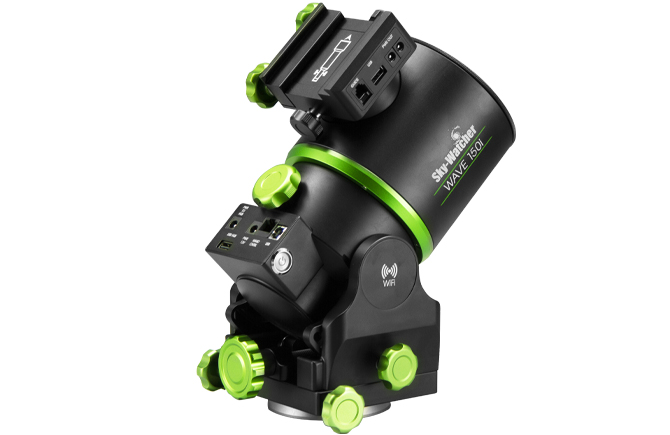
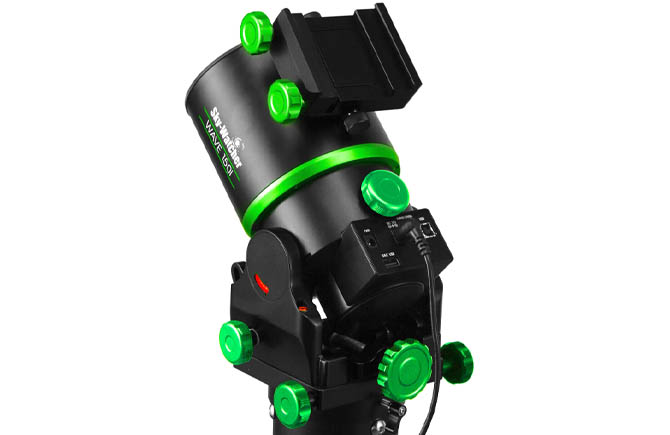
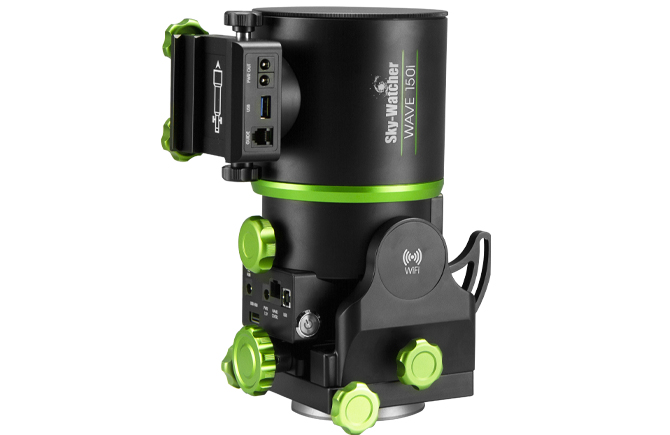
The Sky-Watcher Wave 150i is a prominent contender in the intermediate strain wave market, offering a highly versatile dual-axis harmonic drive platform that weighs just 5.8 kg (12.8 lbs) yet boasts an impressive native payload capacity of 15 kg (33 lbs) without any counterweights. If you attach an optional counterweight kit, that capacity ramps up to a hefty 25 kg (55 lbs), making it an appealing, lightweight replacement for back-straining mounts like the classic EQ6-R Pro. A major standout engineering feature is its advanced internal through-mount cabling; Sky-Watcher equipped the mount with a stationary internal connection route that passes all the way up to a dedicated Declination saddle hub, preventing a single trailing cable from snagging during a meridian flip. Additionally, it natively supports both Alt-Azimuth and Equatorial tracking configurations, integrates with third-party control systems or the wireless SynScan app, and features a built-in red LED map light to preserve night vision. For users who prefer a tactile experience, it features a physical handset port that maintains native compatibility with Sky-Watcher’s classic SynScan hand controller, though it is sold separately.
Real-world user feedback highlights a few mechanical nuances that buyers should anticipate. Because it is an ultra-lightweight strain wave mount handling large telescope payloads, the system creates a top-heavy center of gravity that relies heavily on a rock-solid tripod class; users occasionally note that the factory rubber feet can feel slightly “squishy” in sudden wind gusts, making a stiff carbon fiber or steel pillar extension a highly popular upgrade. Mechanically, several early adopters reported encountering a stiff altitude adjustment knob right out of the box, though this smoothly loosens up after a brief initial break-in period. Fortunately, when it comes to tracking performance, the mount is an exceptional performer. Imagers note that while it exhibits the typical harmonic periodic error curve common to all strain wave gears, real-world field results prove that modern autoguiding software can tames these spikes; by utilizing short, fast 0.5 to 1-second exposure cadences in software like PHD2 or an ASIAIR, the mount easily locks on to deliver an outstanding 0.35″ to 0.70″ total RMS tracking accuracy over long-exposure deep-sky sequences.
iOptron HAE43C AZ/EQ
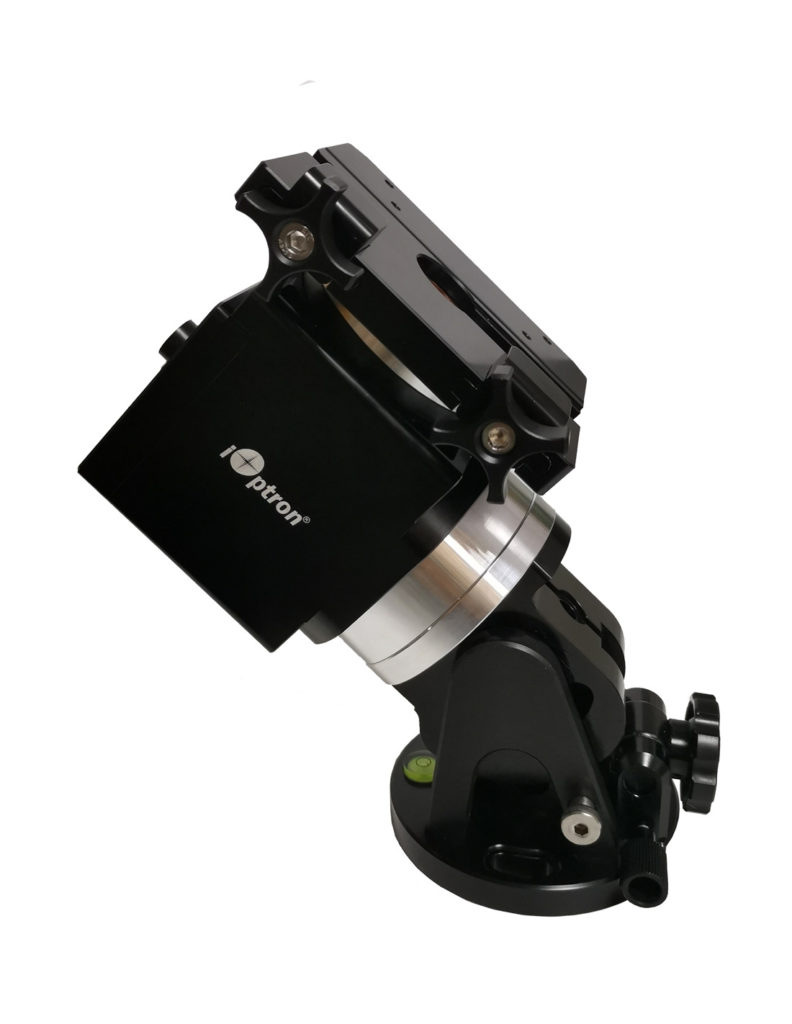
The iOptron HAE43C is widely celebrated across the astrophotography community as a high-capacity, exceptionally portable mid-sized titan. Utilizing precision strain wave gear technology on both axes, it drastically maximizes efficiency, boasting a lightweight 5.7 kg (12.6 lbs) mount head that can effortlessly manage an incredible 20 kg (44 lbs) payload without a counterweight, and up to 25 kg (55 lbs) with an optional counterweight setup for heavier gear. Powering this impressive mechanical leverage are two high-torque stepper motors utilizing a hybrid reduction drive system—incorporating a quiet, vibration-dampening toothed synchronous timing belt as a pre-reduction step before feeding into the primary strain wave cogs to achieve an immense final reduction ratio of 640:1 on the RA axis and 480:1 on the DEC axis. Users love its dual AZ/EQ versatility, allowing it to seamlessly switch between intuitive Alt-Azimuth visual tracking and precise Equatorial astrophotography. True to the latest “C” model design, it boasts a built-in Wi-Fi motherboard, a direct USB-C interface, and a smart cable-management saddle that routes 12V power and USB ports directly to your telescope to effectively eliminate cable snags. Complete with electronic friction brakes that protect your optical tube during unexpected power drops, it represents a massive leap forward in ultra-portable, observatory-grade precision.
While user experiences on community forums like Cloudy Nights and Stargazers Lounge are highly enthusiastic, real-world field use reveals a couple of minor hardware quirks. First, because the HAE43 utilizes a broader 120mm base diameter with side-mount locking screws rather than a traditional central T-bolt, it is natively incompatible with common lightweight travel tripods or standard smaller mini-piers, typically requiring owners to use iOptron’s heavier-class tripods (like the LiteRoc series). Second, because the hybrid mechanics rely on a tensioned rubber timing belt tightly packed inside the housing to drive the gear system, long-term owners should keep in mind that the belt will eventually experience standard wear over several years of heavy field duty. However, when it comes to actual imaging performance, real-world forum reports consistently praise its guided tracking capabilities. Once configured with standard fast-exposure settings (often between 0.5 and 1.5 seconds) in autoguiding software like PHD2 to smooth out the inherent periodic error of strain wave gears, astrophotographers regularly achieve excellent real-world guided RMS tracking figures fluctuating tightly between 0.4 and 0.8 arcseconds. Ultimately, these minor nuances are quickly managed with a little field practice, and the clear consensus is that the HAE43C’s superb guided accuracy, massive weight capacity, and incredible portability make it a premium, game-changing choice.
*Note: Astroshop only appears to have the more expensive HAE43C-EC version
Pegasus Astro NYX-88
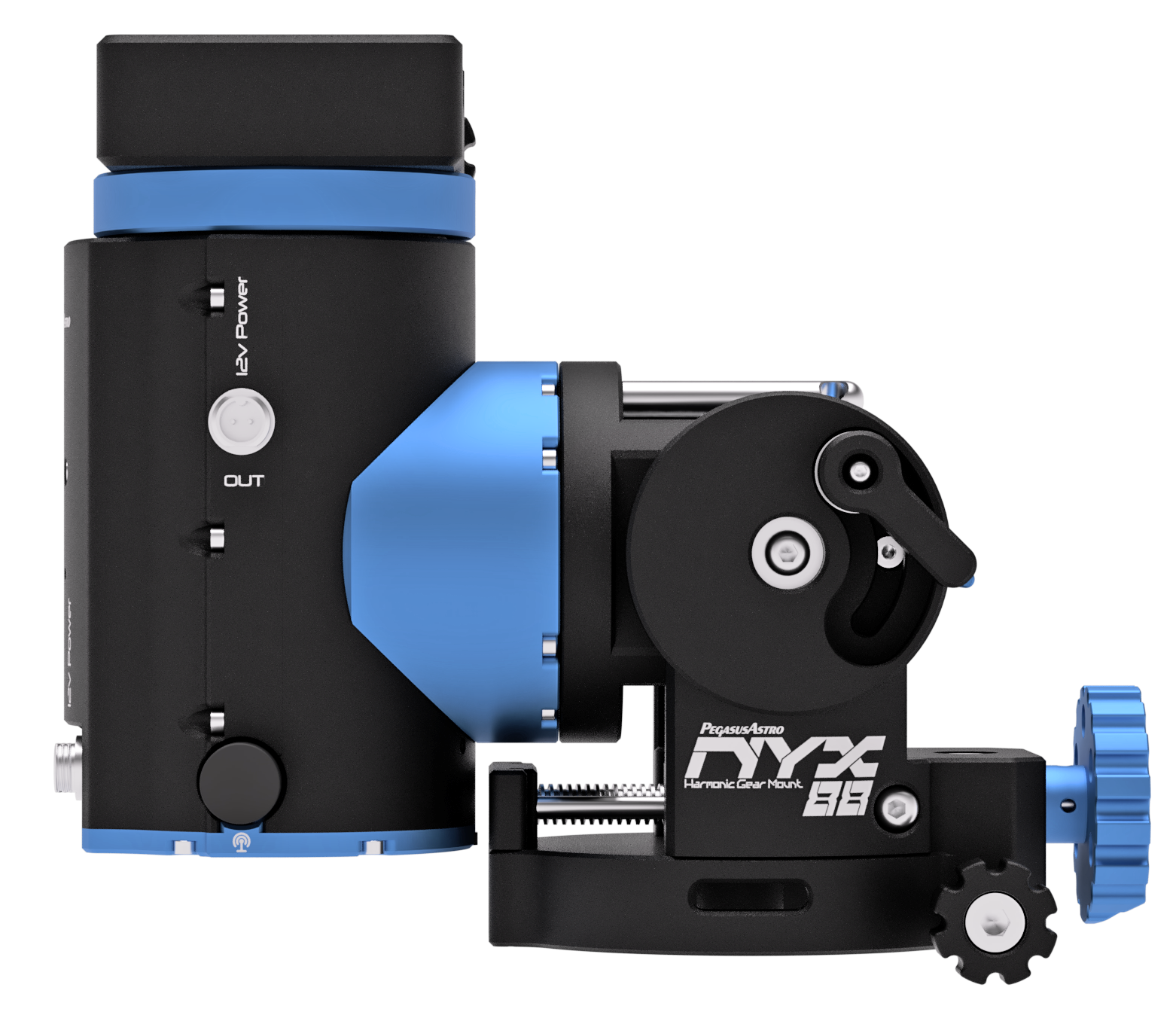
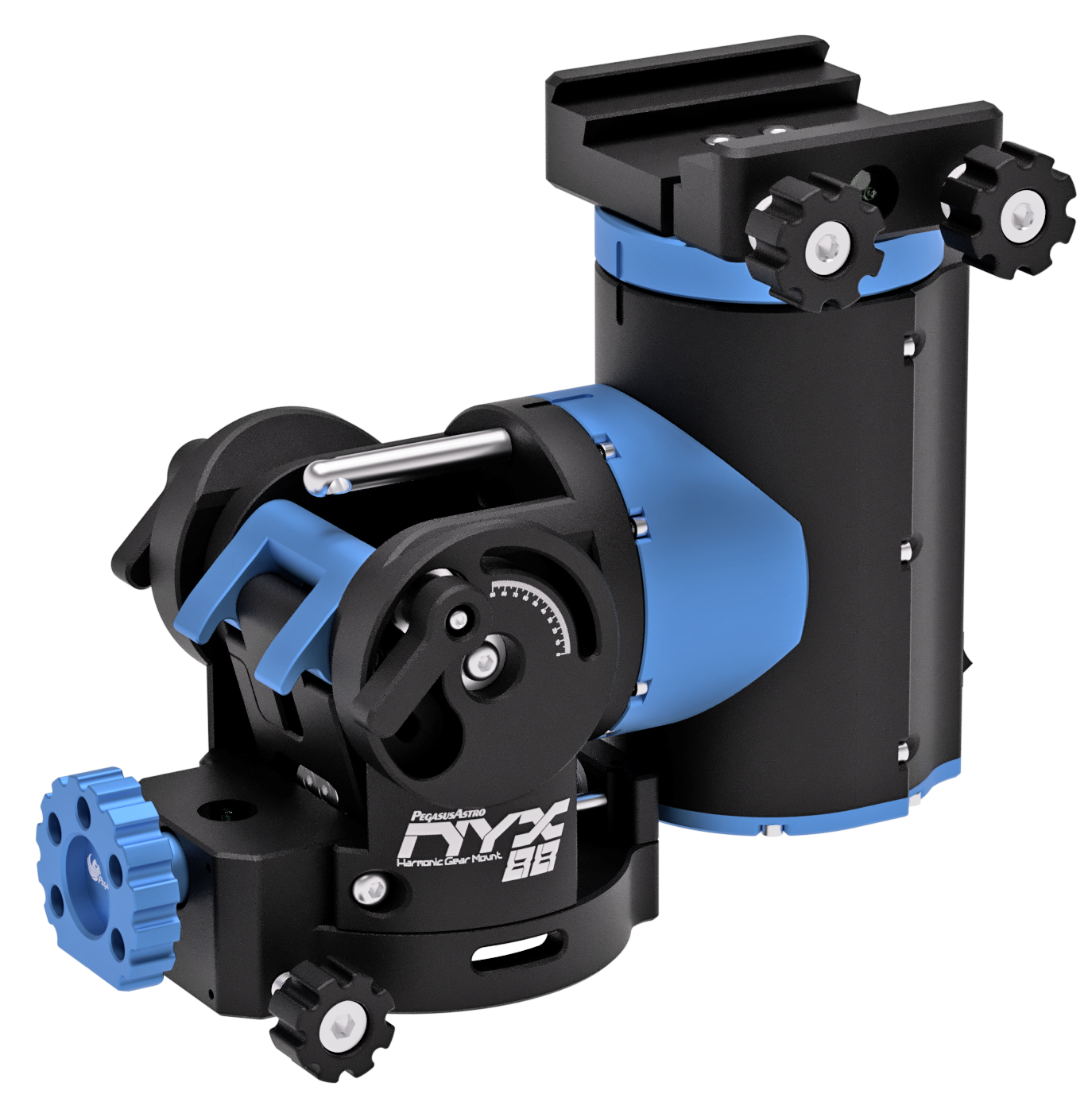
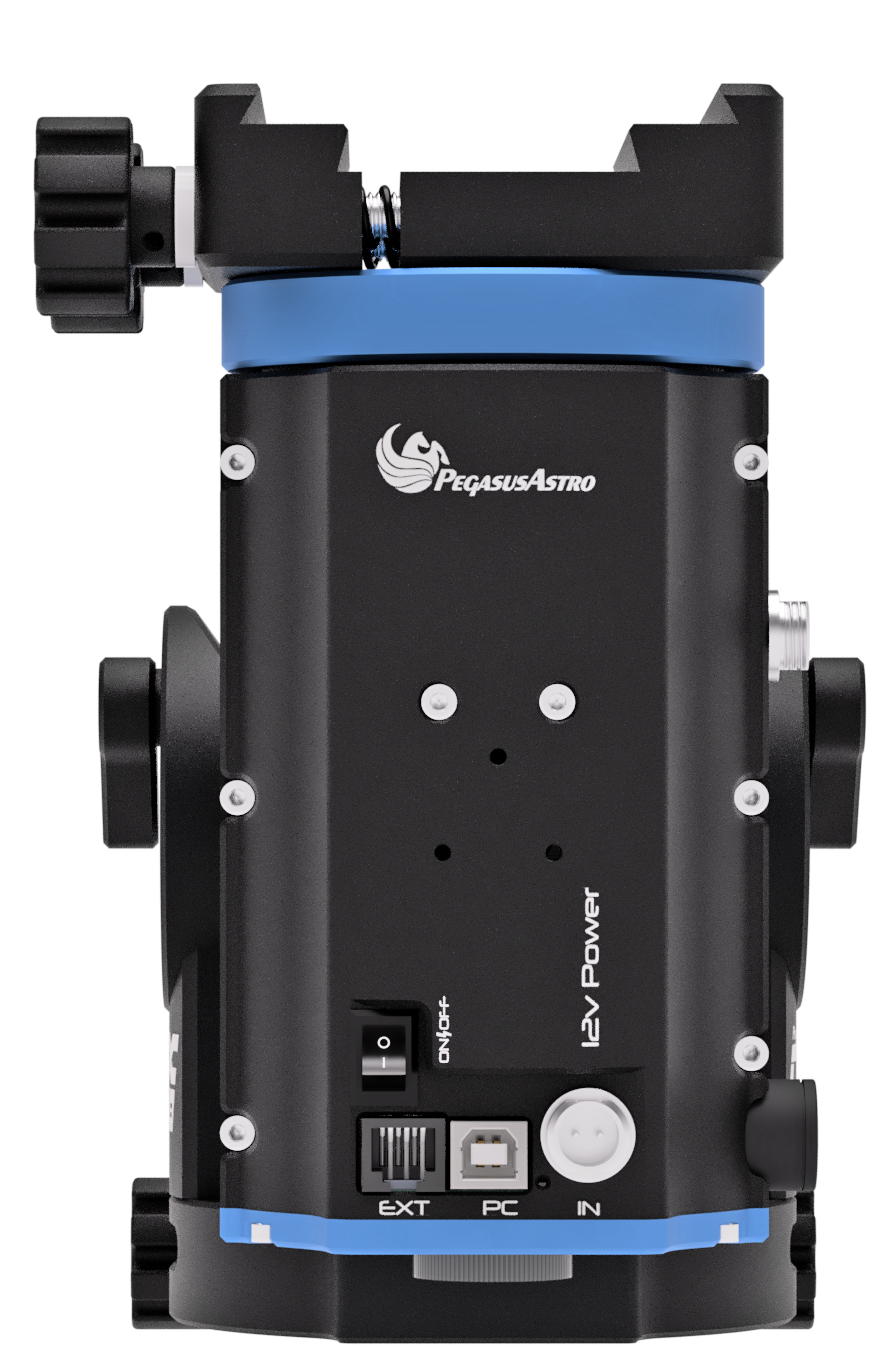
The Pegasus Astro NYX-88 is highly celebrated across the astrophotography community as a premium, ultra-portable powerhouse tailored specifically for mobile deep-sky imagers. Utilizing precision strain wave gears on both axes, this beautifully CNC-machined 5 kg (11 lbs) mount head can comfortably support an impressive 14 kg (31 lbs) payload without a counterweight, which can be pushed even higher by utilizing the built-in M12 threaded shaft hole to add an optional counterweight setup for heavier telescopes. This immense lifting leverage is driven by high-torque stepper motors paired with a synchronous belt drive pre-reduction, offering an extremely fine tracking resolution down to 0.15 arcseconds. Astronomers love its versatile dual Alt-Azimuth and Equatorial functionality, allowing for seamless switching between casual visual observation and demanding photography. Furthermore, the NYX-88 sets itself apart by natively incorporating an integrated web server that communicates seamlessly with driverless ASCOM Alpaca clients alongside built-in Wi-Fi and a secure GX12 power connector. Complete with an electronic brake on the RA axis to securely lock your optical tube during an unexpected power loss, it delivers rock-solid, travel-ready observatory tracking.
While user experiences are positive, real-world field use reveals a couple of quirks. First, because the mount features a remarkably lightweight frame, multiple users point out that pushing its capacity close to that 14 kg limit—especially with high-torque, long-focal-length setups like a 130mm refractor or a deep-body Schmidt-Cassegrain—can cause the motors to work under massive strain and occasionally slip or produce a high-pitched protest if the telescope’s center of gravity is too high. Imagers emphasize that because strain wave mounts are heavily impacted by a telescope’s physical torque and moment of inertia, running a small counterweight or sticking to lower-profile imaging trains is highly recommended for heavier gear. Second, some early owners have noted a slight software learning curve regarding the mount’s internal time-setting behavior, which occasionally requires careful synchronization through the Pegasus Unity Platform or mobile application to prevent time mismatch errors when establishing an initial connection to N.I.N.A. or ASCOM. However, when it comes to actual performance under the stars, the mount is highly praised; once configured with standard fast-exposure autoguiding intervals (0.5 to 1.5 seconds) in PHD2 to smooth out the inherent harmonic periodic curve, astrophotographers regularly document superb guided RMS tracking figures fluctuating tightly between 0.4 and 0.7 arcseconds. Ultimately, these minor operational considerations are easily mastered, and the overwhelming consensus is that the NYX-88’s incredible payload-to-weight ratio, native Alpaca architecture, and flawless tracking make it a top-tier choice for nomadic astrophotographers.
Pegasus Astro NYX-101
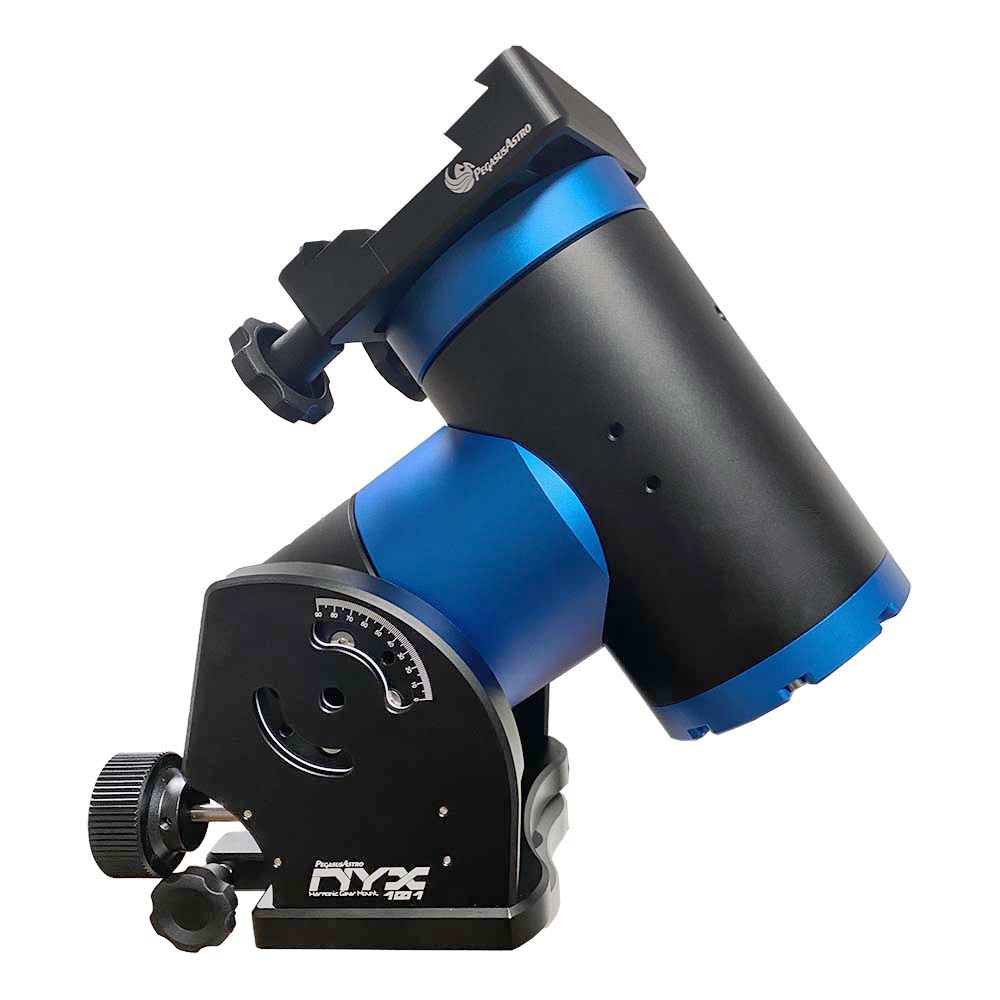
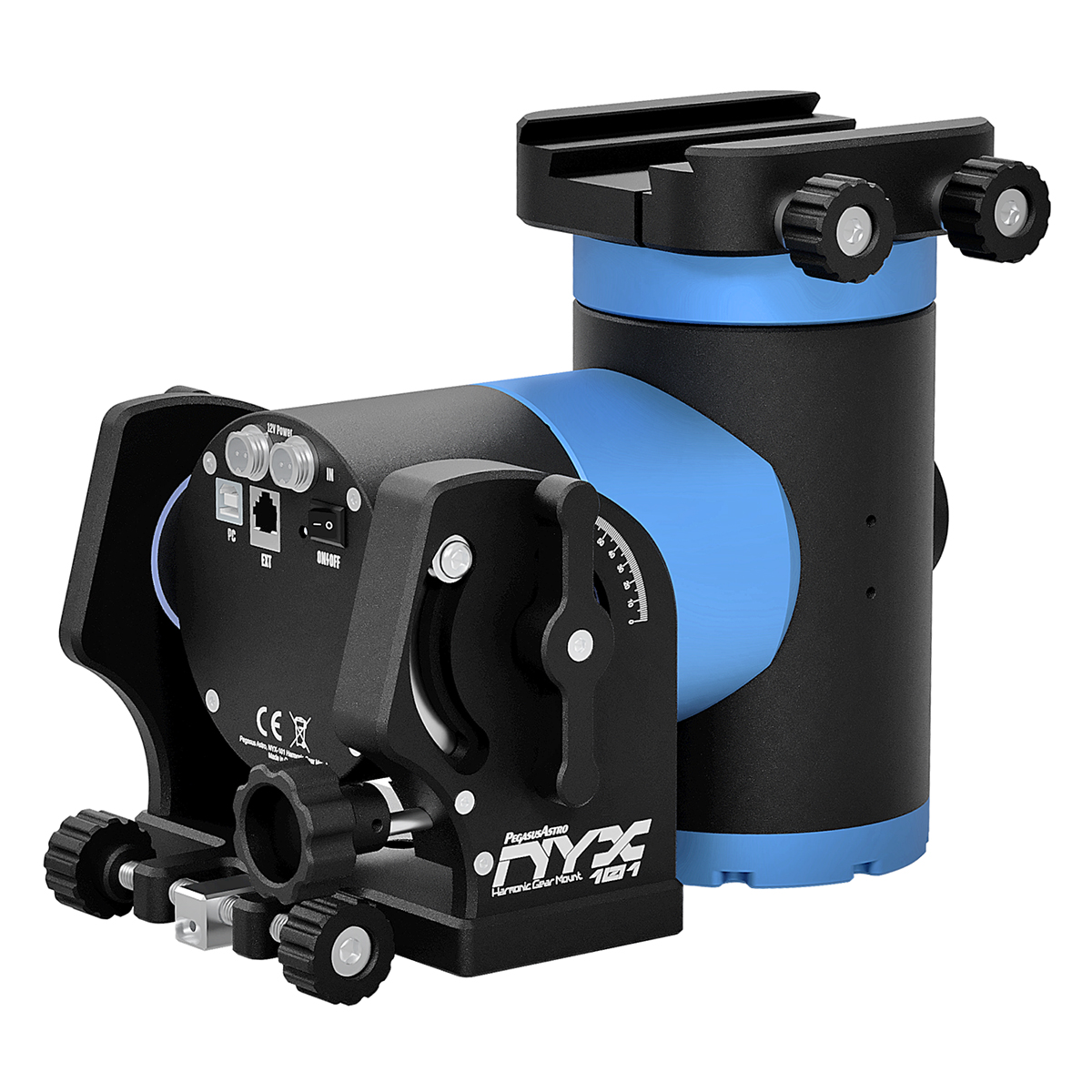
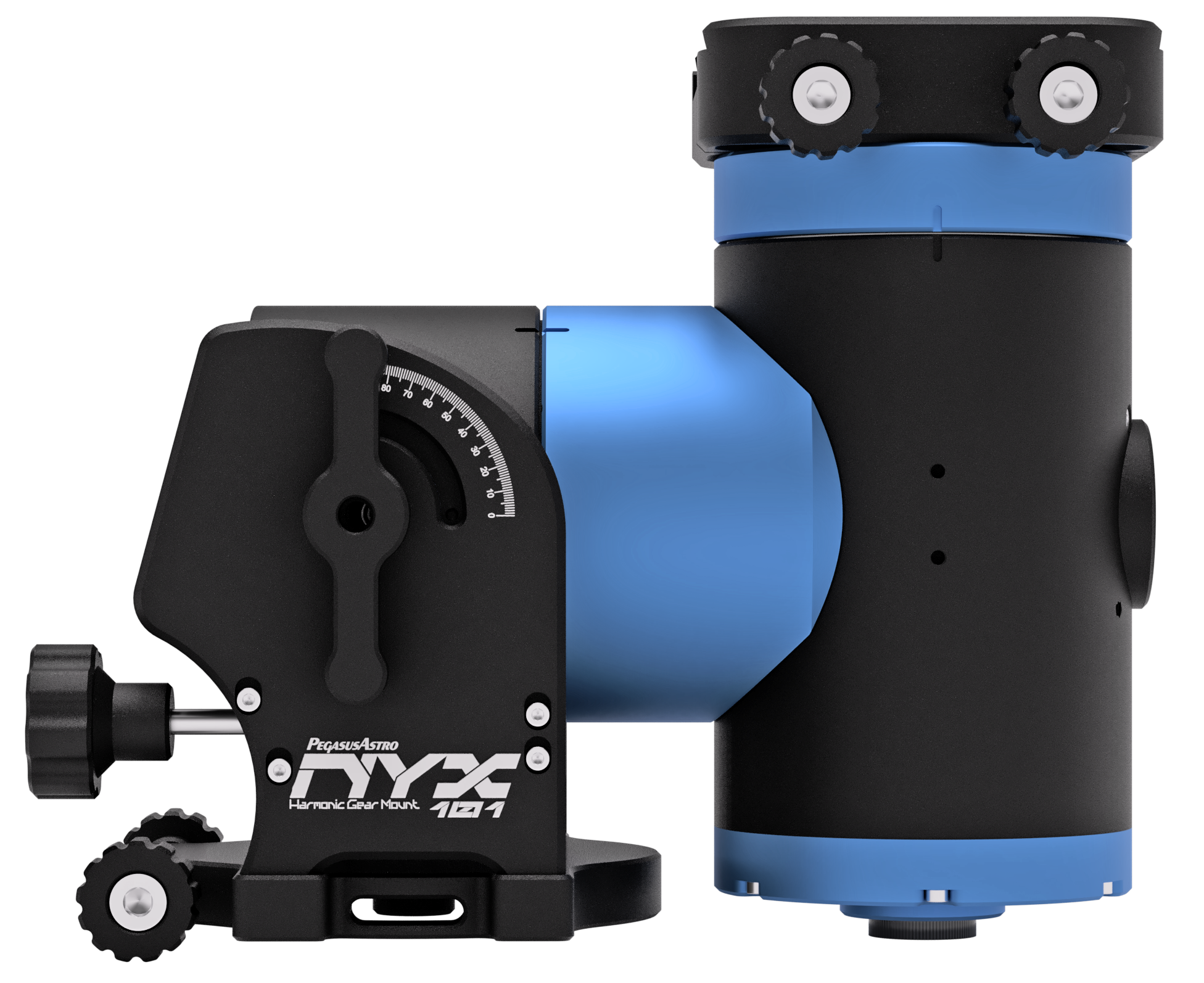
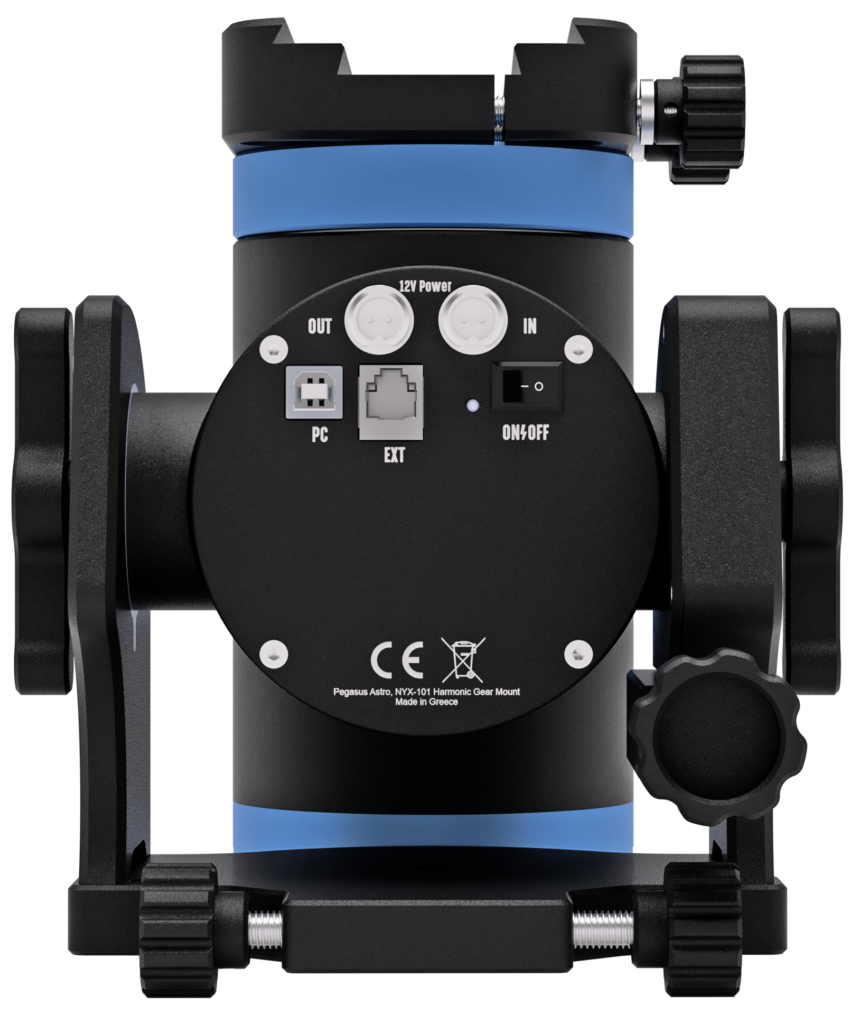
The Nyx-101 mount is a high-performing, high-payload mount designed and produced based on the inspiration from the ancient Greek goddess of the night, Nyx. With a maximum payload capacity of 20 kg (44 lbs), this mount can easily support imaging equipment without the need for counterweights or shafts. The mount uses a strain wave drive on both the RA and DEC movement, resulting in a backlash-free operation with high torque at high payloads. The mount features a fully CNC-machined aluminum alloy 6061 body, which is black and blue anodized, ensuring long-lasting performance. Additionally, the mount comes with branded parts, including stepper motors and strain wave gears, to ensure the mount performs flawlessly for years. Safety features include an electronic brake on the RA axis to prevent backsliding when the power is off, as well as safety limit stops during slew or tracking. The Nyx-101 mount is a lightweight design, weighing only 6.4 kg (14 lb), and can easily handle a wide range of telescopes, from small refractors to fully loaded SCT 11-inch telescopes. The mount can be used in either Equatorial or Alt-Az mode, making it more suitable for astrophotography and visual observations.
The mount can be switched from Equatorial to Altazimuth mode using a PC or mobile application. The Nyx-101 mount supports wireless and USB 2 connectivity and is compatible with LX200 protocol and Sky Safari for mobile interaction. The mount can operate on a DC 12 Volts Battery and requires less than 0.6Amp during tracking and up to 2.5 Amps during slewing. The mount includes a low profile and rigid universal saddle that accepts Vixen and Losmandy dovetails. Additional features of the Nyx-101 mount include an integrated ST-4 Autoguiding Port, Polemaster Adapter for precise polar alignment, electronic assistant for initial polar alignment, reverse voltage polarity protection, ASCOM, INDI, Sky Safari support, and mobile control. The mount also features safety limit encoders on the RA Axis to prevent internal cable snag or collision with the tripod. Firmware upgrades are also easily achievable, allowing users to stay up-to-date with bug fixes and new features. Overall, the Nyx-101 mount is an excellent choice for astrophotographers and astronomers who require a high-performing and reliable mount that can easily handle high payloads.
My Top Picks
🚀 Top 3 Modern Strain Wave Mounts
The ultimate mobile powerhouse. It hits the perfect sweet spot by smoothing out periodic error down to ±10 arcseconds and routing power/USB lines directly through the saddle—completely eliminating standard travel cable snags.
A dual-axis strain wave titan carrying massive 20 kg (44 lb) imaging packages with zero counterweight or balance requirements. Features a flawless anodized aerospace frame running driverless, cross-platform ASCOM Alpaca network integration.
Sky-Watcher’s refined entry into the harmonic market. Natively manages a 15 kg (33 lbs) load counter-free, routes cables internally through the chassis frame, and crucially keeps a handset connection port for tactile astronomy setups.
4 Replies to “Best Advanced Telescope Mounts for Astrophotography (2026 guide)”