As the warm nights return, the Milky Way’s bright band stretches from the Northern Cross of Cygnus down through Cepheus, Vulpecula, Serpens, and into the heart of Sagittarius. Each of these constellations hides standout nebulae—giant glowing clouds, delicate filaments, and jewel-bright clusters—that make summer astrophotography so much fun.
Below, we’ll explore each constellation in turn, with a friendly introduction and a table of “must-shoot” deep-sky objects. Throughout the post, I’ll also show you some of my own photos that I’ve captured and processed—so you can see what’s possible. You’ll find some useful tips—whether you’re just starting out with a DSLR and star tracker to capture the Milky Way’s summer core, using a short focal length lens or telescope for Rho Ophiuchi, or chasing ultra-deep targets with a cooled camera and a large telescope on an EQ mount with a guide camera and guide scope.
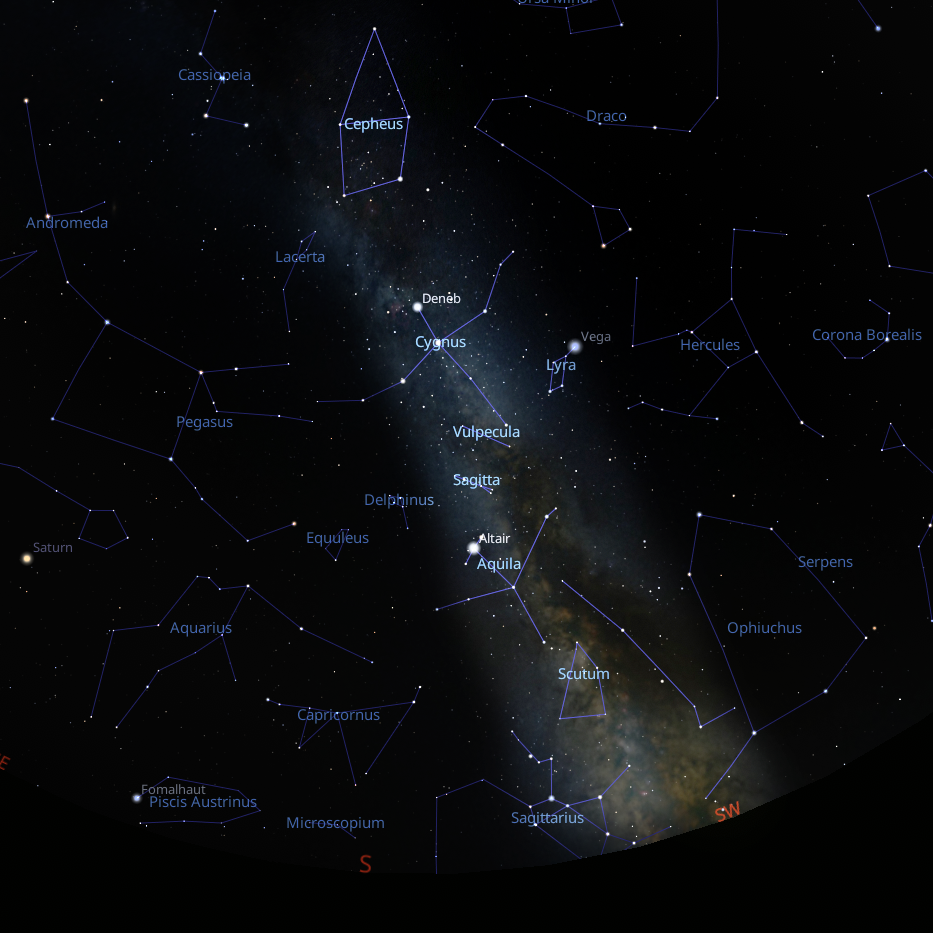
Cepheus (“The King”)
Always circling near Polaris, Cepheus is visible year-round and packed with rewarding narrowband targets.
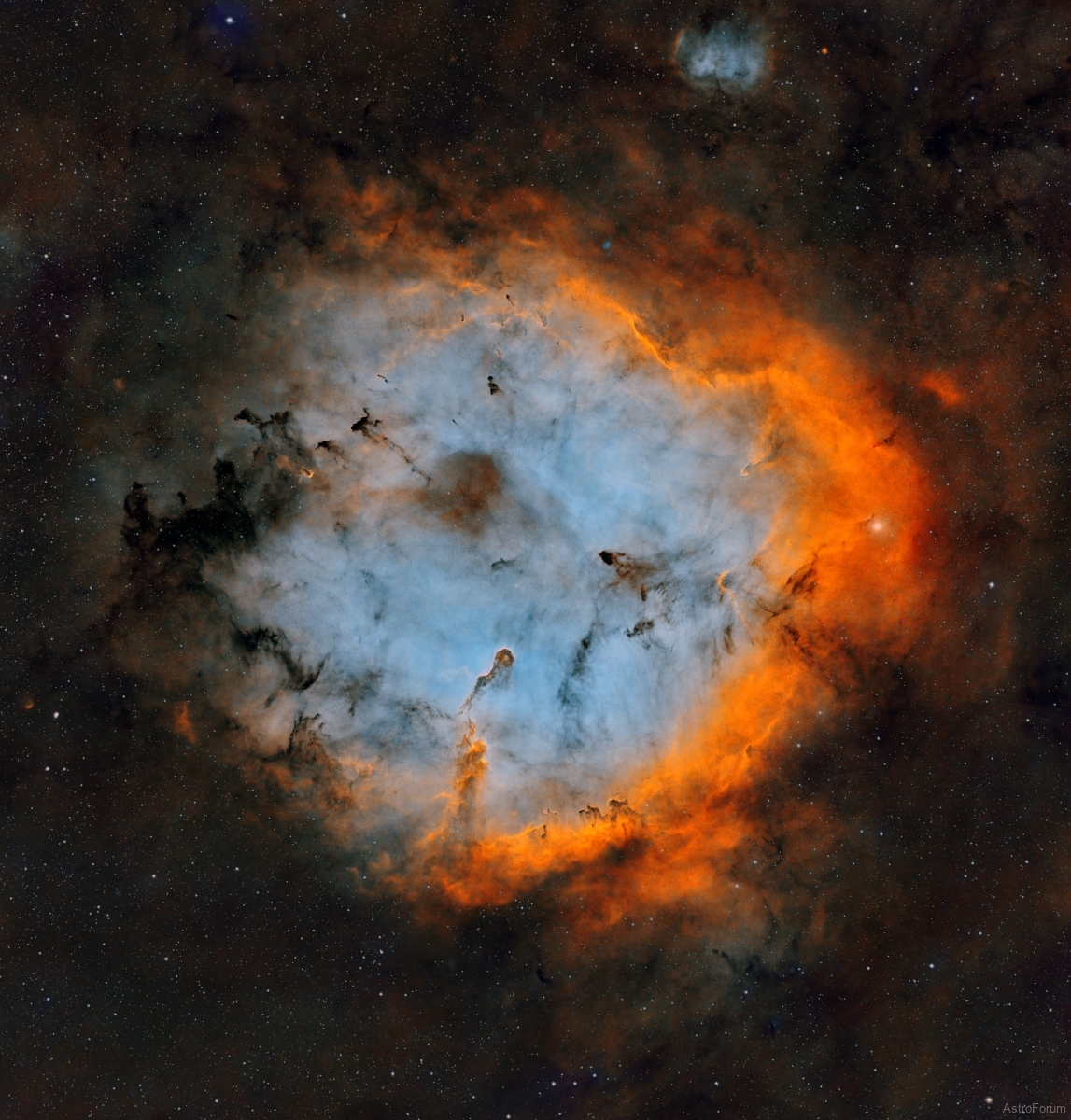
IC 1396 – The Elephant’s Trunk Nebula
This one’s a favorite in Cepheus. It’s about 2,400 light-years away and packed with rich Hα and S II emission. The dark, dusty “trunk” cutting through that glowing red shell looks amazing in SHO (the Hubble palette) or even HOO with a color camera and dual-band filter. To really make it pop, go for long Hα exposures to pull out the fine structure, and blend in some O III for contrast and cooler tones.
Sh2-129 – The Flying Bat and Squid Nebula
Just nearby, about 2,300 light-years out, is Sh2-129 — the big red “bat” nebula. Hidden inside it is the Squid Nebula (Ou4), which is crazy faint but incredibly rewarding if you have the patience. The red Hα shell is easy enough to capture, but that blue O III “squid” takes dedication — think 20+ hours of integration to really see it. If you’re up for a challenge, this one’s a masterpiece waiting to appear.
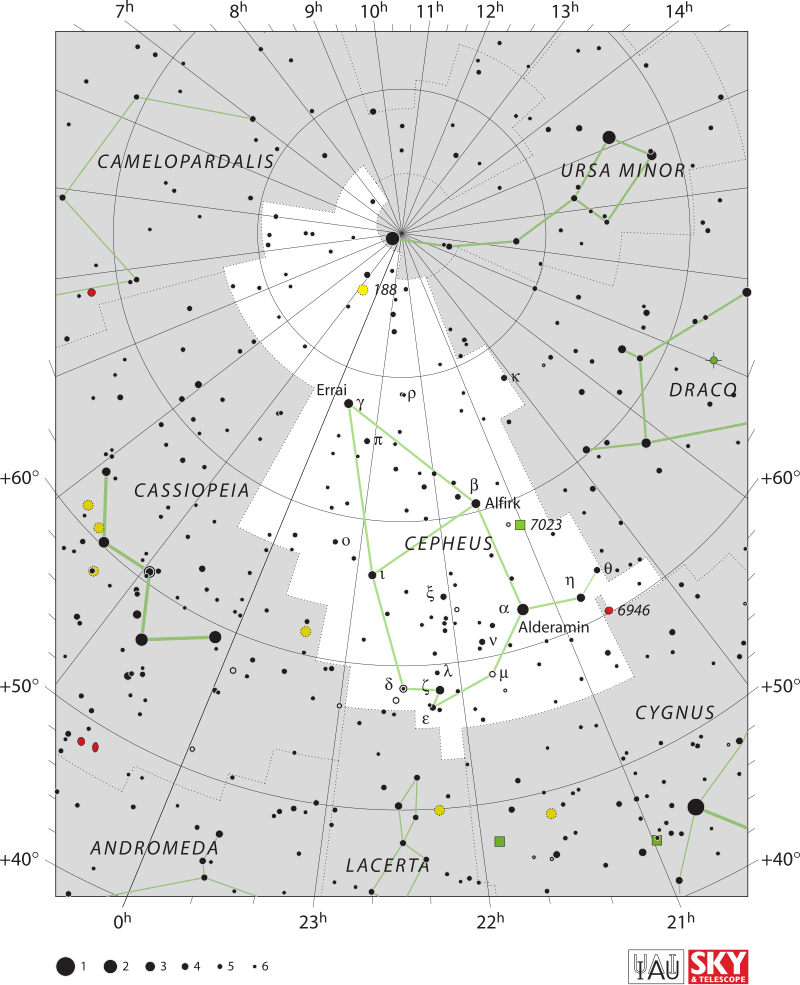
Both regions fit well in wide-field setups (300–500 mm focal length) and reward patience with haunting, detailed beauty that’s invisible to the naked eye.
| Object | Designation | Size (′–°) | Palette | Why It’s Special |
|---|---|---|---|---|
| Elephant’s Trunk Nebula | IC 1396 | 120 | SHO | Striking dark “trunk” in glowing red shell. |
| Squid Nebula | Sh2-129 | 120–150 | H α-only | Faint envelope—you’ll need patient red subs. |
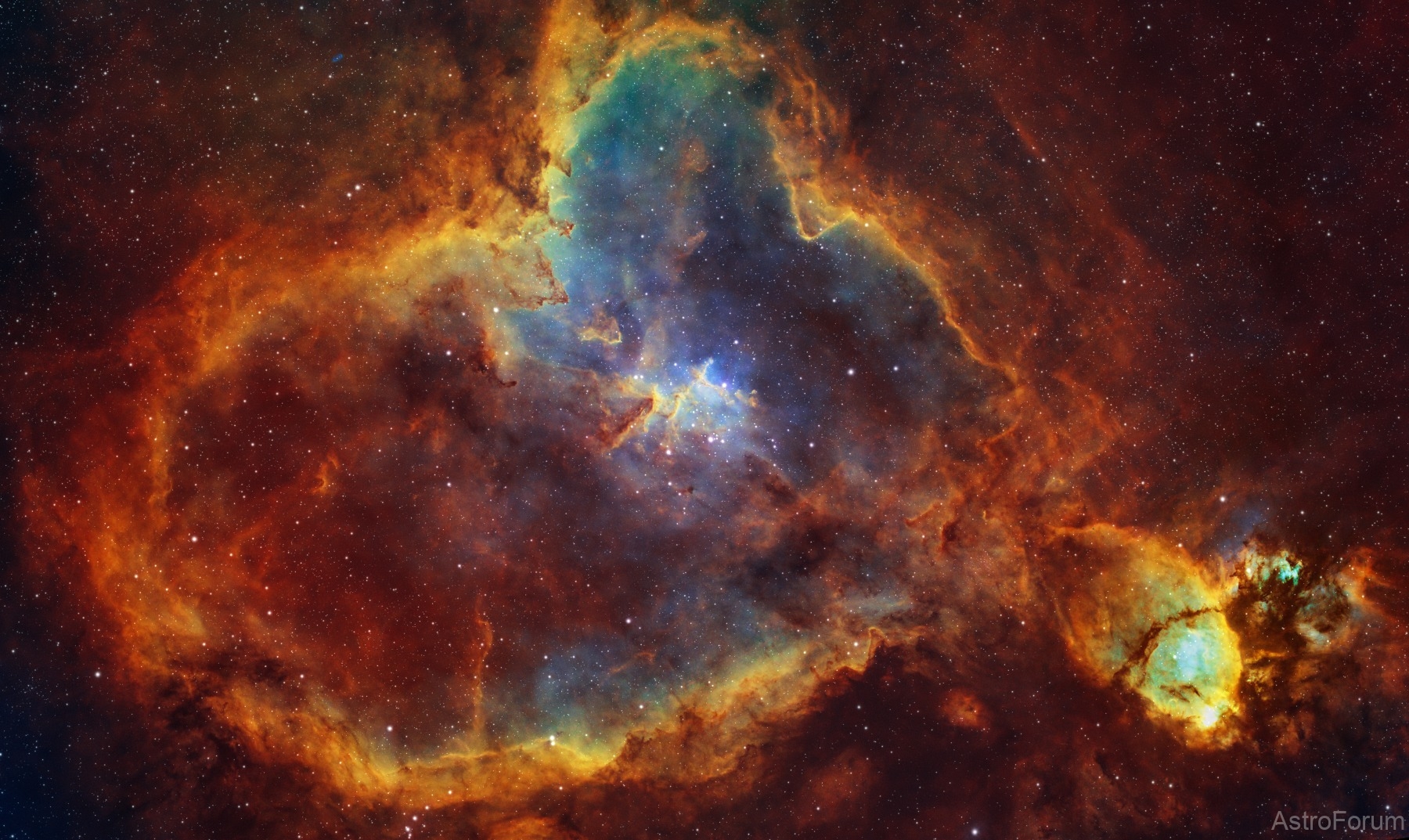
Here are some of my processed photos of this region in the sky:
Cygnus (“The Swan”)
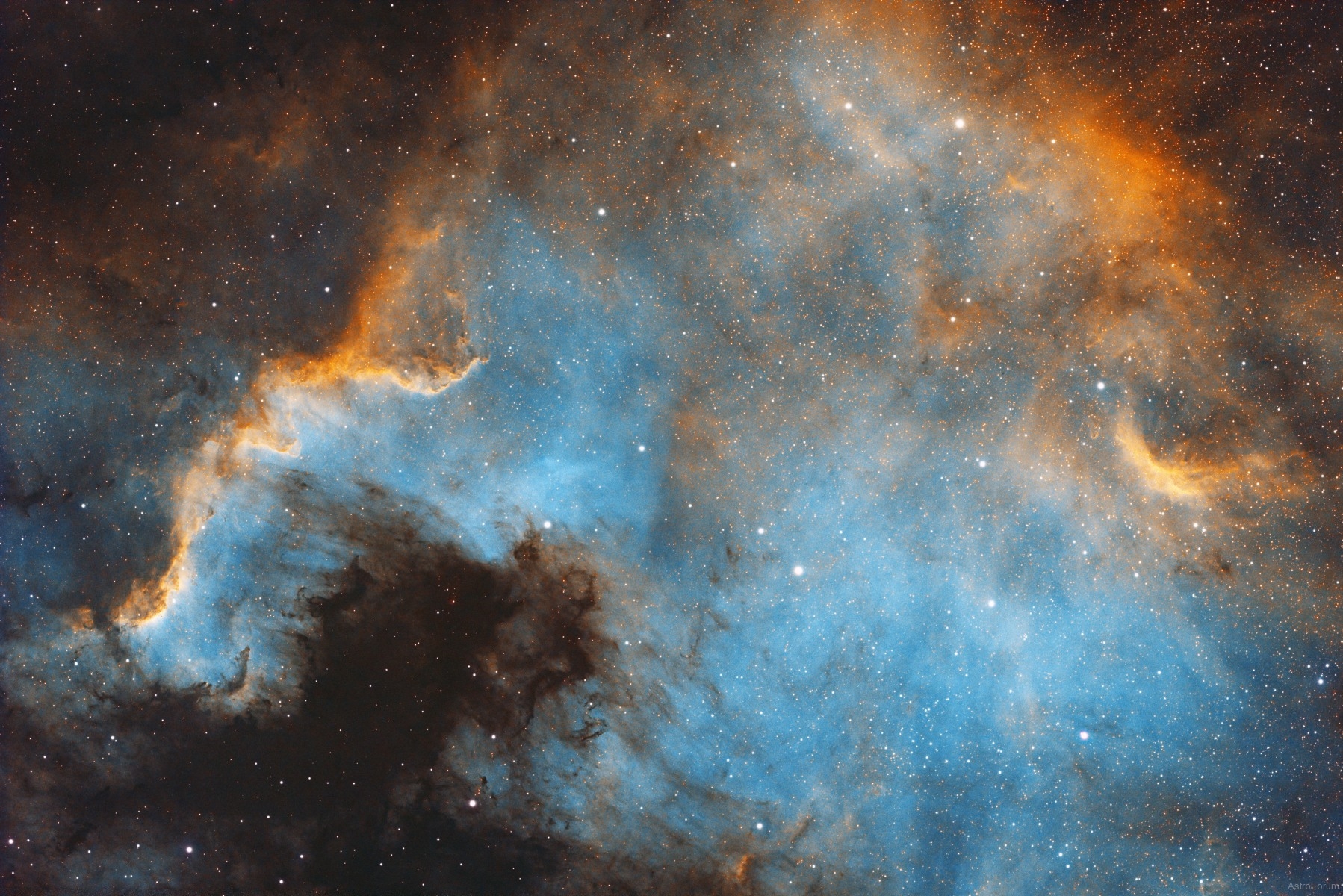
High overhead on summer nights, Cygnus is packed with glowing nebulae perfect for both widefield and deep-sky imaging. With a 50–135 mm lens, you can frame the North America (NGC 7000) and Pelican (IC 5070) Nebulae—bright in Hα and S II, great for SHO or dual-band filters.
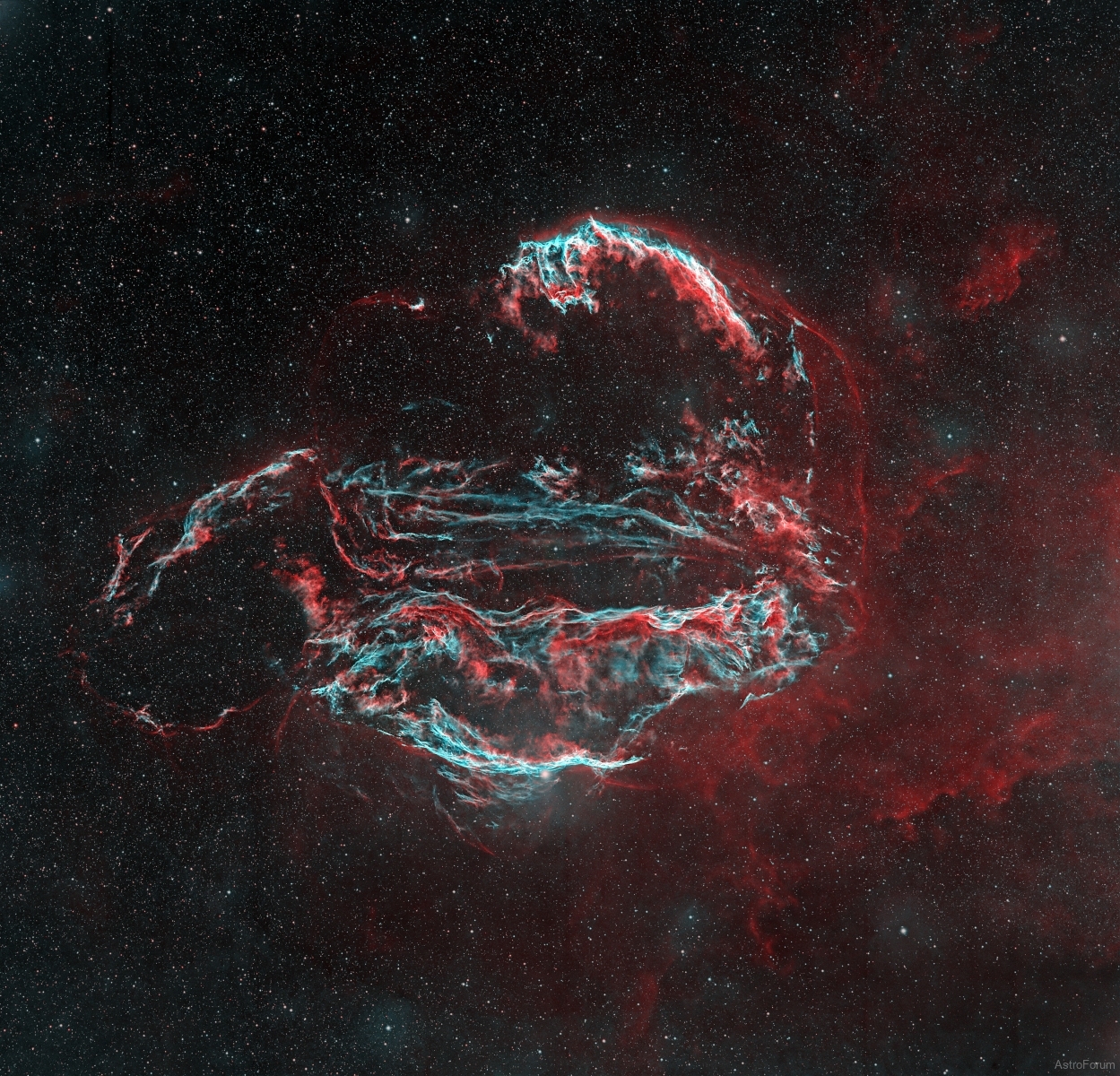
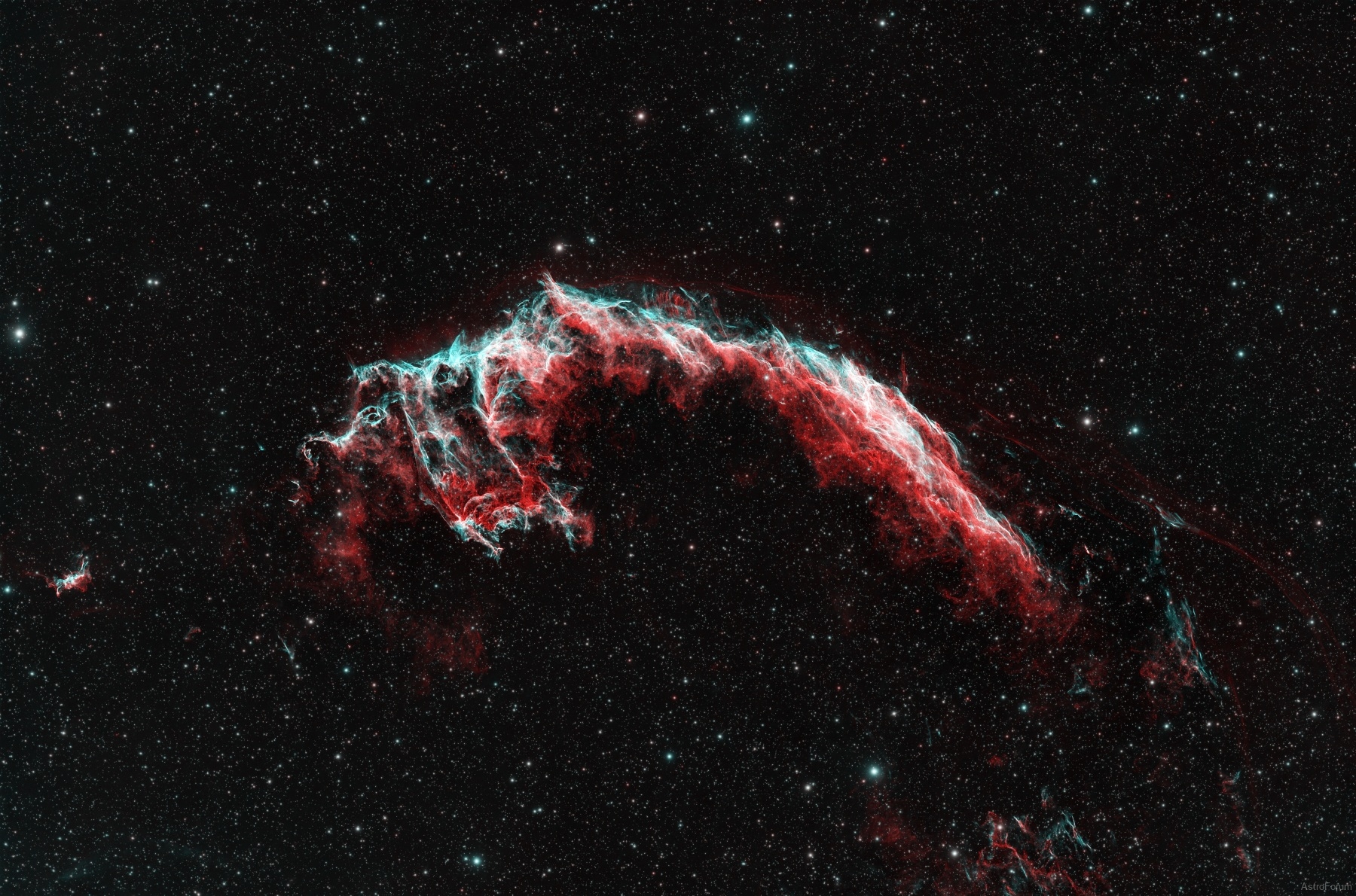
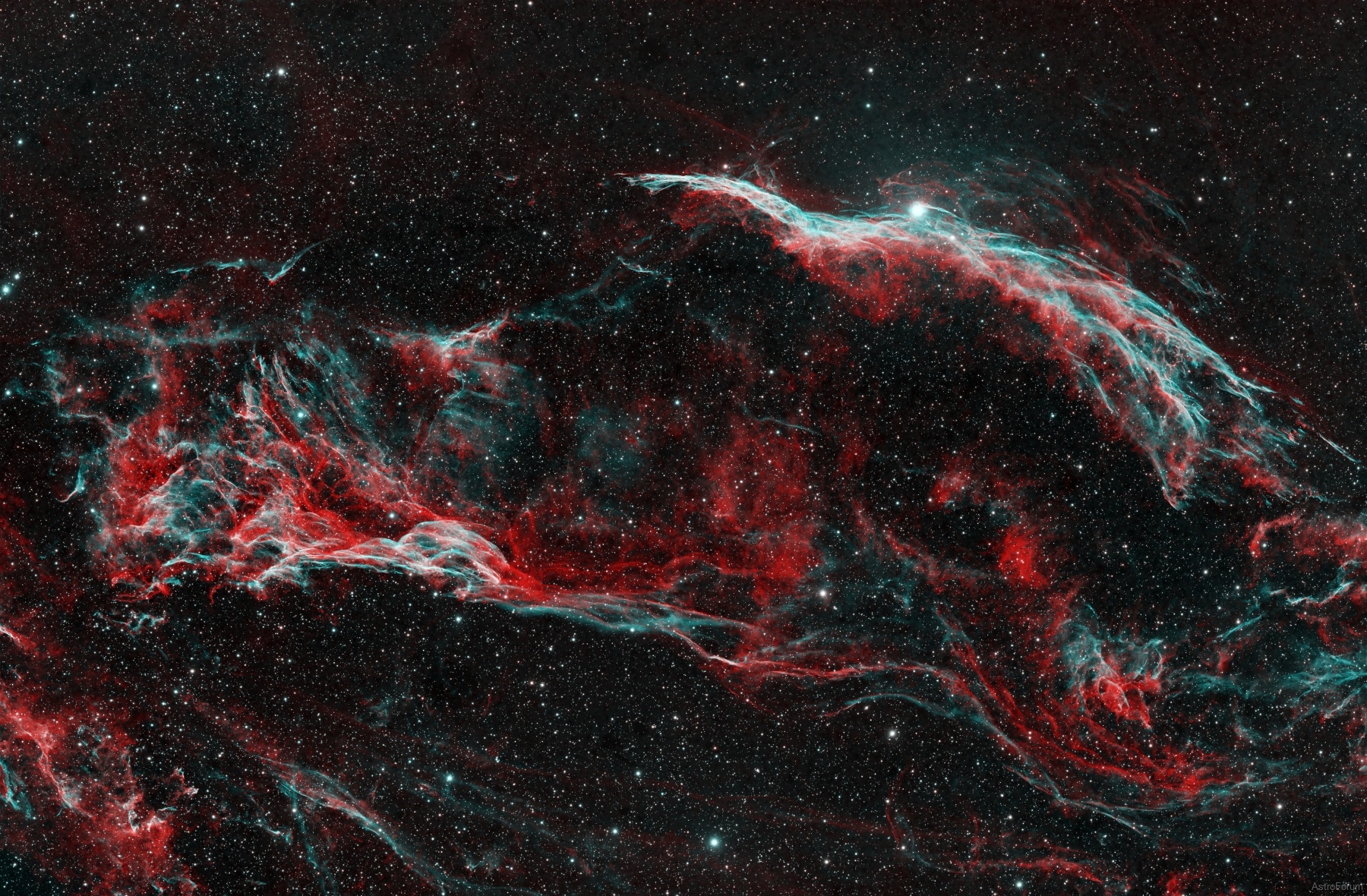
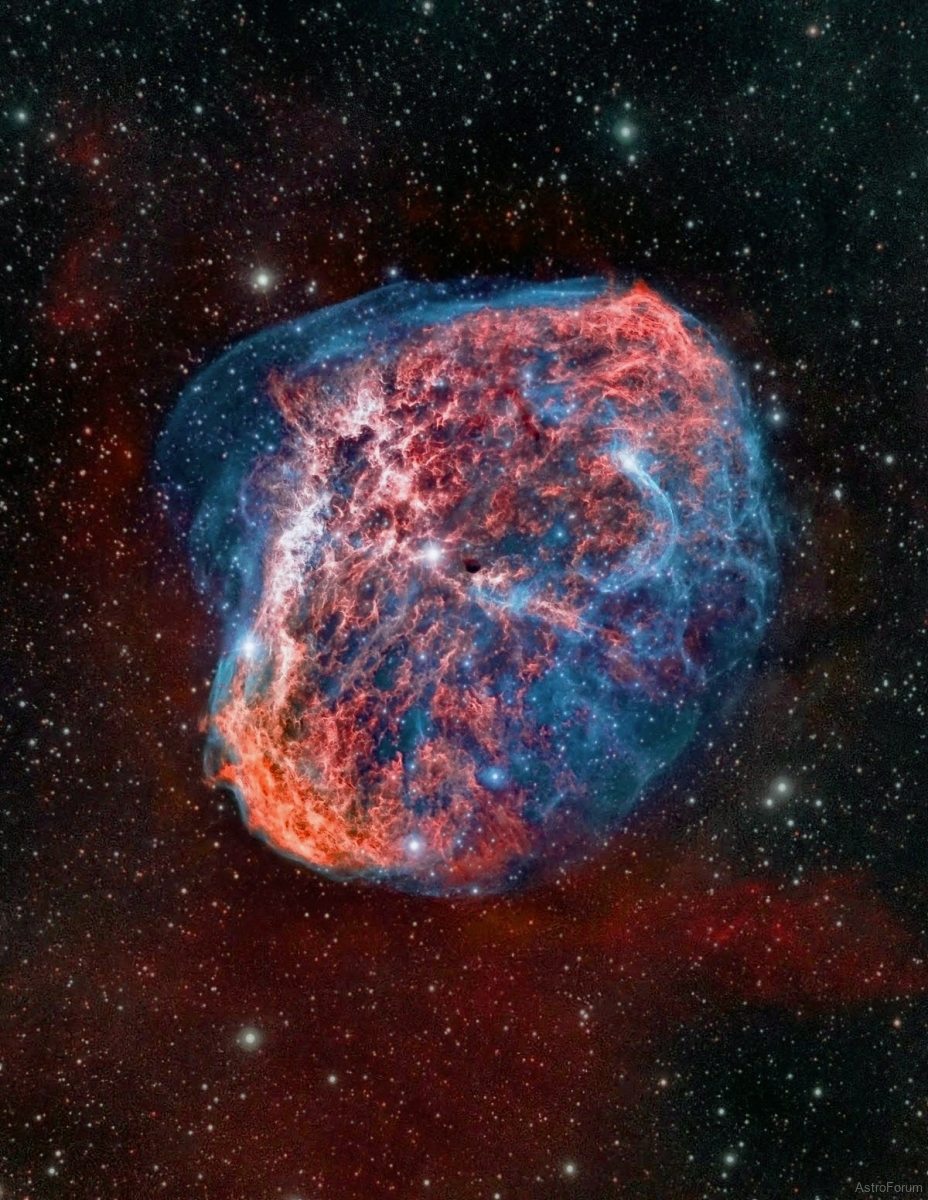
At longer focal lengths, try the Crescent Nebula (NGC 6888)—a Wolf–Rayet bubble strong in Hα/O III—or the Veil Nebula, a supernova remnant with teal O III and red Hα filaments. For a faint challenge, go for the wide Clamshell Nebula (Sh2-119) in Hα.
Cygnus is a narrowband paradise
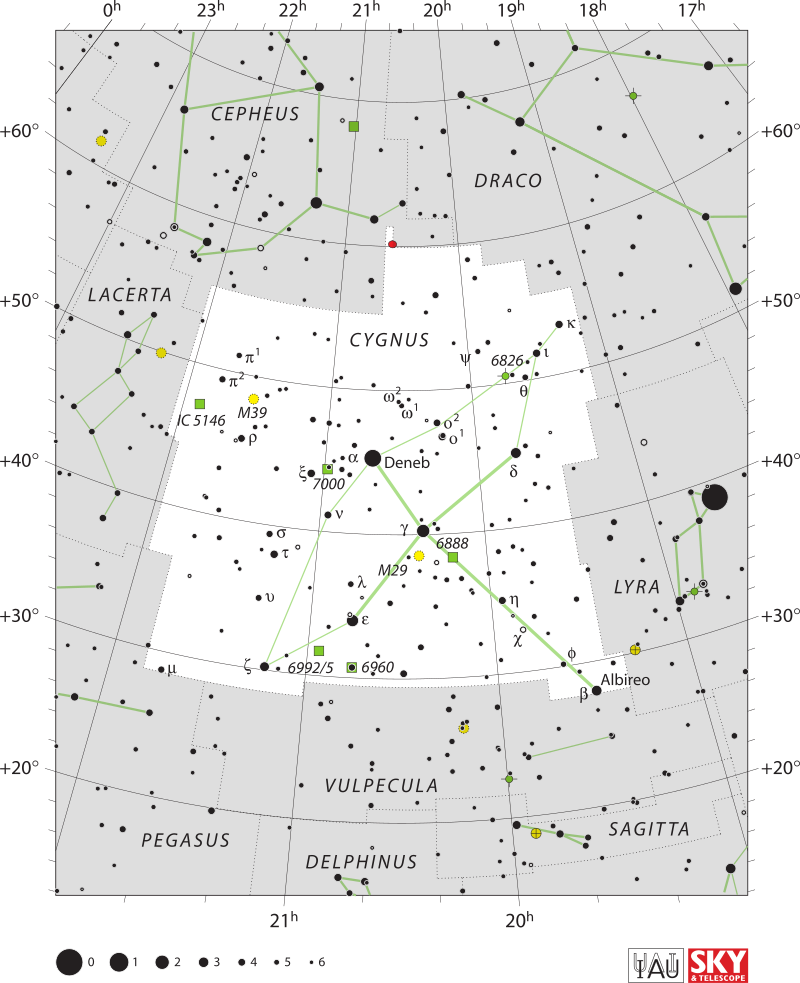
| Object | Designation | Size (′) | Palette | Why It’s Special |
|---|---|---|---|---|
| North America Nebula | NGC 7000 | 120 × 100 | SHO | A huge H II “continent” in dramatic red, green and blue. |
| Pelican Nebula | IC 5070 | 60 × 50 | SHO | Dust lanes sculpted like a bird’s beak. |
| Crescent Nebula | NGC 6888 | 18 × 12 | HOO | Wind-blown shell around a hot Wolf-Rayet star. |
| Veil Nebula (W/E) | NGC 6960/6992 | 60 / 45 | HOO | Delicate supernova filaments in O III and H α. |
| Clamshell Nebula | Sh2-119 | ~120 | H α-only | Faint, wide cloud—perfect for red narrowband. |
Here are some of my processed photos of this region in the sky:
Vulpecula (“The Fox”)
Vulpecula – Home of the Dumbbell Nebula
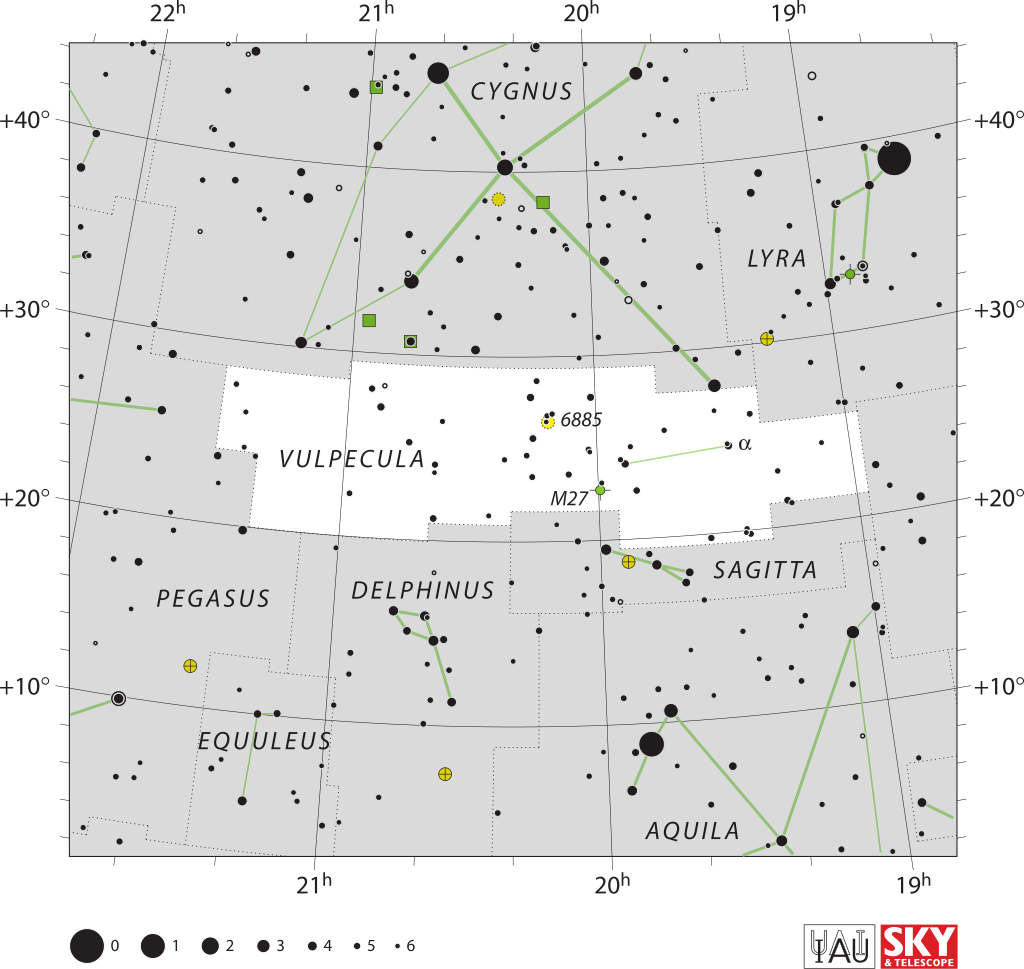
Small but worth a stop, Vulpecula hosts one of summer’s most popular planetary nebulae: the Dumbbell Nebula (M27). Bright and easy to find, it glows beautifully in RGB, with teal O III filaments adding depth and contrast.
It’s a great target for 400–1000 mm focal lengths, and even short exposures will reveal its classic “apple-core” shape. Add some O III data or use a dual-band filter to make those outer shells pop.
| Object | Designation | Size (′) | Palette | Why It’s Special |
|---|---|---|---|---|
| Dumbbell Nebula | M 27 | 8 × 6 | RGB + O III | A classic “apple-doughnut” with inner filaments. |
Serpens (“The Serpent”)
Serpens – Home of the Pillars of Creation
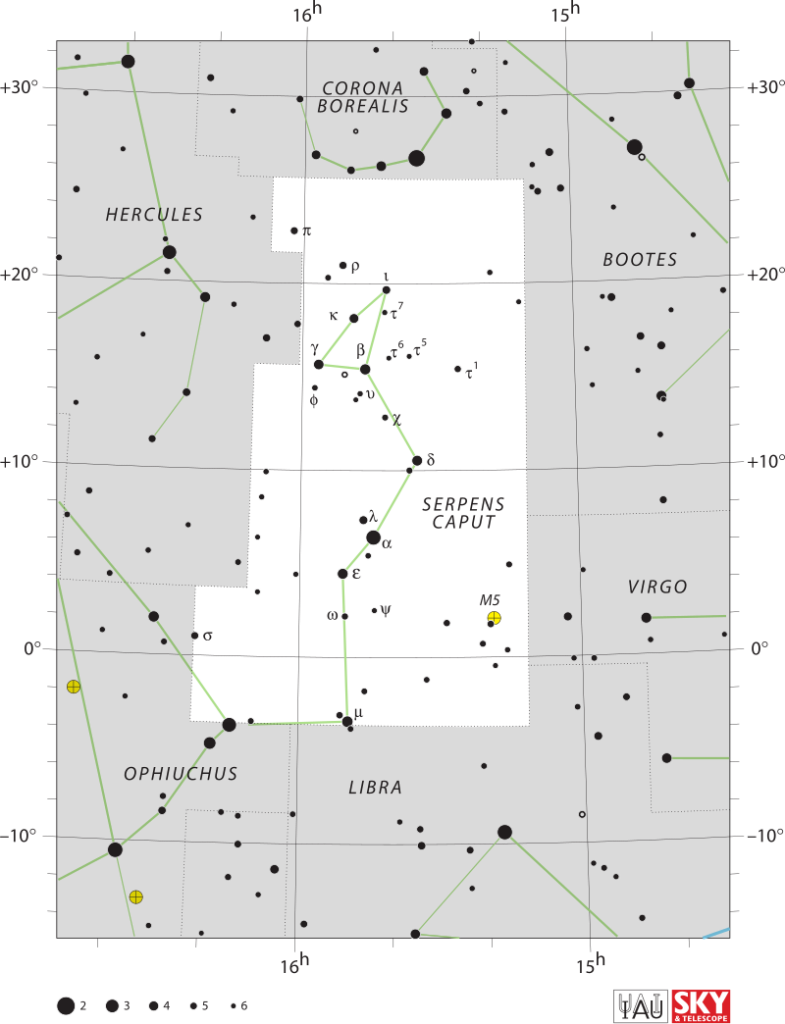
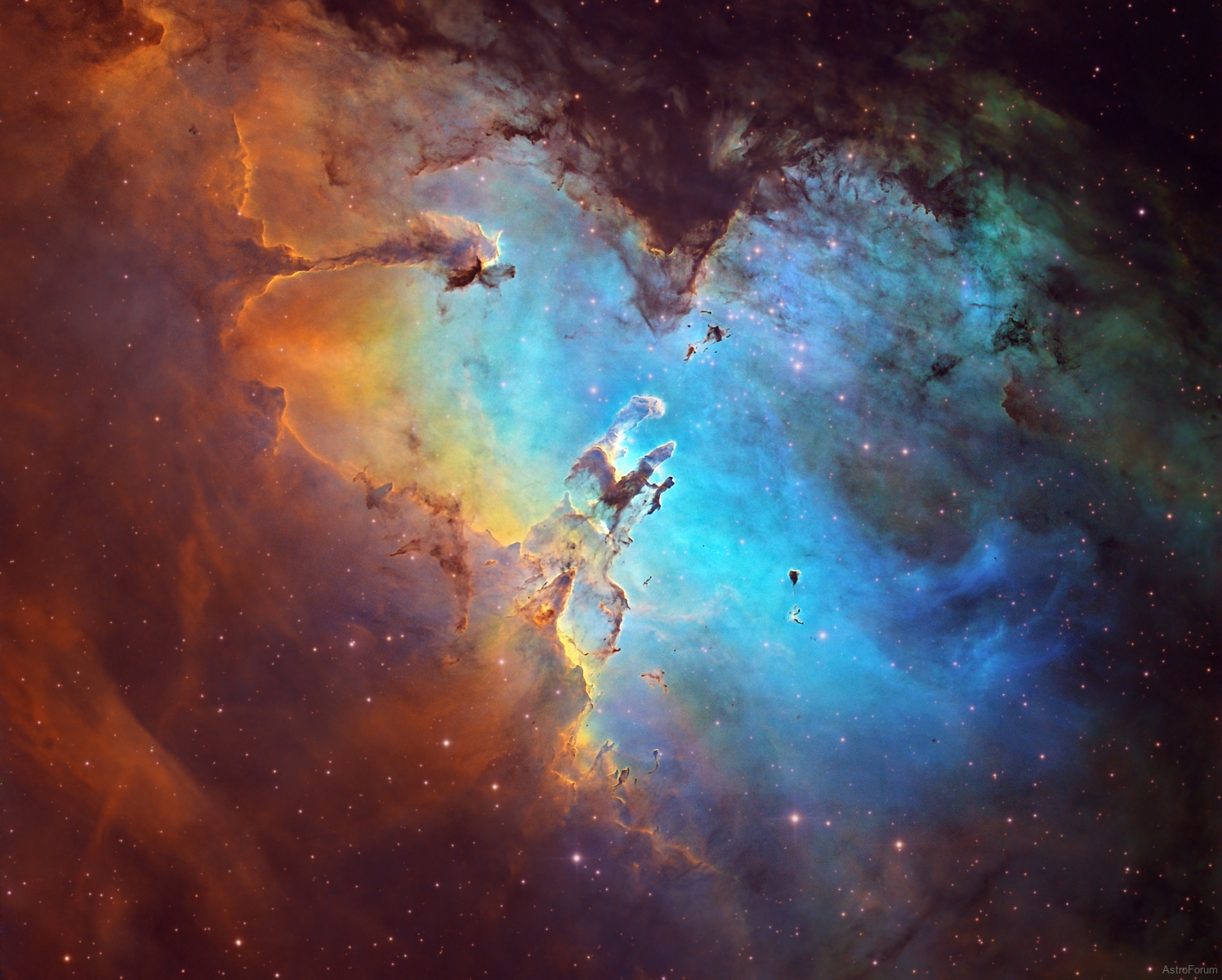
In Serpens Caput, the famous Eagle Nebula (M16) hosts the iconic Pillars of Creation—towering columns of gas glowing in Hα and S II, with O III outlining their edges in teal. It’s a stunning SHO target that shines with longer integrations and a 600–1000 mm setup.
Nearby, the faint Scary Face Nebula (Sh2-54) glows a deep red in Hα, its dark “eyes” giving it an eerie look—perfect for a pure narrowband portrait.
Both are beautiful narrowband projects for warm summer nights.
| Object | Designation | Size (′) | Palette | Why It’s Special |
|---|---|---|---|---|
| Eagle Nebula | M 16 (NGC 6611) | 20 | SHO | Iconic pillars in glowing red and teal. |
| Scary Face Nebula | Sh2-54 | 45 | H α-only | Haunting red-emission “eyes” in space. |
Here are some of my processed photos of this region in the sky:
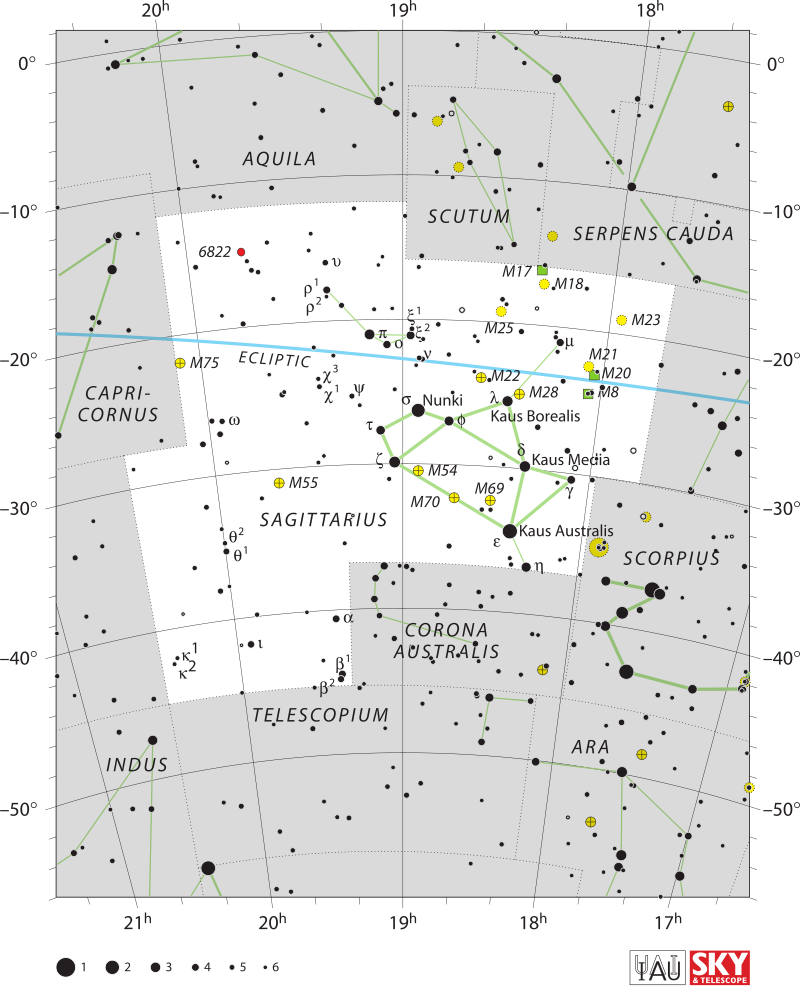
Sagittarius (“The Archer”)
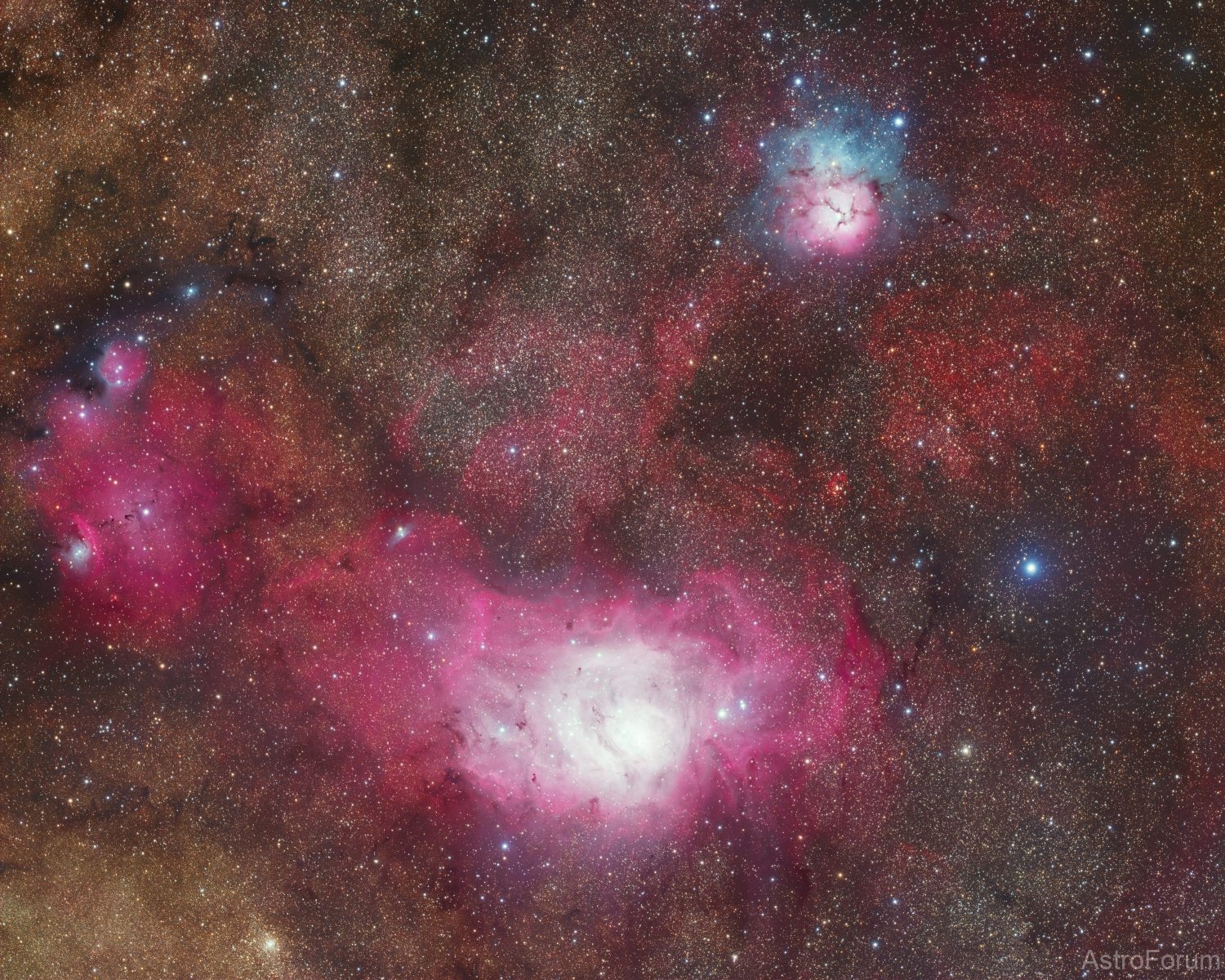
The Lagoon (M8) and Trifid (M20) Nebulae sit side by side in Sagittarius—perfect for 400–800 mm focal lengths. Both shine in Hα, with the Lagoon showing strong S II and the Trifid mixing in O III and reflection blue.
Use SHO for dramatic contrast or RGB for natural color. Around 3–5 minute subs at unity gain work well; add more O III to balance the teal tones. These bright southern targets reward short integrations under dark skies.
| Object | Designation | Size (′) | Palette | Why It’s Special |
|---|---|---|---|---|
| Lagoon Nebula | M 8 | 90 × 40 | SHO or RGB | Bright red lagoon with dusty dark lanes. |
| Trifid Nebula | M 20 | 28 | SHO or RGB | Three-lobed mix of emission (red), reflection (blue) and O III (green). |
Here are some of my processed photos of this region in the sky:
Tips for DSO Astrophotography with a telescope
When I’m shooting deep-sky objects in summer with my telescopes, I usually set my cooled CMOS camera to around –10 °C on warm nights—just to keep the cooler from running at 100%. With autoguiding, I typically go for 5-minute exposures at unity gain for narrowband targets (Hα, S II, O III), and shorter subs—around 2–3 minutes—for broadband (LRGB) objects. The exact timing depends on your sky brightness and how bright the target is.
I love using APO (preferably flat-field) refractors, but I also bring out my Edge HD for smaller targets. I also use Telescope Live’s remote services to capture raw imaging data under truly dark skies with amazing (semi-professional) gear.
These days, I do nearly all my processing in PixInsight—stacking with the WBPP script, then stretching, color balancing, and enhancing details before a quick final polish in Photoshop to bring out those subtle colors and highlights.
Tips for widefield astrophotography
Pick a clear, moonless night around New Moon, grab your tripod, and mount your DSLR or mirrorless camera. For widefield shots, a 16–24mm lens works great. Set your ISO to around 1600–3200, focus on a bright star, and check where the Milky Way is using Stellarium or PhotoPills—in summer in the Northern Hemisphere, it’s due south around midnight.
Take about 15–30 shots, each 15–25 seconds, and make sure your stars are round (shorten the exposure if they look stretched). Always shoot in RAW. Back home, stack your photos in DeepSkyStacker or Sequator, then edit in Photoshop until that Milky Way core shines through.
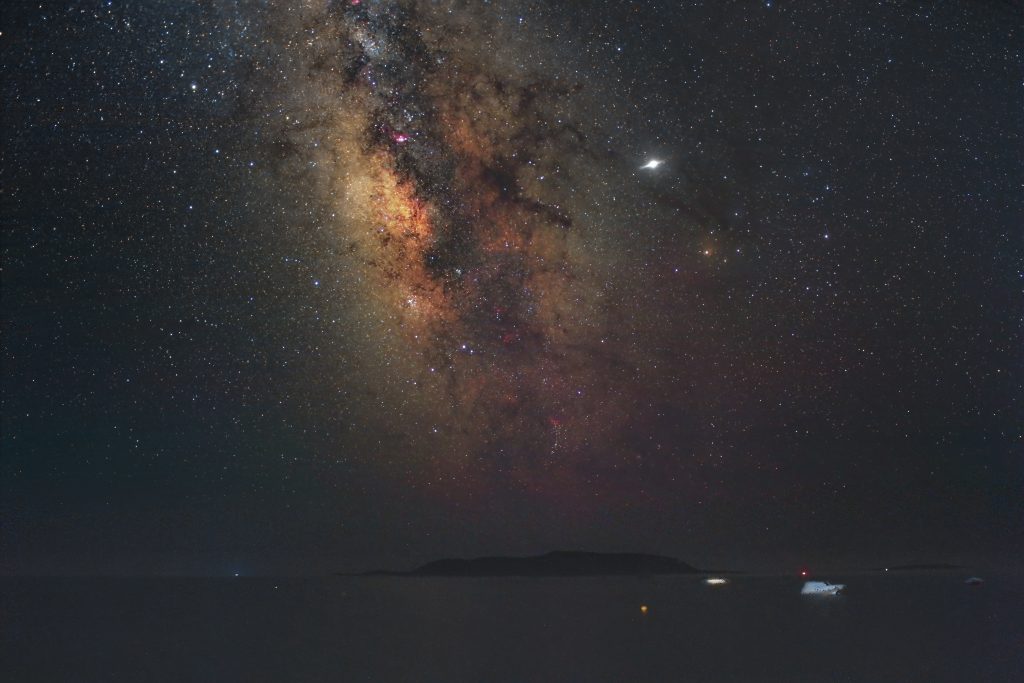
I’m more of a deep-sky guy these days, but below is my very first Milky Way photo back in 2019—shot with a Canon 1200D (astro-modded) from Greece (Peloponesos) on the beach; you can see a bright elongated star on the right (Saturn!) and (faintly) Rho Ophiuchi just below.
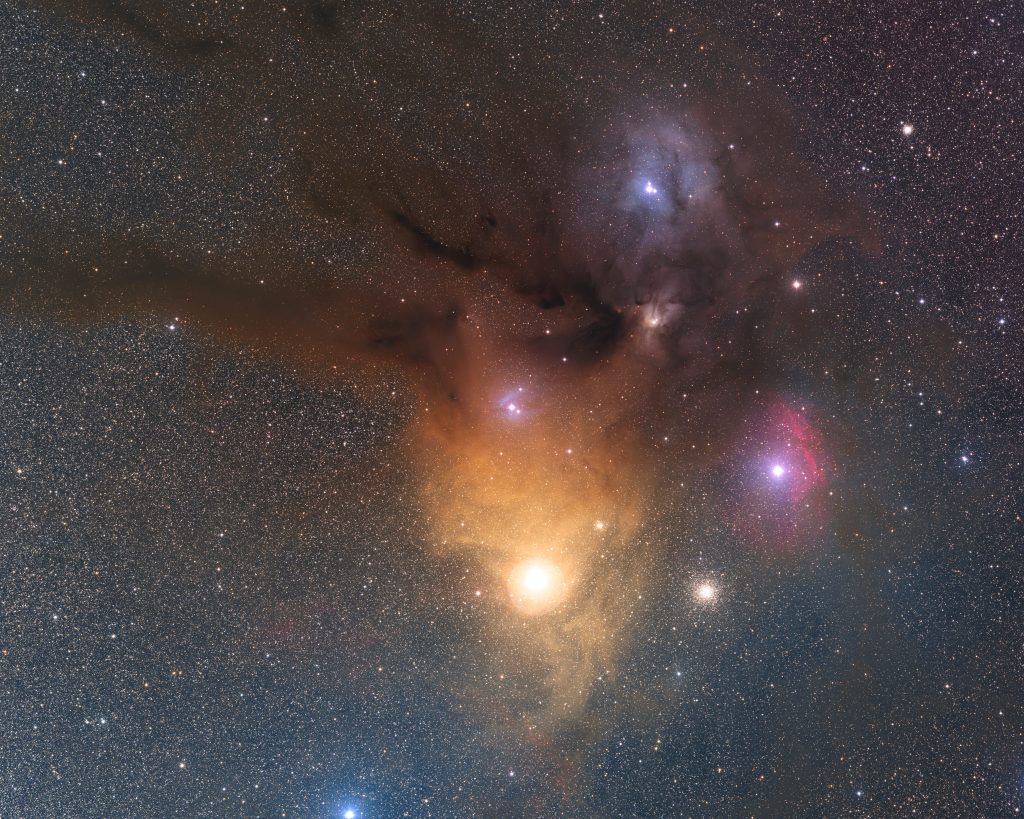
If you’ve got a small star tracker and a lens up to 200mm, try aiming for Rho Ophiuchi—that colorful cloud of stars just right of the Milky Way. With tracking, you can shoot 1-minute exposures at lower ISO (800–400) for smoother, cleaner data. Add Hα or O III filters for 30–60 minutes and those reds and teals will really pop.
Here are two of my shots: one of the Milky Way (Greece, ISO 3200, during summer without tracking, not good but a good indication of an amateur shot!) and one more professional photo of Rho Ophiuchi, captured remotely with 200mm LRGB data in australia remotely through Telescope Live services. By the way, that small globular cluster just below Rho Ophiuchi is Messier 4 (M4) — a bright, nearby globular cluster in Scorpius, about 7,200 light-years away, it looks like a compact golden ball beneath the colorful Rho Ophiuchi nebula complex.
I hope you get to spend many clear nights under the stars this summer—and that your gear behaves the whole time!
Wido.