The ToupTek HOPE D60 enters the wide-field astrophotography space aiming to deliver fast optical speed in a compact refractor design. Running at a fast f/4.66, it promises quick signal collection. I took it on a first light mission to photograph the expansive North America Nebula (NGC 7000) as well as it’s neigbour, the Pelican Nebula (IC5070) under my Dutch summer sky.
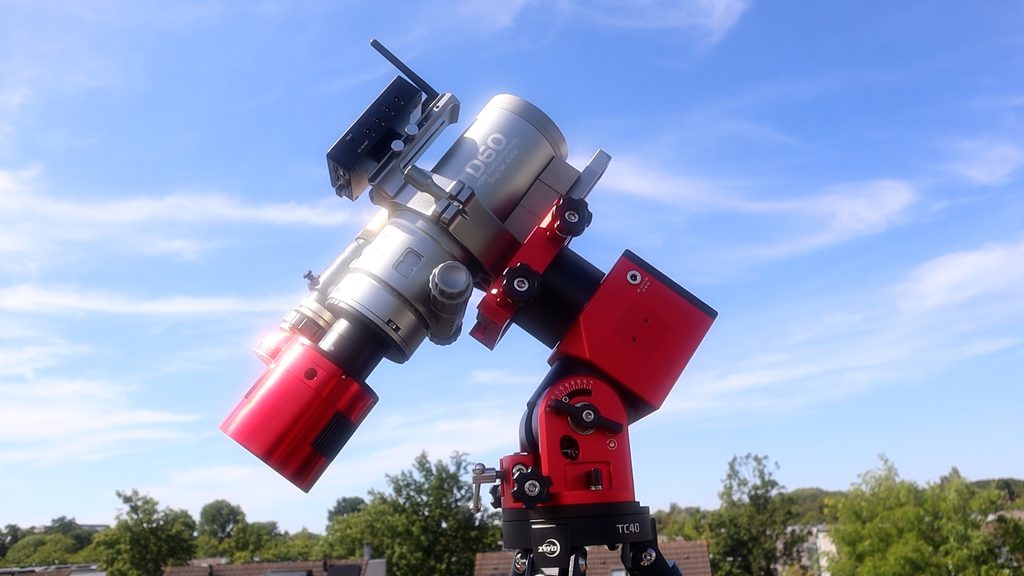
Optical & Mechanical Specifications
The HOPE D60 is built as a 5-element Planar Apochromat (PAPO) optical system arranged in 3 groups, combining Super ED (SD) glass with Lanthanum glass elements. Featuring a 60mm aperture and a short 280mm focal length, the optical design incorporates an integrated field flattener. ToupTek specifies a 44mm full-frame image circle with relative illumination exceeding 90% at the field edge to accomodate full frame cameras.
In terms of mechanical specs, the optical tube assembly (OTA) alone weighs roughly 2.83 kg, expanding to about 3.5 kg with the single tube ring, top handle, and dovetail bar installed. A retractable magnetic dew shield keeps the overall storage length down to 255mm. Focus control is managed by a 3-inch zero-backlash rack-and-pinion focuser with 30mm of travel, fine/coarse adjustment knobs, a millimeter scale window, and a 360-degree Camera Angle Adjuster (CAA) rotator. For camera attachments, the scope provides native M54 and M48 interfaces, with internal M48 threads on the rear adapter to thread 2-inch filters directly into the optical path.
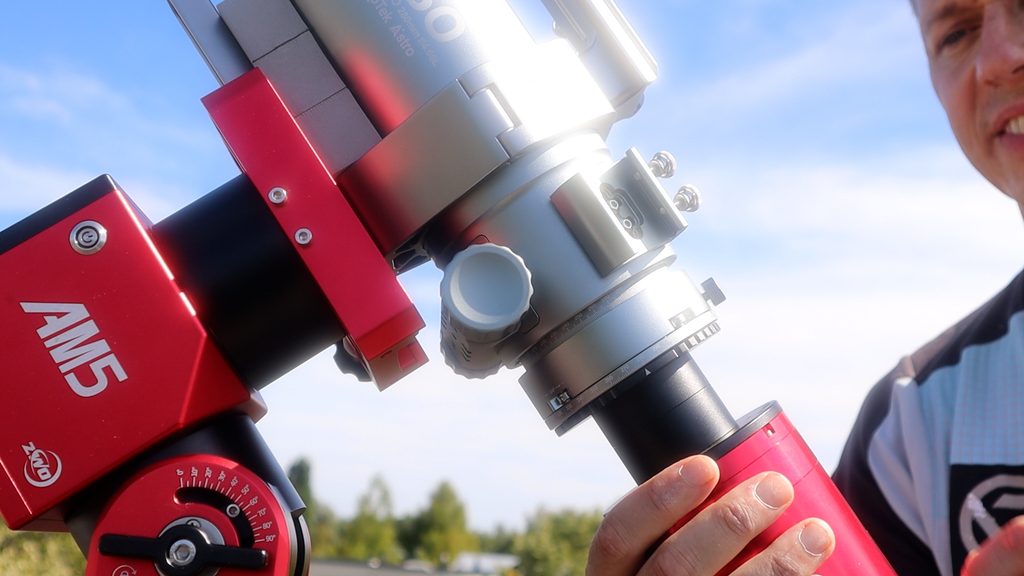
Regarding backfocus, the HOPE D60 requires a standard 55mm connection distance (with an operational focus tolerance of 50mm to 58mm). While the integrated flattener avoids the need for external flattener elements, I kept a proper 55mm spacing between the rear thread and the camera sensor to ensure flat-field correction across the frame.
First Light Testing & Performance Analysis
My first light session took place under mid-summer northern (Dutch) skies targeting the North America Nebula (NGC 7000) and Pelican Nebula (IC 5070) complex. The imaging train consisted of the HOPE D60 paired with a cooled ASI2600MC Pro APS-C camera, an SV220 3nm dual-band filter, and a StellaVita wireless control unit. Data was gathered using 300-second exposures at Gain 100 with camera sensor cooling set to -15°C.
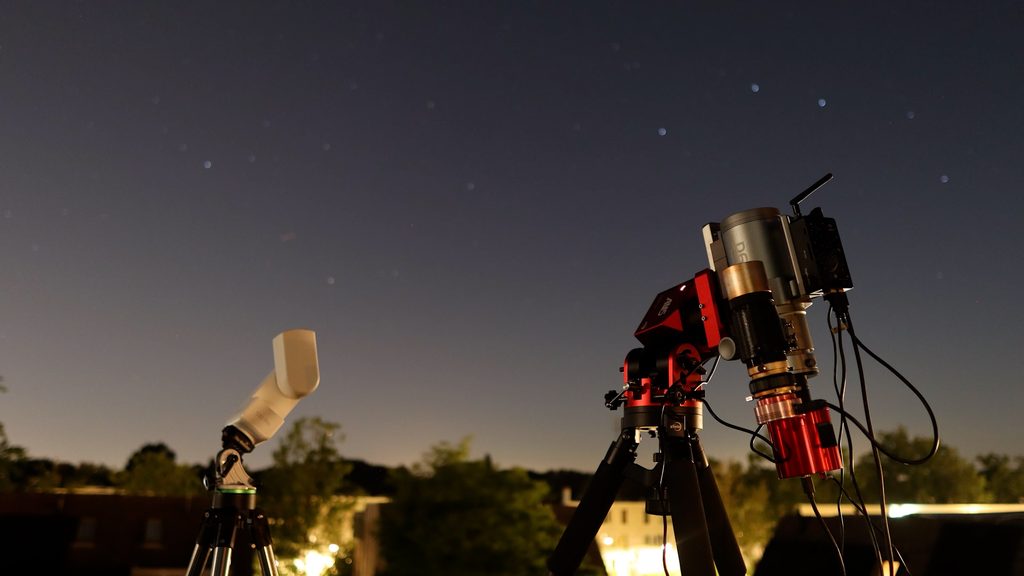
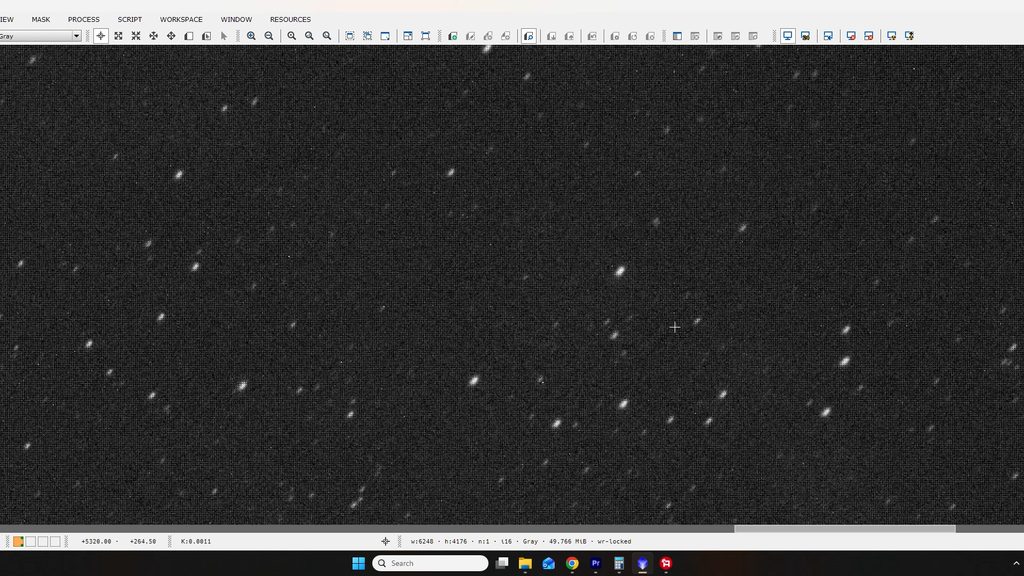
Autoguiding remained solid throughout the night, holding RMS tracking well below 1 arcsecond (averaging around 0.4 to 0.6 in RA and DEC). A single raw 5-minute exposure revealed impressive signal across the emission nebulae, though close inspection showed minor star eccentricity in the upper-right corner. Given the limited dark hours of a summer night, I opted to keep the sequence running rather than wasting valuable imaging time troubleshooting what appeared to be a slight camera tilt issue, and I captured 41 sub-exposures with a total integration time of 3.5 hours.
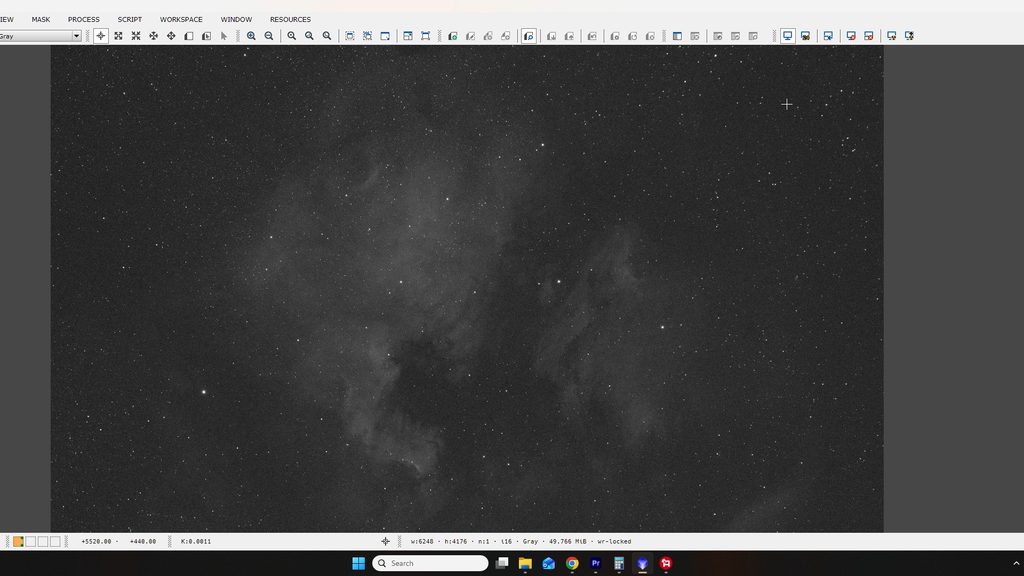
In PixInsight, running the FWHMEccentricity script across the raw sub-exposures measured a sharp central median FWHM of 1.5 pixels. However, moving toward the frame edges revealed noticeably higher FWHM and eccentricity values, with visible star elongation concentrated in the upper-right corner. Because the elongation pattern remained directionally identical both before and after a meridian flip, I suspect the issue was a slight camera sensor tilt rather than a mechanical issue or guiding drift and I’ll test this further in future test runs.
Post-Processing & Final Assessment
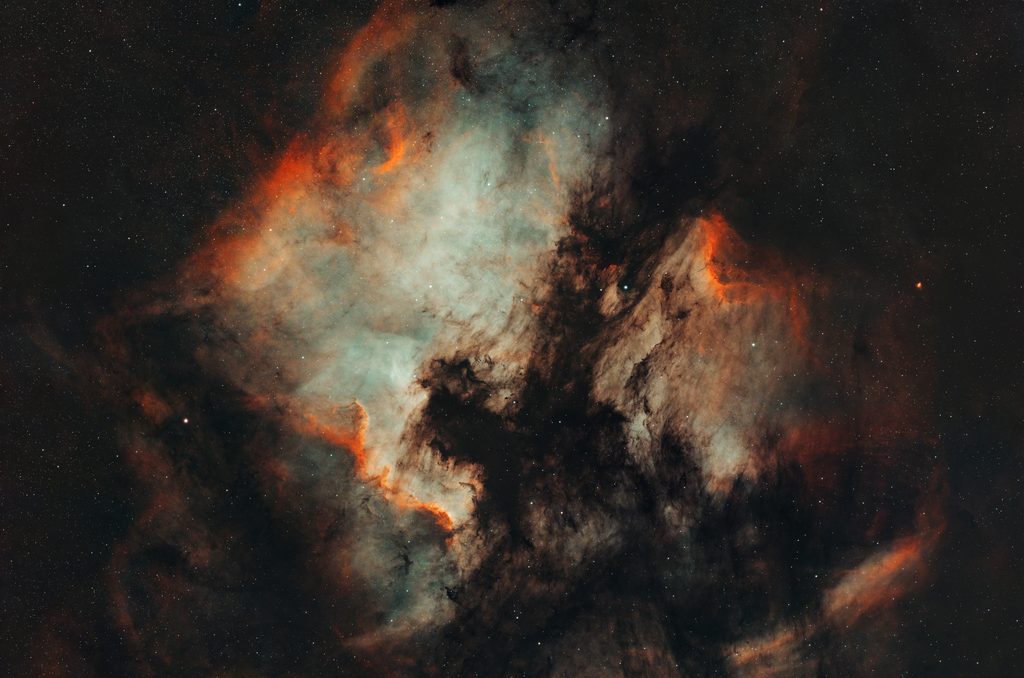
I stacked my 41 sub-frames using Weighted Batch PreProcessing (WBPP) in Pixinsight, after taking and using flats and dark-flats the next day to calibrate my frames. I had quite some satellite trails in my individual frames, caused by low-angle summer twilight, but they were fully rejected by standard sigma-clipping algorithms. To handle the slight corner elongation, RC-Astro BlurXTerminator effectively corrected the peripheral stars, yielding tight, round star points across the APS-C field. Unlinked color stretching already revealed the distinct color separation between the golden-red H-alpha structures and the deep blue OIII gas along the Cygnus Wall. Here’s my final image of both nebulae, processed in Pixinsight and Photoshop.
Overall, the ToupTek HOPE D60 is a solid, highly capable wide-field astrograph that offers real optical speed and robust mechanical build quality. Its f/4.66 focal ratio allows you to accumulate deep emission signal quickly during short dark windows, and the wide-field views at 280mm will allow you to image some of the largest deep-sky objects in our Milky Way without needing to depend on stitching various parts of the night sky into one overall mosaic photo—which is challenging in itself. Apart from what I suspect is a tilt issue, the HOPE D60 performed quite well during my first light run, and at under $1,000 / €1,000, this fast refractor may be exactly what you are looking for.
Clear skies!
Wido.
Links to HOPE D60 Telescope & Custom rig Setup
Direct supplier links and global vendor availability for my imaging gear
🔭 Main Optics: ToupTek HOPE D60 Astrograph
FEATURED GEAR5-Element PAPO | 60mm Aperture | 280mm Focal Length | Fast f/4.66 | Built-in Field Flattener
💻 Controller: StellaVita Smart Astrostation
Wireless Mount, Camera & Sequence Control System
📷 Main Camera: ZWO ASI2600MC Pro
APS-C Cooled Color CMOS Sensor
🌌 Filter: SVBONY SV220 2″ 3nm Dual-Band
H-Alpha & OIII Ultra-Narrowband Emission Isolation
⚖️ Telescope Mount: ZWO AM5N Strain Wave Mount
High Payload Strain Wave Equatorial Mount