I recently traveled to Montpellier, France, for Vaonis’s 10th-anniversary event, where I met the Vaonis team and Cyril (CEO) for an exclusive first look at their new flagship—the Vaonis Atlas Smart Telescope. Now back home in Utrecht, I’m breaking down everything you need to know about Atlas, from its 80mm f/4.5 APO imaging module and modular SkyDocks to Twin mode (+41% SNR boost) and the 360° Sky Guard camera. I also inform you about planned future updates after its March 2027 release—like the “Limitless” EQ tracking mode, Superresolution and more —along with pricing details (€3,990–€6,990) and how it stacks up against traditional custom rigs.
Normally, you’d find me on my rooftop in Utrecht, The Netherlands setting up my custom astrophotography rig, checking cables, or running a polar alignment routine for a night of deep-sky astrophotography. But this time, Vaonis invited me to celebrate their 10th anniversary at a breathtaking venue—a classic French château surrounded by lush, manicured gardens. Between tasting local wines, enjoying exceptional French cuisine, and meeting passionate astronomers from across the globe, I had one primary mission: getting up close and personal with their newest, most ambitious creation yet—the Vaonis Atlas Smart Telescope.
A Decade of Pioneering Smart Astronomy
Walking through the château’s garden felt like stepping through a timeline of modern smart astronomy. Exactly ten years ago, Vaonis sparked a revolution with the original Stellina—an 80mm refractor smart telescope that completely changed how people approached deep-sky imaging. They followed that success with the popular Vespera line, continually refining battery life, storage capacity, and optics. In fact, their latest iterations—the Vespera III and Vespera Pro 2—now feature an incredible 11-hour battery life for uninterrupted, all-night imaging runs.
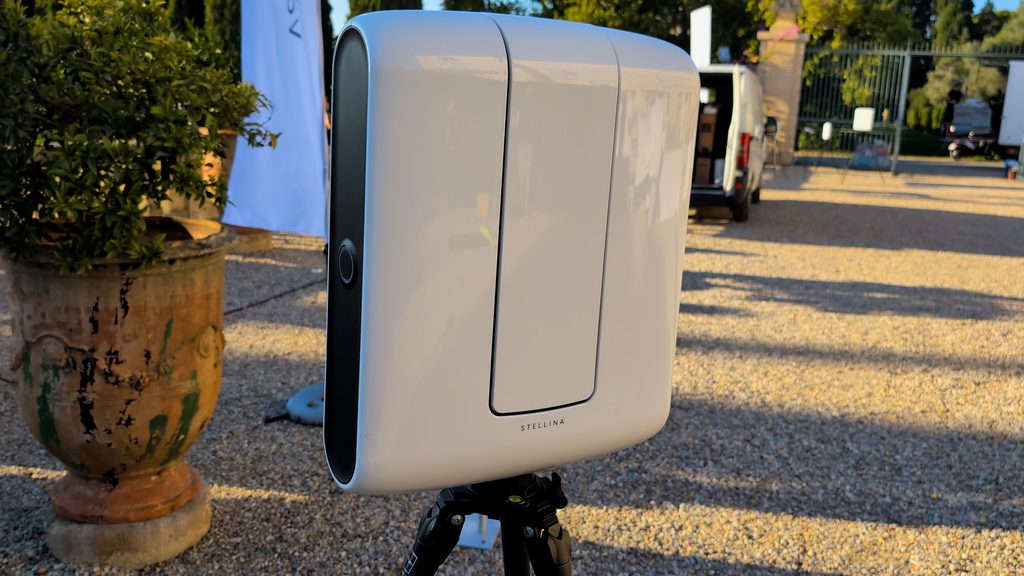
During the event, I had the pleasure of meeting Cyril, the founder and CEO of Vaonis. I asked him where the original spark for all this came from. He smiled and recalled his days as an aerospace student in Montpellier. Back then, he was using traditional astrophotography rigs like Sky-Watcher and Celestron equatorial mounts, OTA’s and custom cameras with cables running to a laptop with astro-software plugins where more time troubleshooting than observing, or as Cyril put it:
“Ten years ago, I was managing traditional setups, and it was so hard. Mounts, software, alignment… when everything is ready, something goes wrong and you have to start over. Observing the night sky shouldn’t have to be a problem or something difficult to do.”
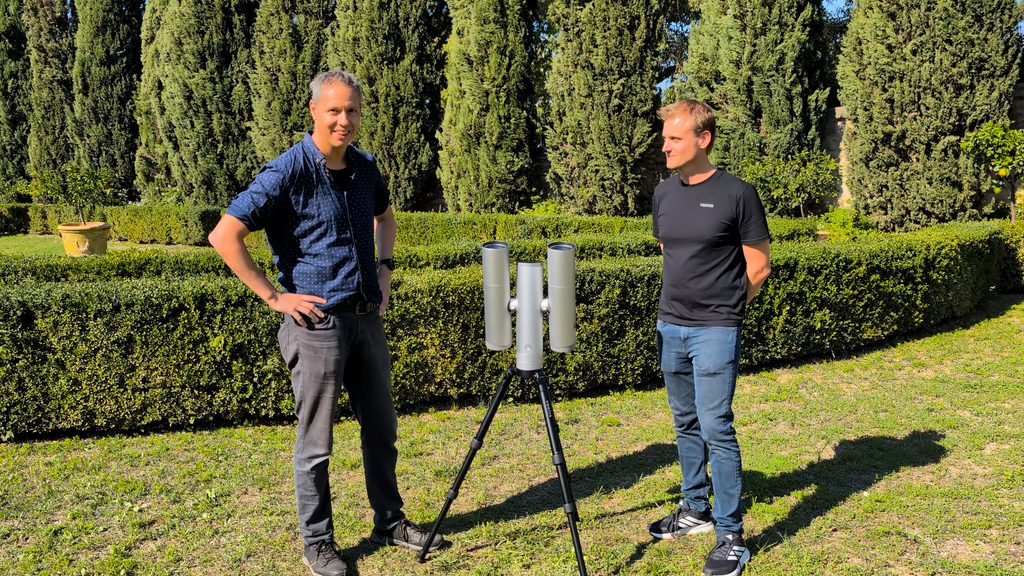
That simple realization was the catalyst for Stellina, and a decade later, it has culminated in their ultimate flagship: the Atlas.
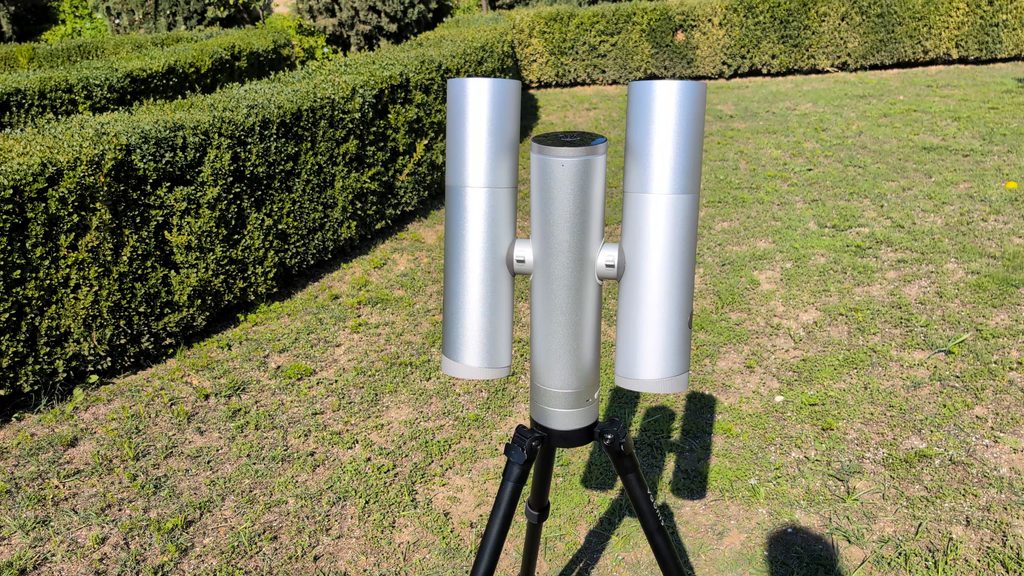
Atlas reveal and Price Tag
The atmosphere in the room was electric during the reveal—people were unbelievably enthusiastic as Cyril, the CEO, and Gilles, the CTO, took the stage to explain the vision, hardware, and engineering behind the Atlas, which we’ll dive into below. But when the covers were finally pulled back and the pricing slides hit the screen, it also gave an immediate reality check.
The Single 80mm module setup launches at an early-bird pre-order price of €3,990 (until mid-November 2026), rising to €4,990 afterwards. If you want the full Twin configuration with two 80mm imaging modules, the pre-order starts at €5,490, going up to €6,990 later on.
🛒 Where to Pre-Order the Vaonis Atlas
Vaonis Atlas (Single Module)
- 🌐 Vaonis Direct: Pre-Order Official Store
- 🇺🇸 High Point Scientific: View at High Point
- 🇺🇸 Agena Astro: View at Agena Astro
- 🇪🇺 Astroshop (EU): View at Astroshop EU
Vaonis Atlas Twin (Dual Modules)
- 🌐 Vaonis Direct: Pre-Order Official Store
- 🇺🇸 High Point Scientific: View at High Point
- 🇺🇸 Agena Astro: View at Agena Astro
- 🇪🇺 Astroshop (EU): View at Astroshop EU
It made it crystal clear that Vaonis isn’t trying to compete with budget entry-level smart scopes like the Seestar or Dwarflab series. They are aiming squarely at the high-end amateur astrophotography market, which left me with plenty to think about as I joined the star party…
Meeting Atlas: 3 Features to improve Deep-Sky Imaging forever
The morning after the opening conference, the French sun came out and, thanks to Stéphanie, I got to inspect the Atlas up close in broad daylight and have a chat with Cyril, the CEO of Vaonis. Standing right next to Atlas, the build quality is immediately apparent. It isn’t built with flimsy plastics; it features a heavy-duty, rugged diecast aluminum frame rated at IP64 for weather resistance. Heavy dew, sudden temperature drops, or light rain won’t pose any threat to the internal electronics. Plus, Atlas looks stunning—easily one of the most beautiful smart telescopes I’ve ever laid eyes on!
With last nights reveal in mind while examining the hardware up close, I saw three massive technical features that set the Vaonis Atlas apart from other smart telescopes or custom telescope rigs:
1. “SkyDock” plus 80mm Imaging Module
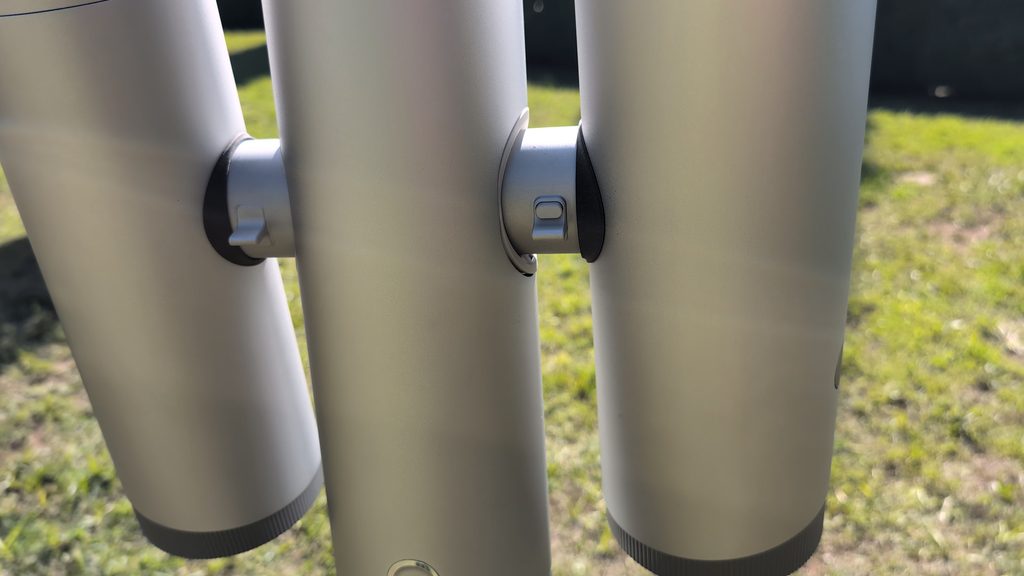
In a traditional astrophotography setup, you’re usually wrestling to put the optical tube assembly (OTA – your telescope) on your mount, and you need to attach and calculate precise back-focus distances for your astro-camera. The Atlas completely throws that hassle out the window.
Instead, the new Atlas mount features two modular interfaces called SkyDocks. You can snap an imaging module on or off in under 5 seconds without touching a single tool. Vaonis specifically calls these units “imaging modules” because each one houses both the optical tube (the telescope) and the camera sensor together in a sealed system.
The primary imaging module is an absolute optical powerhouse:
- Optics: Fast 80mm quadruplet apochromatic refractor operating at f/4.5.
- Sensor: Backlit Sony IMX 585 color sensor with ultra-low read noise and high quantum efficiency.
- Thermal Management: Built-in active temperature control and automatic dew heaters inside the optical tube, ensuring your optics stay crystal clear throughout a humid night of imaging.
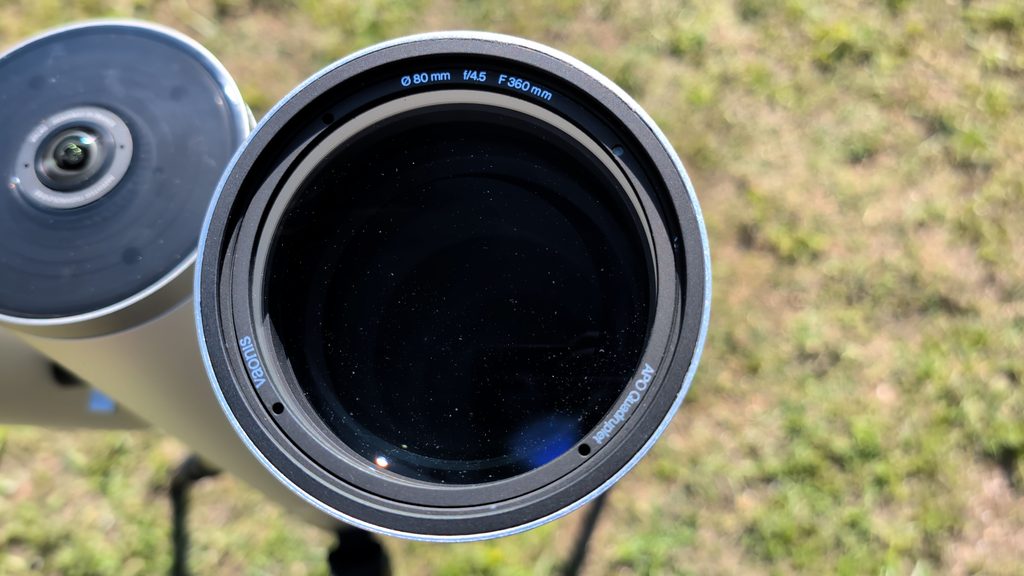
When I asked Cyril why they selected the Sony IMX 585 over other sensors for this imaging module, he explained that seasoned astrophotographers consider the IMX sensors as the absolute best cameras for high pixel sensitivity and low noise—and I can confirm that, as I have been primarily using Sony IMX sensors for the past five years.
So let’s get a bit more nerdy as astrophotographers tend to be. The IMX 585 has a native resolution of 8.3 megapixels (3840 x 2160 pixels with 2.9 micron pixel size). I’ve been using the popular IMX 571 on my custom rigs myself, which gives you a larger 26 MP (a larger field of view) – but retails at a hefty €1300 to €1500 depending on the brand….
Out of the box, the Atlas’s 80mm imaging module (360mm focal length) paired with the Sony IMX585 sensor natively delivers a generous 1.78° × 1.00° field of view at a sharp image scale of 1.66 arcsec/pixel. That native frame is already wide enough to comfortably fit major deep-sky targets like the Orion or Lagoon Nebulae in a single shot. However, Cyril pointed out that when you need even broader coverage, Vaonis’s mosaic technology lets you expand that native field up to three times—yielding a seamless total frame of about 3.50° × 2.00° at a maximum resolution of 24 Megapixels. This dual capability gives you the best of both worlds: crisp native imaging for framed targets, and massive wide-field mosaic captures ready for large-format printing.
💡 My Take
The SkyDock ecosystem is a masterclass in usability. By locking the optics, sensor, and back-focus geometry into a factory-calibrated, sealed housing, Vaonis completely eliminates the most frustrating bottlenecks of traditional astrophotography—calculating sensor tilt, measuring back-focus distance, and fighting dew build-up on cold nights. However, that plug-and-play convenience comes with clear trade-offs: you are permanently locked into the integrated sensor with no option to upgrade or swap camera types down the line without buying an entirely new module.
The IMX585 sensor on the 80mm imaging module lacks active thermoelectric cooling (TEC). Although the sensor performs remarkably well without active cooling, thermal noise will still remain a factor during warm summer nights—even with a sensor as efficient as Sony’s IMX585. While adding TEC cooling would deliver cleaner images, cooling draws significant power. On a system rated for roughly 6 hours of battery life with one module (and ~4.5 hours in Twin Mode), active cooling would drain the internal battery rapidly and require a bulky external power bank—a compromise Vaonis probably avoided to keep the Atlas lightweight, self-contained, and truly portable.
2, Twin Setup: Combining 2x80mm Imaging modules
Because the Atlas mount houses two SkyDocks, you can attach a second 80mm imaging module and run the system in Twin Mode. This is not just a visual gimmick—it fundamentally changes how you gather data.
Twin Mode: Faster, but how does the math work?
At first glance, you might think running two identical scopes simply cuts your individual exposure time in half. While this is true in terms of real-world data collection—as you collect twice as much data in the same timeframe—the physics of photon collection works a bit differently when taking into account the Signal-to-Noise Ratio (SNR).
On their official specifications for the Atlas in Twin Mode, Vaonis highlights two main performance metrics: an equivalent optical speed of f/3.2 (down from f/4.5) and a +41% boost in signal-to-noise ratio (SNR).
🔍 Click here to expand the full optical & SNR math breakdown
- The Equivalent f/3.2 Speed: Physically, both 80mm quadruplets retain their native f/4.5 focal ratio. However, because you are collecting photons across two separate 80mm apertures at once, the combined light-gathering surface area equals that of a single 113.1mm* aperture. Dividing that 113.1mm equivalent diameter into the 360mm focal length gives an effective light-gathering speed of f/3.2.
- The +41% SNR Boost: Noise from deep-sky targets (shot noise) is randomly distributed across your sensor, meaning noise increases with the square root of your signal (√2 ≈ 1.414). If you run both scopes simultaneously for a 2-hour session, you collect twice as many photons as a single scope in that same window, yielding a mathematically precise +41% improvement in image clarity.
- The Real-World Time Saving: If your goal is to match the exact image depth and quality of a single scope shooting for 4 hours, Twin Mode does allow you to finish the entire session in just 2 hours of real-world wall-clock time, as both modules accumulate data at the same time.
* Note: The equivalent 113.1mm aperture is calculated by scaling the single 80mm aperture by the square root of 2 (80mm × √2 ≈ 113.1mm), since light collection scales with circular surface area rather than a straight line.
Potential Multi-Band Workflows
Each 80mm imaging module features an internal 1.25″ filter drawer situated directly in front of the IMX 585 sensor. This accepts standard 1.25″ light pollution or dual-band narrowband (H-alpha / OIII) filters from any brand, though Vaonis will also launch official filters with automatic recognition inside the Gaia app.
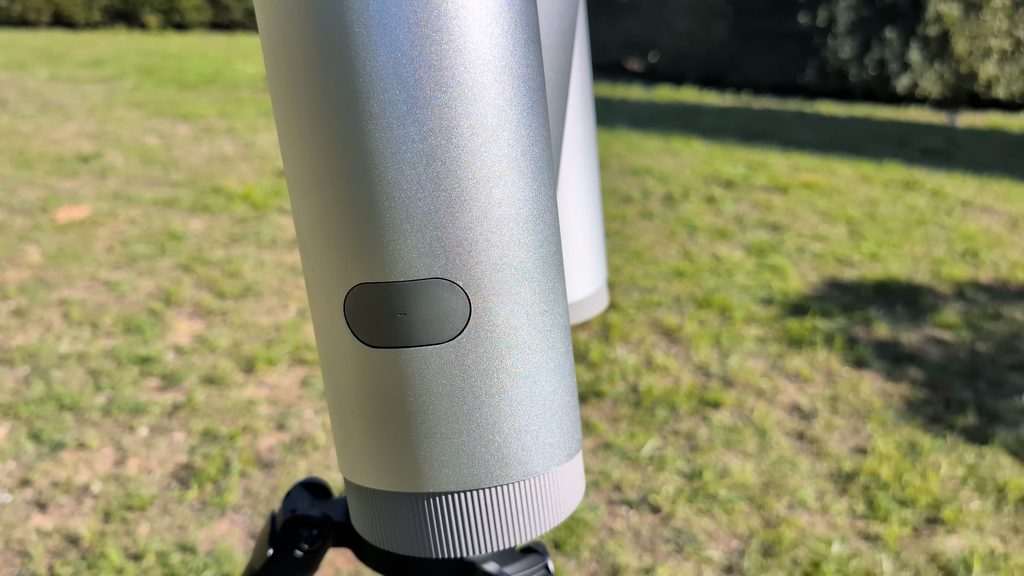
Where this gets truly exciting is combining different filters across both scopes in Twin Mode. You can load a dual-band filter into Scope A while leaving Scope B completely unfiltered in broadband RGB. When targeting object-rich targets like the Triangulum Galaxy (M33), Scope A captures the deep Hydrogen-alpha emission nebulae while Scope B captures true star colors and galaxy arms simultaneously. It would be glorious if the Gaia APP could blend them into a single, high-contrast Ha-RGB composite in real time :-).
💡 My Take:
The core concept behind the Twin Setup is brilliant: It delivers a massive +41% boost in Signal-to-Noise Ratio (SNR) on deep-sky targets right out of the box. As for my fantasy, capturing simultaneous broadband RGB on Scope B while running a dual-band filter on Scope A gives you instant Ha-RGB data without spending nights swapping filters manually.
The Color Sensor & Exposure Dynamics: At a fast f/4.5 focal ratio paired with the IMX 585’s ultra-low read noise (~1.3e⁻), 10-second Alt-Az exposures in dual-band mode are surprisingly effective for bright objects like star clusters, and cores of nebulae and galaxies. However, because the Bayer matrix restricts H-alpha to 1 out of 4 pixels, pushing into extremely faint surrounding gas still benefits immensely from longer single exposures (1–3+ minutes) to keep faint signals well above the noise floor without drowning the image stack in read noise—which is precisely why the upcoming long-exposure limitless (EQ tracking) mode will be such a critical unlock for advanced narrowband imagers.
Future Limitless (EQ) Mode
At launch in March 2027, the Atlas operates in standard Alt-Az mode, capping exposures around 10 seconds to avoid field rotation. While 10-second frames at f/4.5 easily capture bright nebulae, star clusters, and galaxy cores (like M31’s ~3.4 mag core), pulling faint outer spiral arms or extended nebulae down to magnitude 14–15+ out of the noise floor requires longer sub-exposures. Fortunately, Cyril confirmed they are developing a post-launch “Limitless” Equatorial Mode. In a Twin setup, one 80mm module acts as an auto-guider while the second captures single exposures of up to 20 minutes.
When operating in Equatorial (EQ) mode, the telescope must be physically tilted to align with the North or South Celestial Pole. However, fully loaded with two 80mm quadruplets, the dual-scope system weighs roughly 10 kg (22 lbs). Tilting that much top-heavy weight onto a standard equatorial table or wedge creates a real risk of tipping the tripod over. Cyril hinted at a custom EQ table design Vaonis is developing, which will actively counterbalance the 10 kg payload to keep the center of gravity centered directly over the tripod base at all times—making long-exposure tracking completely safe, balanced, and stable.
💡 My Take:
Unlocking untethered long exposures via the future EQ mode is a logical next step, especially for narrowband imaging with color cameras and dualband filter, where the Bayer matrix overhead demands longer sub-exposures to pull faint detail above the noise floor.
The Guiding Trade-off: Repurposing one imaging module as an autoguider during EQ mode creates a compromise: you step away from the dual-scope photon collection (+41% SNR boost) of Twin Mode as one imaging module is effectively turned into your guide scope.
Brainstorming Alternatives: Note: This is just my personal fantasy running wild. Looking at future possibilities, adding a low-profile external guide camera could preserve both main imaging scopes, though that would admittedly add extra hardware clutter to Vaonis’s otherwise clean, self-contained ecosystem. Alternatively, an internal rotating camera sensor block with a guiding sensor could compensate for field rotation natively in Alt-Az mode—keeping the Atlas mount perfectly level without needing an external wedge at all. We’ve seen exciting progress in field rotation mechanisms recently with systems like PrimaLuce Lab’s ARCO rotator or the upcoming DWARFLAB Draco. While Vaonis hasn’t hinted at internal sensor rotation for this architecture, it might be a very intersting avenue to explore, especially as it would keep the alt-az design clean and avoids eq setup complexity for the user!
3. The Integrated Sky Guard Camera
At the top of the Atlas mount sits an integrated all-sky camera driven by Sony’s IMX 676 sensor. Operating as an ultra-wide-field fisheye camera, this system—dubbed Sky Guard—films the entire night sky live in 360 degrees, capturing stars down to magnitude 6 directly on your smartphone or tablet.
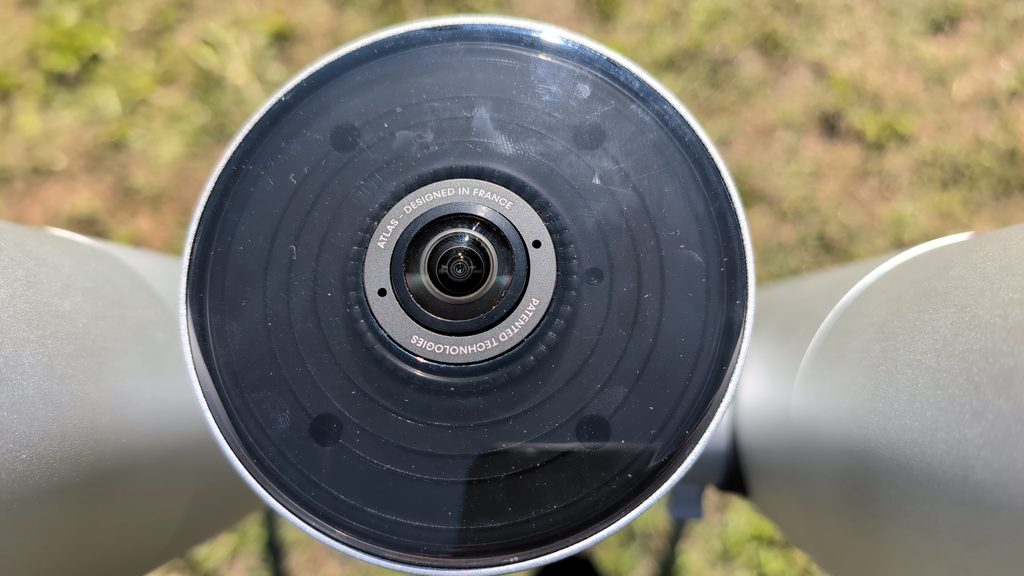
Inside the newly developed Gaia app, this wide-field feed powers several smart features designed to eliminate manual setup hassles:
- Smart Session Timelapse: By morning, Sky Guard automatically condenses your entire night into a smooth wide-field timelapse video showing satellite passes, shooting stars, and moving cloud layers over your setup.
- 360° Live Overlay & Tap-to-Point: Instead of searching through text menus or abstract star charts, you see a live video feed of your actual backyard sky. Tapping any celestial target directly on the screen commands the Atlas to point to it immediately.
- Dual-View & Obstruction Monitoring: The app splits the display into a dual view: one side shows the wide-field Sky Guard feed tracking the telescope against physical obstructions (like trees, rooflines, or passing clouds), while the other side displays the live-stacking deep-sky image from the main 80mm module.
- Plan My Night & Multi-Night Stacking: You can schedule your imaging plan in advance based on your local horizon. For multi-night projects, the software automatically aligns and resumes image stacking on the exact same target across separate imaging sessions.
💡 My Take
My take on this is simply: Genius!
Integrating an all-sky camera directly onto the mount solves one of the biggest headaches in backyard astrophotography: dealing with real-world obstructions. Because Sky Guard uses computer vision algorithms to separate foreground objects from open sky, seeing exact tree branches or rooflines overlaid on your target path means you no longer waste precious imaging time collecting frames of a maple tree. Also, seeing weather conditions in real-time and the option to create timelapses of your imaging night is simply brilliant.
Future Potential….
When chatting with Cyril about software updates planned after the initial March 2027 release, he shared a few exciting modes currently in development. Beyond the “Limitless” EQ tracking feature, he highlighted Superresolution Mode—a software processing pipeline that utilizes sub-pixel drizzle integration during live frame capture to extract ultra-fine details and boost the effective resolution of your final stacked images.
During the 10-year anniversary presentations, members from Vaonis also brainstormed longer-term possibilities for the SkyDock ecosystem, including dedicated planetary imaging modules and potentially larger, heavy-duty Atlas mounts capable of accommodating even bigger payloads down the line. For now, though, let’s bring our focus back to what’s coming at launch in March 2027!
Vaonis Atlas vs. Traditional Custom Astrophotography Rigs
After returning to Utrecht and looking at my custom equatorial rig—complete with its clutter of USB hubs, an astrostation (stella vita or asiair plus), guide scope, and heating bands —I had a clear perspective on where the Atlas sits in the astrophotography market.
It’s crucial to understand that the Atlas isn’t built to compete with budget entry-level scopes like the Seestar or Dwarf series. It enters directly into the territory of high-end custom rigs. So taking that into account, let’s copmare the pros and cons of getting into astrophotography with Atlas vs a traditional astrophotography rig.
| Feature / Aspect | Vaonis Atlas | Traditional Custom Rig |
|---|---|---|
| Investment / Price | €3,990 (Pre-order before Nov 15) / €4,990 standard MSRP | ~€4,500+ (Combined total for dedicated EQ mount, APO scope, camera, filter drawer, dew control, & astrostation) |
| Optical Capacity | Dual SkyDock (Up to 2 imaging modules simultaneously) | Single primary OTA (requires extra side-by-side bar for dual setups) |
| Setup Time | < 2 minutes (Plug-and-play) | 30–60 minutes (Setup, polar alignment, software, etc.) |
| Cable Management | Zero external cables | Complex wiring (Power, USB, dew heaters, laptop/astrostation) |
| Portability & Build | Sleek, IP64-rated integrated unit | Heavy, multi-piece modular components |
| Warranty Support | 5-Yr (Modules) / 10-Yr (Mount Base) | Standard 1–2 year individual warranties |
| Customization | Locked to Vaonis SkyDock ecosystem | Infinite (Any camera, filter wheel, scope) |
| Target Focus | Optimized for Deep Sky & Mosaics | Highly customizable (Deep sky or planetary) |
Final Verdict: Who is the Atlas For?
Reaching the 10-year mark is a major milestone, and seeing how far Vaonis has come since their early days is truly inspiring. Having met some of the hardworking, passionate people behind the scenes it is clear that Vaonis isn’t just building hardware; they are actively pushing the boundaries of smart telescope technology. Their driving vision has always been to simplify the complexity of night-sky imaging so that more people are inspired to look up at the stars.
With the Atlas, that passion extends into a bold design philosophy. Vaonis has placed enormous effort into elevating the smart telescope from a piece of utility equipment into a genuine beauty and fashion statement. Featuring a sleek, minimalist die-cast aluminum frame with clean contours and zero visible cables, the Atlas is designed to look like a modern piece of high-end design hardware that you would proudly display in your living room rather than hide away in a garage.
- Choose the Atlas if: You value premium design aesthetics, an effortless sub-two-minute setup, dual-scope integration, and zero cable clutter. You want high-end deep-sky results without spending hours troubleshooting equipment in the cold. Additionally, the 10-year mount base warranty and 5-year optical module warranty provide an unmatched level of long-term peace of mind compared to standard consumer astrophotography warranties.
- Stick to a Custom Rig if: You enjoy the hands-on process of tinkering with hardware, swapping dedicated color/monochrome (cooled) astro-cameras, using external filter wheels, or building specialized long-focal-length (planetary) setups. And Atlas is not a telescope for visual observing (it has no eyepiece), nor detailed planetary imaging – although planets through an 80mm scope will be somehwat better as compared to smaller aperture budget smart telescopes.
Technical Specifications: Vaonis Atlas
1. Optical System, Sensor & Field of View Specs
| Aperture | 80 mm |
|---|---|
| Focal Length | 360 mm |
| Native Focal Ratio | f/4.5 |
| Optical Design | Apochromatic quadruplet (4 lenses in 3 groups, Petzval-derived) |
| Glass Elements | 2x Extra-low Dispersion (ED) + 1x Lanthanum |
| Optical Quality | RMS spot size: 1.5 microns (center), 1.6 microns (mid-field), 2.5 microns (edge) |
| Camera Sensor | Sony IMX585 (Color, Back-illuminated CMOS) |
| Sensor Format | 1/1.2 inch (11.2 mm x 6.3 mm) |
| Native Resolution | 8.3 MP (3840 x 2160 pixels) |
| Pixel Size | 2.9 microns |
| Native FOV | 1.78 x 1.00 degrees |
| Mosaic Mode FOV | Up to 3.50 x 2.00 degrees (Resolution up to 24 MP) |
2. Twin Setup & Performance Metrics
| Twin Mode Collection | 2x light collection on a single target simultaneously |
|---|---|
| Equivalent Speed | f/3.2 equivalent speed (at 360 mm focal length) |
| SNR Boost | +41% improvement in Signal-to-Noise Ratio |
| Stacking Sync | Automated real-time dual-stream stacking in Gaia App |
3. Mount Architecture & SkyDock Specs
| Mount Architecture | Alt-Azimuth (Native) |
|---|---|
| Future EQ Support | Equatorial Table accessory + Limitless Mode (H2 2027) |
| Modular Coupling | Tool-less SkyDock quick-release (under 5 seconds swap) |
| Interface Bandwidth | Up to 3 Gbit/s data transfer rate per module |
| Leveling System | Electronic bubble level guided by an 18-LED ring |
| Thermal Control | Humidity & temperature sensors with automated internal dew heaters |
| Structure | Outer load-bearing die-cast aluminum frame |
| Protection Rating | IP64 rated (dust and splash resistant) |
| Mount Weight | 3.5 kg (7.7 lbs) |
| Total System Weight | 6.5 kg (Single Setup) / 9.5 kg (Twin Setup) |
| Dimensions | 41 x 10 x 20.5 cm |
4. Sky Guard (All-Sky Camera) & Filter System
| Sky Guard Sensor | Sony IMX676 (12 MP) |
|---|---|
| Sky Guard Lens | 185 degree Fisheye wide-field lens |
| Sensitivity | Captures real-time night sky stars down to Magnitude 6 |
| Smart Sky Features | Live 360 degree sky stream, tap-to-point target selection, dual-view preview |
| Obstruction Management | Real-time horizon detection & tree/roofline overlay tracking |
| Filter Integration | Internal 1.25 inch filter drawer per module |
| Filter Compatibility | Standard 1.25 inch third-party filters + official Vaonis auto-detect filters |
5. General Specs, Battery, Connectivity & Pricing
| Built-in Battery Life | 6 hours |
|---|---|
| Power & Connectivity | USB-C 3.1 (60W fast charging & data), Wi-Fi 6, Bluetooth, NFC |
| Simultaneous Users | 10+ users connected at once |
| Operating Temp | -20 C to +40 C |
| Output Formats | 16-bit RAW FITS, 16-bit TIFF, 8-bit JPEG |
| Early-Bird Pricing | Single: €3,990 (MSRP €4,990) | Twin: €5,490 (MSRP €6,990) |
| Release Date | Shipping starting March 2027 |
| Warranty Coverage | 10-Year Warranty on Mount Base | 5-Year Warranty on Modules |
Concluding Thoughts
The Vaonis Atlas feels a bit like a fine French wine: it requires a little time to fully mature as post-launch software updates and the EQ table roll out, but the underlying craftsmanship, optical performance, and design elegance are undeniable.
If you are looking for a high-end, hassle-free deep-sky setup that delivers professional results while removing technical barriers—and looks stunning while doing it—the Atlas stands out as a masterpiece in modern smart telescope design.
🛒 Where to Pre-Order the Vaonis Atlas
Vaonis Atlas (Single Module)
- 🌐 Vaonis Direct: Pre-Order Official Store
- 🇺🇸 High Point Scientific: View at High Point
- 🇺🇸 Agena Astro: View at Agena Astro
- 🇪🇺 Astroshop (EU): View at Astroshop EU
Vaonis Atlas Twin (Dual Modules)
- 🌐 Vaonis Direct: Pre-Order Official Store
- 🇺🇸 High Point Scientific: View at High Point
- 🇺🇸 Agena Astro: View at Agena Astro
- 🇪🇺 Astroshop (EU): View at Astroshop EU