If you are hunting for the ideal beginner astrophotography mount, you have likely realized that the 8–15 kg payload range is the ultimate sweet spot for deep-sky imaging. If you’re in the market for a cutting-edge strain wave mount, the ZWO AM3N is tough to beat with its powered dual saddle and ZWO ecosystem integration. For excellent lightweight alternatives, consider the lightweight iOptron HAE18C, or the Sky-Watcher Wave 100i for its extra payload capacity. If you want to stick to traditional, time-tested German Equatorial mounts (GEMs), definitely watch the new Sky-Watcher EQ-AL55i Pro that comes in under $1000 and has all the specs astrophotographers are looking for. Alternatively, the mid-range Sky-Watcher HEQ5-R Pro is a fantastic choice with its updated belt drive, USB/Wi-Fi connectivity, and powered Hub right on the chassis. Let’s break down which mount design deserves a spot under your night sky.
When people start their astrophotography journey and ask me for advise, I often tell them: “Put your money where your mount is!” Just think about it: You can buy the most expensive astrophotography camera and telescope in the world, but if your mount is unable to accurately track a moving deep-sky object due to the Earth’s rotation, you will always end up with blurry pictures. A high-quality tracking mount is an absolute must when you want to dive into long-exposure astrophotography.
But that being said, what should you look for? The astrophotography gear landscape is shifting incredibly fast. Today, serious beginners have the luxury of choosing between cutting-edge, ultra-portable harmonic drive mounts, classic, time-tested German Equatorial Mounts (GEMs), or a combination of the two: the so-called hybrid mounts.
Before you completely lose track of all these options, let’s take a step back. First, I’ll provide you with the main “must-haves” I always look for when evaluating a sturdy, well-designed beginner astrophotography mount. After that, we will dive into the best-value and best mid-range classic GEMs, and I’ll share my personal thoughts on which one I would consider to be best value and best buy options. Finally, we will break down five standout harmonic drive mounts utilizing strain wave gear technology—including the ZWO AM3N, the Sky-Watcher Wave 100i, and iOptron’s HAE18C, HAE16C, and HEM15. We’ll decide which ones are truly worth your money if you’re eyeing these ultra-portable mount heads, which come completely stripped of a counterweight bar, counterweights, and a tripod (all of which are now optional extras).
If you are completely new to the hobby, I suggest first checking out my guide answering the [10 most common telescope mount questions] where I break down basic terminology
Here is a quick overview of how these entry-level astrophotography mounts stack up side-by-side, complete with links to respected astroshops in the USA and Europe so you can check their current pricing.
Loading dynamic comparison matrix…
Quick Navigation: Jump to Categories
What to look for in a beginner mount to start your astrophotography hobby?
So, how did I come up with this list? Well, all of these “beginner” astrophotography mounts comply with my personal “must-have” criteria for deep-sky imaging.
First, I always look for a baseline payload capacity of at minimum 8 to 10 kg (18 to 22 lbs). A small telescope might seem light on paper, but once you bolt on a main camera, guidescope, electronic focuser, and filter wheel, the weight adds up fast. Overloading a mount causes tracking performance to nose-dive, especially on classic German Equatorial Mounts (GEMs), where you should ideally keep your gear under 50 to 60 percent of the max payload. Strain wave mounts are much more forgiving of weight, but they still benefit from some breathing room to maintain accurate tracking and prevent tip-overs.
Second, every mount on this list features computerized GoTo capabilities and is fully capable of precise, automated equatorial tracking to counteract the Earth’s rotation and prevent star trailing. Fortunately, achieving that essential polar alignment has become incredibly easy thanks to modern software. You no longer have to crouch down to squint through an optical polar scope in the freezing cold. Instead, modern capture software uses automated polar alignment modules driven by plate solving, giving you simple, on-screen instructions to adjust your altitude and azimuth knobs for near-perfect alignment in just a few minutes.
Third, every single mount listed here accepts autoguiding, which is mandatory for taking long exposure photos of three to five minutes. Internal tracking motors suffer from Periodic Error—microscopic gear imperfections that cause tracking to slowly drift over time. Autoguiding fixes this by utilizing a secondary guide camera to take short exposures of stars in the vicinity of your target. When those stars appear to drift even a fraction of a pixel from their original positions, the software sends immediate corrective pulses to the mount. This keeps your setup perfectly centered on your deep-sky object, ensuring you end up with pin-sharp multi-minute photos.
Fourth, most modern astrophotographers control their telescope mounts remotely. They do this either by connecting the mount to a dedicated smart control hub (like the ZWO ASIAIR Plus or Stella Vita) or by hooking it up to a mini-PC or laptop. From there, they run powerful astrophotography software like N.I.N.A., PHD2 (for autoguiding), KStars/Ekos, or SharpCap. To make this seamless, a modern telescope mount feature native ASCOM, INDI, or Alpaca drivers—the standard communication protocols that enable your mount to “talk” to your software. No more standing outside in the freezing cold trying to manually find and track deep-sky objects. Those days are over (unless you just love visual observing, of course!).
All mounts ($900–$2,000) in this overview support 8–15 kg (22–33 lbs), autoguiding, computerized GoTo, and remote connectivity options, making them ideal for serious beginners. For heavier-duty options, see my [advanced astrophotography mounts guide]. If you’re just starting with a wide-field DSLR or mirrorless setup, my [best star trackers guide] is a better fit.
All telescope mounts discussed in this overview are backed by reputable US and EU vendors for reliable customer support and warranty protection. If you are a hardcore tinkerer interested in building budget-friendly, open-source strain wave mounts from small-scale manufacturers or DIY plans, I have shared my thoughts on those fascinating alternatives [here].
OK, now that we’re all set, let’s delve into the advantages and disadvantages of each of the telescope mounts that I recommend for beginners in astrophotography, starting with the Best Value classical German Equatorial Mounts.
Classic German Equatorial Mounts
Traditional German Equatorial Mounts (GEMs) offer a clear budget advantage because they are generally much more affordable than strain wave systems, and they almost always arrive as complete kits with a sturdy tripod and matching counterweights included out of the box. Mechanically, they provide incredibly smooth tracking with gradual, predictable periodic error curves that can be flattened out even further using trainable PPEC (Permanent Periodic Error Correction). Backlash performance depends heavily on the price point—budget models using DC servo motors suffer from noticeable gear lag and high slewing noise, whereas mid-range belt-driven stepper motors are whisper-quiet and highly responsive. However, the major trade-off with traditional GEMs is their physical footprint; they are significantly heavier and less portable, and they require a precise, manual telescope balancing routine on both axes before every single imaging session to prevent tracking failure or gear damage.
Best Value Classic (GEM) Astrophotography Mounts ($800- $1200)
#1: Sky WatcherEQ-AL55i Pro
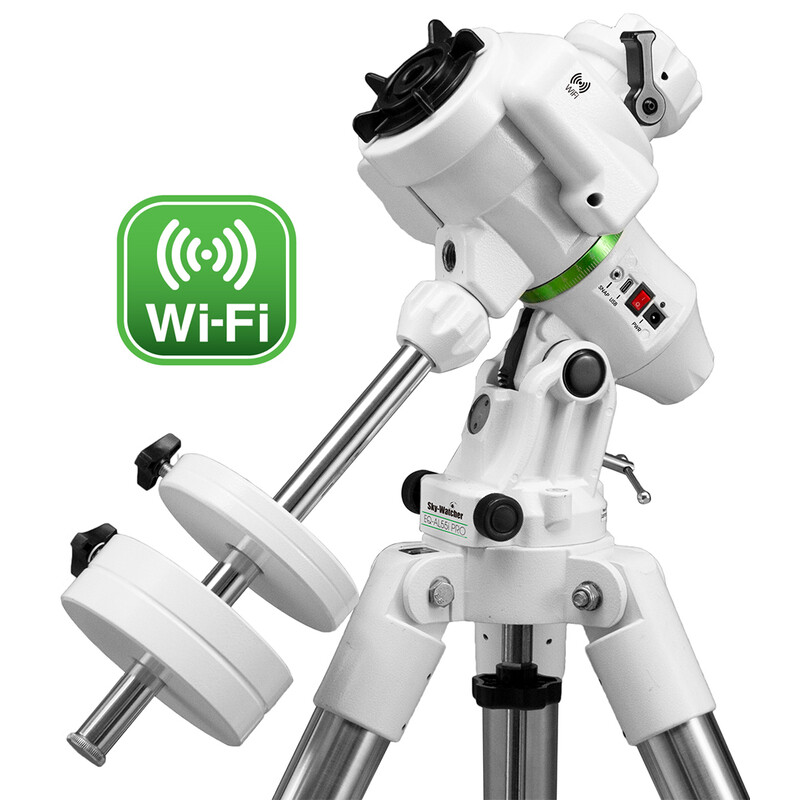
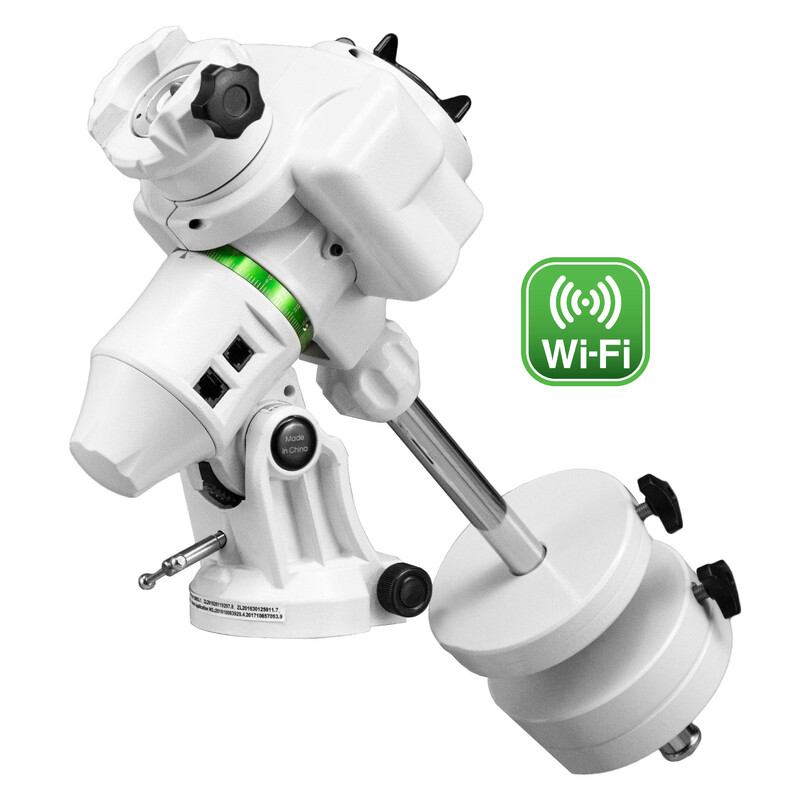
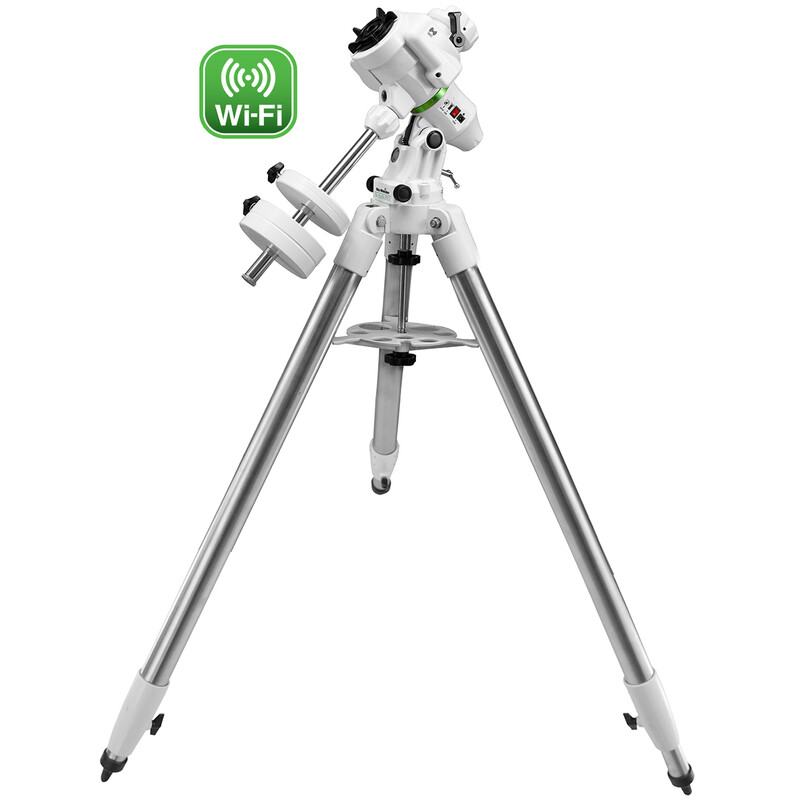
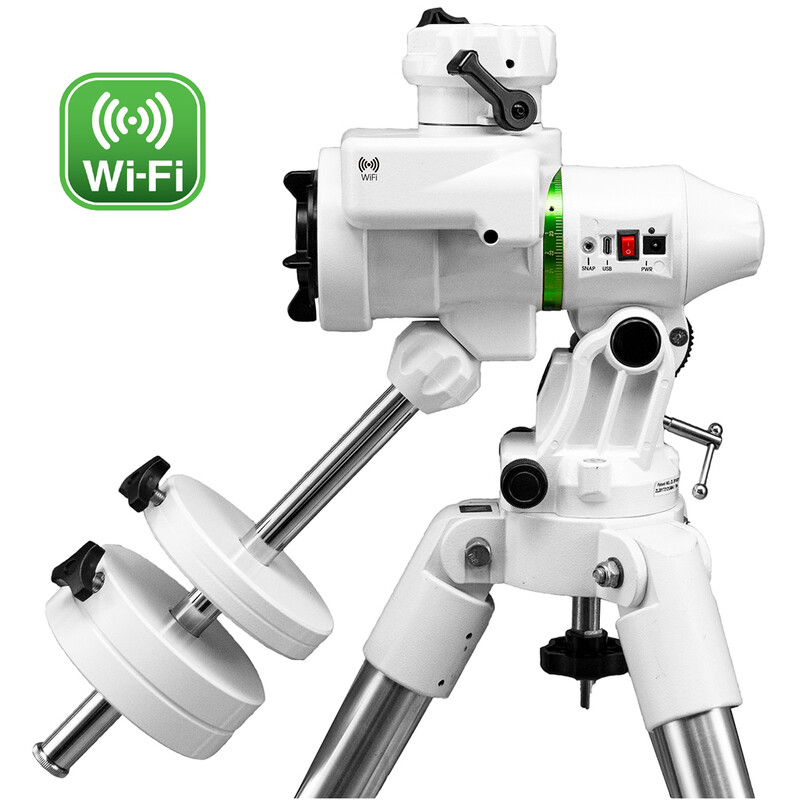
The Sky-Watcher EQ-AL55i Pro stands out as a highly innovative, modern entry into the beginner equatorial mount market, boasting a solid 10 kg (22 lbs) payload capacity. The mount head itself weighing just 3.7 kg (8.2 lbs) and the accompanying tripod adding 5.7 kg (12.5 lbs). When you factor in the two included counterweights, which total 5.3 kg (11.6 lbs), the entire assembled package comes out to a very manageable 14.8 kg (32.6 lbs). This lightweight profile makes it an exceptionally easy grab-and-go option for field use or travel.
Replacing the discontinued EQM-35 Pro, this model entirely outclasses its predecessor by adding integrated Wi-Fi, Bluetooth, and a built-in illuminated polar scope reticle right out of the box. Its standout feature is the “All-Latitude” (AL) hardware redesign, which uses a dual-position counterweight bar to allow a full 0° to 90° polar elevation range. This completely prevents the mechanical locking or tripod-striking issues encountered by traditional mounts when used near the equator or in extreme northern and southern latitudes. Additionally, Sky-Watcher modernized the cable management by entirely encasing the motor housings and featuring a stationary power hub alongside a native USB-C port, massively reducing the risk of accidental cable snags. Real-world users highlight that it integrates flawlessly over USB-C with mini-PCs or astro-controllers like the ASIAIR, running smoothly and quietly for light-to-medium imaging payloads.
On the downside, it utilizes standard gears and mini DC servo drives rather than a silent, snappy belt-driven system like its heavier brother, the Sky-Watcher HEQ5-R Pro. Because of those servo gears, you can expect a normal amount of mechanical backlash, resulting in real-world RMS guiding numbers that hover around 0.75 to 1.2 arcseconds when autoguiding in PHD2. Furthermore, when you slew this mount at maximum speed, your neighbors might wake up in a panic thinking you just fired up a commercial espresso machine in the backyard. It also does not ship with a physical hand controller, which is Sky-Watcher’s polite way of telling you to use your phone, tablet, ASIAIR, or laptop instead—though traditionalists can buy the SynScan V5 hand controller separately for around $170. Ultimately, for astrophotographers who already plan on automating their entire rig through smart software anyway, this entry-level mount packs an exceptional punch, beautifully bridging the gap between lightweight star trackers and heavy, expensive setups. Best of all, as a Dutch astrophotographer, I absolutely have to highlight its most attractive selling point: this is the only motorized GoTo equatorial mount in this overview that sneaks in comfortably below the 1,000 dollar or euro mark.
#2: The Celestron Advanced VX
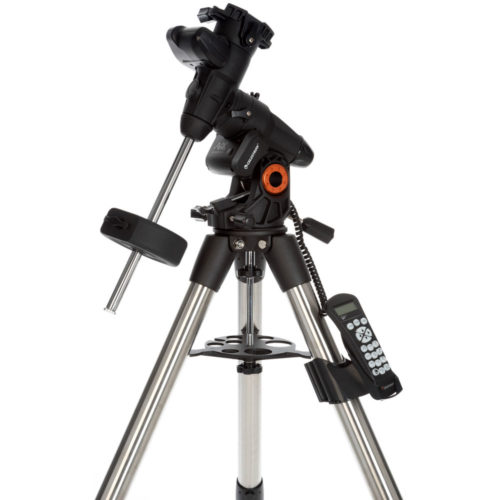
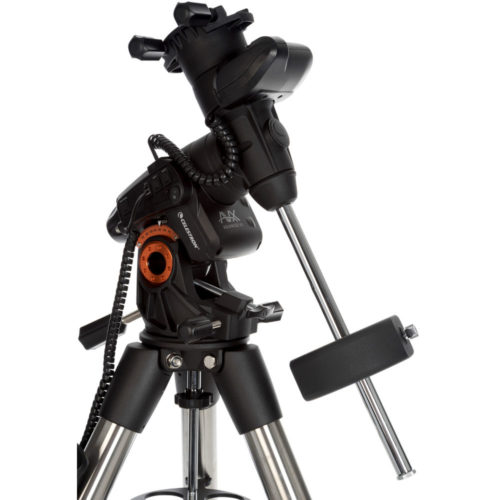
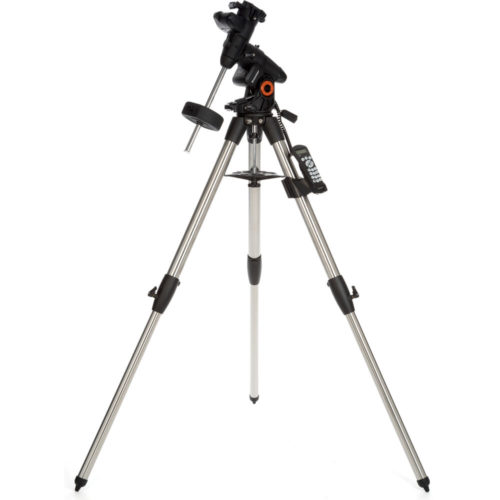
I logged over two years of field use with the Celestron Advanced VX (AVX) tracking my early deep-sky images, so I know firsthand exactly how this time-tested workhorse performs under the stars. Boasting an impressive 14 kg (30 lbs) payload capacity, it provides exceptional stability and plenty of weight breathing room for entry-level setups and mid-sized optical tubes on a budget. The mount head weighs 7.71 kg (17 lbs), and it sits on a beefy 8.16 kg (18 lbs) tripod. Once you slide on the included 5.4 kg (12 lbs) counterweight, the total assembled kit weight reaches 21.31 kg (47 lbs), sacrificing a bit of portability in exchange for its extra structural stability.
Equipped with computerized GoTo tracking, full autoguiding support, ASCOM compatibility, and Periodic Error Correction (PEC), the AVX easily delivers all the essential tracking fundamentals beginners need to jump into long-exposure imaging. Because it has maintained such a massive, long-term presence in the astrophotography community, users gain the added bonus of an incredibly vast online network filled with custom tuning guides, troubleshooting forums, and instant community support.
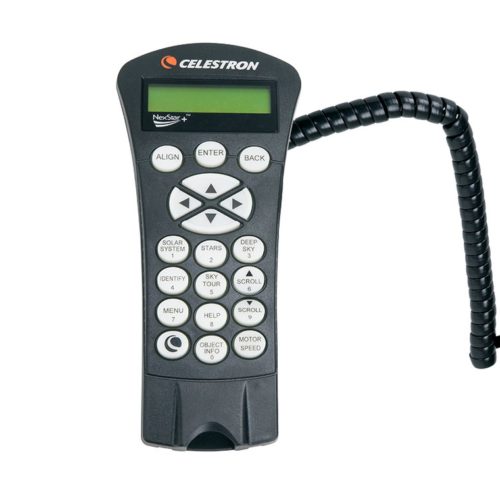
However, its internal mechanics rely on traditional DC servo motors and standard gears rather than a modern, silent belt-driven system. This introduces noticeable mechanical backlash and a distinct, high-pitched “singing” whine when slewing at maximum speed—though it remains perfectly silent while actively tracking. Connectivity is also distinctly old-school; the mount head lacks a built-in USB port, meaning your control cables must route directly through the mini-USB port at the bottom of the NexStar+ hand controller. If you are using a Windows laptop to run capture software like N.I.N.A., you will need to run Celestron’s proprietary CPWI software first to act as your master ASCOM bridge, though ASIAIR users can bypass CPWI after performing a quick mock alignment on the hand control. Ultimately, if you don’t mind the quirky cable routing and lack of built-in Wi-Fi, the AVX stands as a rock-solid, community-backed platform capable of handling substantial equipment loads.
Best Value Classic GEM? – My Verdict
Choosing between these two affordable, classic German Equatorial Mounts (GEMs) comes down to raw muscle versus modern convenience. The Celestron Advanced VX (AVX) remains the undisputed heavy-lifter, offering a 14 kg limit that effortlessly secures larger telescopes. However, linking it to modern astrophotography software like N.I.N.A. or SharpCap requires a legacy, tethered setup: you must route a USB cable through the hand controller and run Celestron’s CPWI software in the background as a mandatory driver bridge. On the flip side, beginners will love the fact that it includes a physical hand controller out of the box for quick, computer-free mount control. Furthermore, when you don’t have a direct view of Polaris, Celestron’s built-in All-Star Polar Alignment (ASPA) routine allows you to achieve an accurate polar alignment using virtually any bright star in the sky.
The Sky-Watcher EQ-AL55i Pro trades away raw payload capacity—maxing out at a lighter 10 kg—but provides a drastically simplified user experience. It ditches the stock hand controller to cut costs and weight, relying instead on built-in Wi-Fi and Bluetooth alongside a native USB-C port right on the chassis. This allows for a completely wireless connection to your smartphone or tablet via the SynScan Pro app, or a clean, direct cable hookup to smart hubs like the ASIAIR Plus or a mini-PC, bypassing the need for an intermediate hand controller altogether. Combined with its entirely enclosed motor housings and a unique 0° to 90° latitude adjustment that prevents your scope from striking the tripod legs, it stands out as a brilliantly optimized, hassle-free system for modern imagers.
Side-by-Side Comparison
| Feature / Metric | Sky-Watcher EQ-AL55i Pro | Celestron Advanced VX (AVX) |
| Max Payload | 10 kg (22 lbs) | 14 kg (30 lbs) |
| Out-of-Box Control | Wi-Fi / Bluetooth / USB-C | NexStar+ Hand Controller (USB) |
| PC/Smart Hub Hookup | Direct cable or Wireless connection | Tethered (Requires CPWI for PC) |
| Cable Design | Enclosed motor housings | External exposed DC power cords |
| Latitude Freedom | Full 0° to 90° (No tripod strikes) | 7° to 77° (Can strike at tight angles) |
| Hand Controller | Optional add-on (~$170 / €170) | Included |
My Top Pick
Sky-Watcher EQ-AL55i Pro
Why choose this: You run a small, lightweight APO refractor and want a modern, hassle-free wireless ecosystem. Built-in Wi-Fi, direct USB-C, enclosed cable routing, and a smart 0° to 90° latitude layout make it exceptionally user-friendly for automated smart setups.
Celestron Advanced VX (AVX)
Why choose this: You intend to step up to heavy, long-focal-length telescopes (like an 8-inch SCT) on a tight budget. It trades away wireless convenience for raw physical muscle, offering crucial extra load stability backed by a massive, years-deep online troubleshooting community.
Mid-range Classic (GEM) Astrophotography Mounts (1300 – 1700)
In this mid-range category of traditional German Equatorial Mounts (GEM), we discuss three highly popular mid-tier contenders: the iOptron GEM28, the iOptron CEM26, and the Sky-Watcher HEQ5-R Pro. A major advantage shared by these three mounts is their belt-driven stepper motor architecture. Unlike entry-level mounts equipped with noisy, high-pitched DC servo motors, these belt drives allow the mount to slew across the night sky at maximum speed with whisper-quiet acoustics. Additionally, the integrated belts smooth out high-frequency mechanical variations and eliminate most axis backlash, making autoguiding tracking corrections incredibly responsive.
#3: The iOptron GEM28
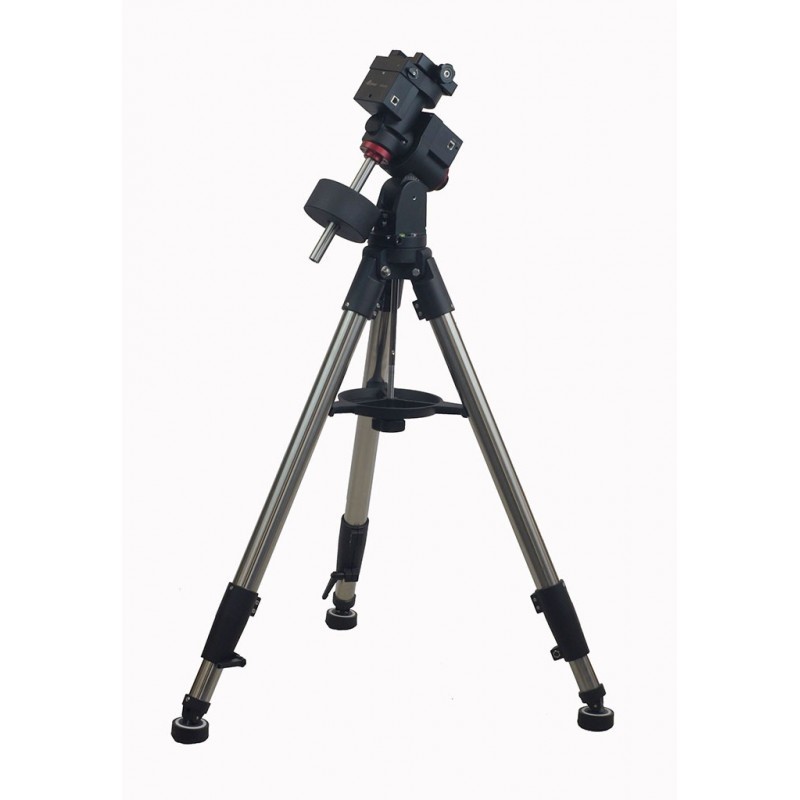
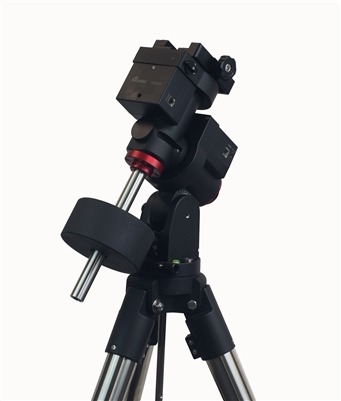
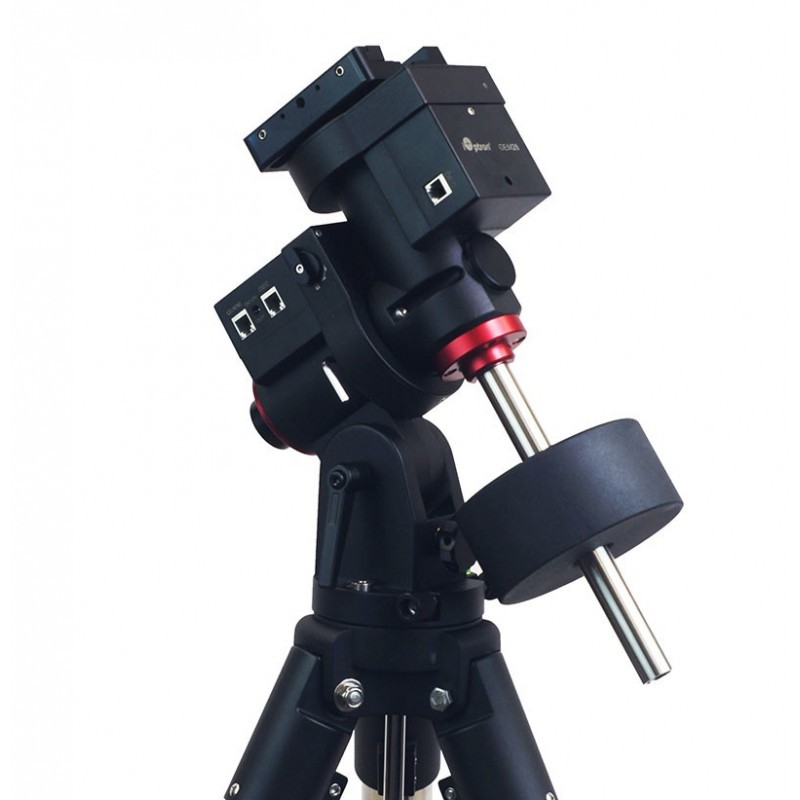
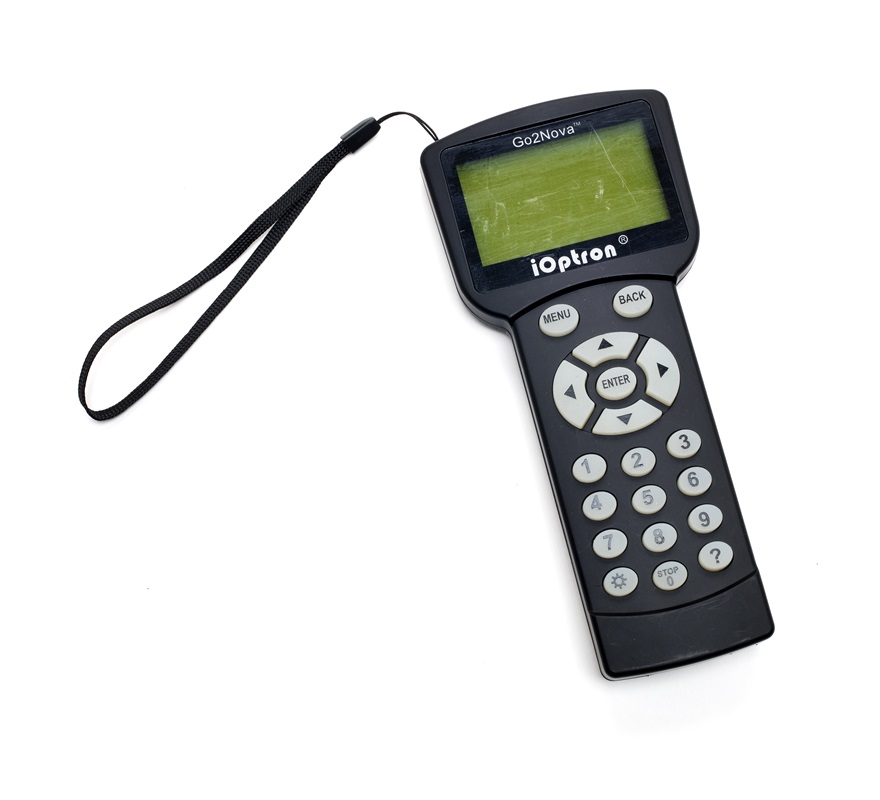
The iOptron GEM28 stands out as a meticulously crafted workhorse in the intermediate class. Boasting an impressive 13 kg (28 lbs) payload capacity, it comfortably accommodates mid-sized refractors and guiding equipment. It is an exceptionally lightweight and travel-friendly traditional equatorial setup, featuring a mount head that weighs a mere 4.5 kg (10 lbs). When paired with its standard 1.5-inch steel tripod at 5 kg (11 lbs) and the included 4.7 kg (10.4 lbs) counterweight, the total assembled package scales in at just 14.2 kg (31.4 lbs). This gives it one of the best payload-to-weight ratios available for mobile astrophotographers who want a classic German design. Users report excellent tracking reliability even when pushing its limits with longer focal lengths (0.4 to 0.8 arcseconds). Packed with essential features like computerized GoTo, autoguiding support, and ASCOM compatibility, it also boasts Permanent Periodic Error Correction (PPEC) to ensure continuous, precise tracking accuracy under the stars.
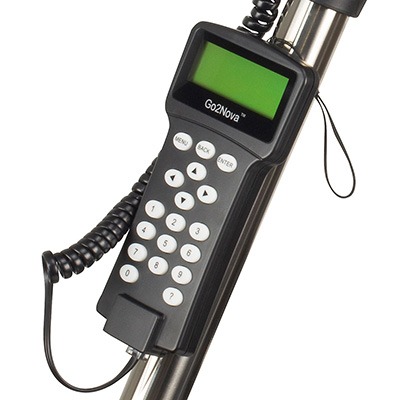
On the integration side, keep in mind that the Go2Nova hand controller is strictly required for computer or smart station control. Because the mount’s internal computer lives entirely inside that handset, it must remain plugged into the mount head whether you choose to connect your software via USB or Wi-Fi. For those running an ASIAIR Plus or mini-PC, hardwiring a high-quality USB cable directly into the port at the bottom of the hand controller provides a vastly more stable, reliable connection than finicky Wi-Fi networks that are prone to dropping out mid-session. While you need to be gentle with its lightweight locking clutches and manage your external wires carefully to avoid snags, the GEM28’s featherweight build, quiet operation, and smooth tracking make it a great addition to the entry-level market.
#4: iOptron CEM26
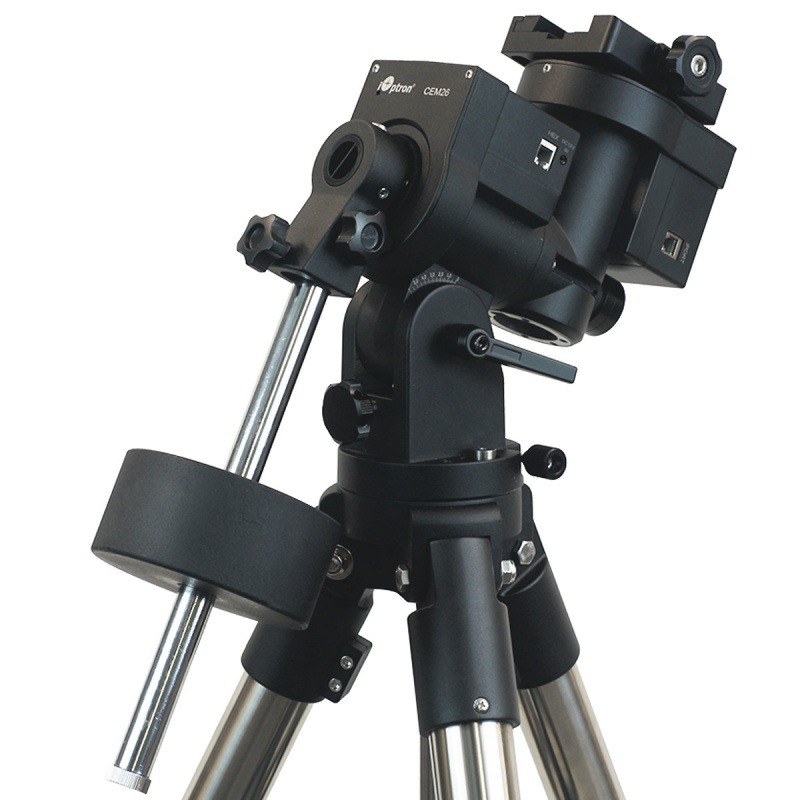
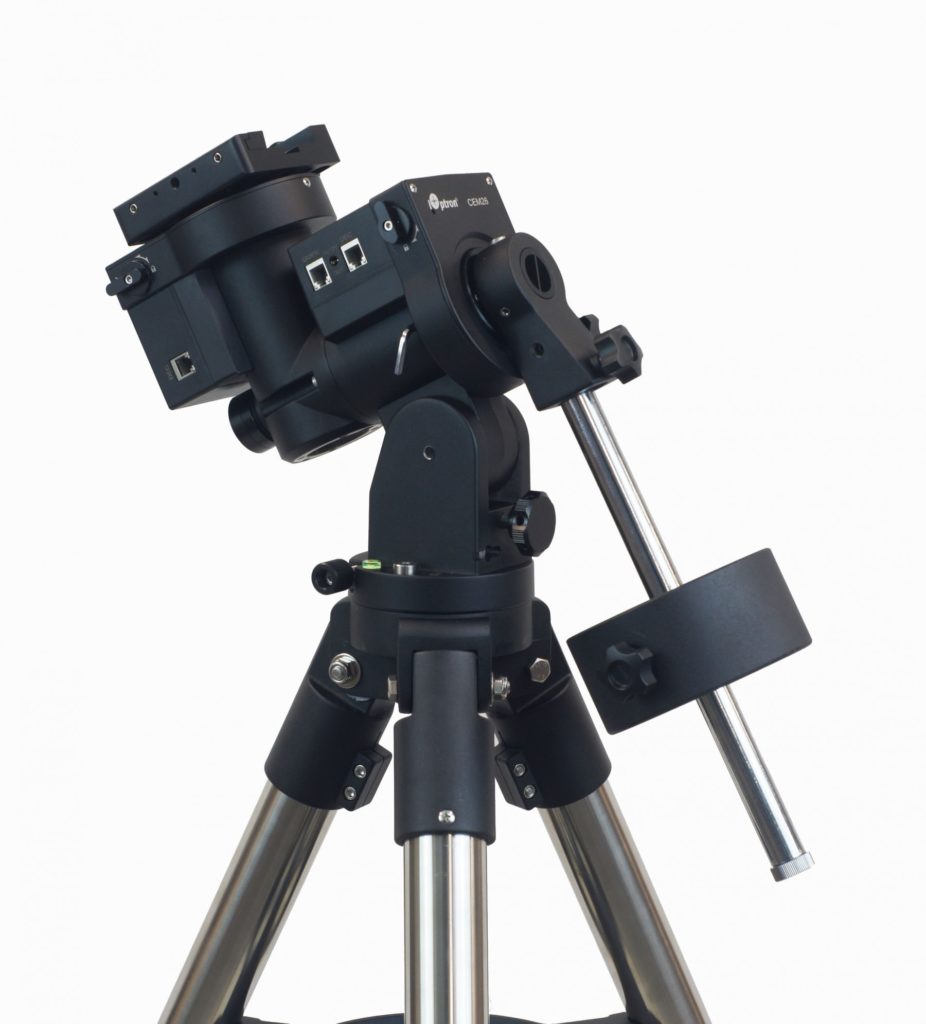
Launched alongside its traditional equatorial sibling, the iOptron CEM26 takes a completely different engineering approach by utilizing iOptron’s signature “Z-design” Center-Balanced Equatorial Mount. By placing the payload weight directly over the center of gravity of the tripod, this mount achieves incredible mechanical stability while keeping the mount head exceptionally light at just 4.5 kg (10 lbs). This clever weight distribution yields an impressive 12 kg (26 lbs) payload capacity, giving mobile astrophotographers a highly rigid tracking platform that handles small-to-medium refractors with ease. the center-balanced Sitting on a 5 kg (11 lbs) steel tripod and utilizing a 4.7 kg (10.4 lbs) counterweight, its total assembled weight rounds out to 14.2 kg (31.4 lbs).
The unique layout shifts the center of gravity directly over the tripod, providing the tracking stability of a much heavier mount without adding any actual physical bulk to your gear bag. Real-world users frequently praise its tracking capabilities, noting that when paired with proper autoguiding, the CEM26 regularly achieves incredibly tight RMS guiding numbers well below 0.7 arcseconds, punches far above its weight class, and operates quietly in the backyard.
However, community feedback highlights a few minor quirks that beginners should anticipate before heading out into the field. While the built-in iPolar electronic polar scope earns high marks for making alignment incredibly fast and precise via a laptop, some users find iOptron’s Commander software and Wi-Fi connectivity a bit finicky to configure. In particular, the hand controller acts as the connection bridge for the CEM26. It must remain plugged into the mount whether you are connecting via USB or the mount’s built-in Wi-Fi. Once the connection is established, you need to use iOptron Commander to link the mount to your astronomy software. Additionally, the unique center-balanced geometry requires a slightly different balancing workflow, as standard rules for traditional German equatorial mounts do not perfectly apply. Despite these minor software and balancing learning curves, the CEM26 remains an outstanding, ultra-portable favorite for astrophotographers who want maximum stability and superb tracking performance without breaking their backs hauling heavy gear.
#5: The Sky-Watcher HEQ5-R Pro
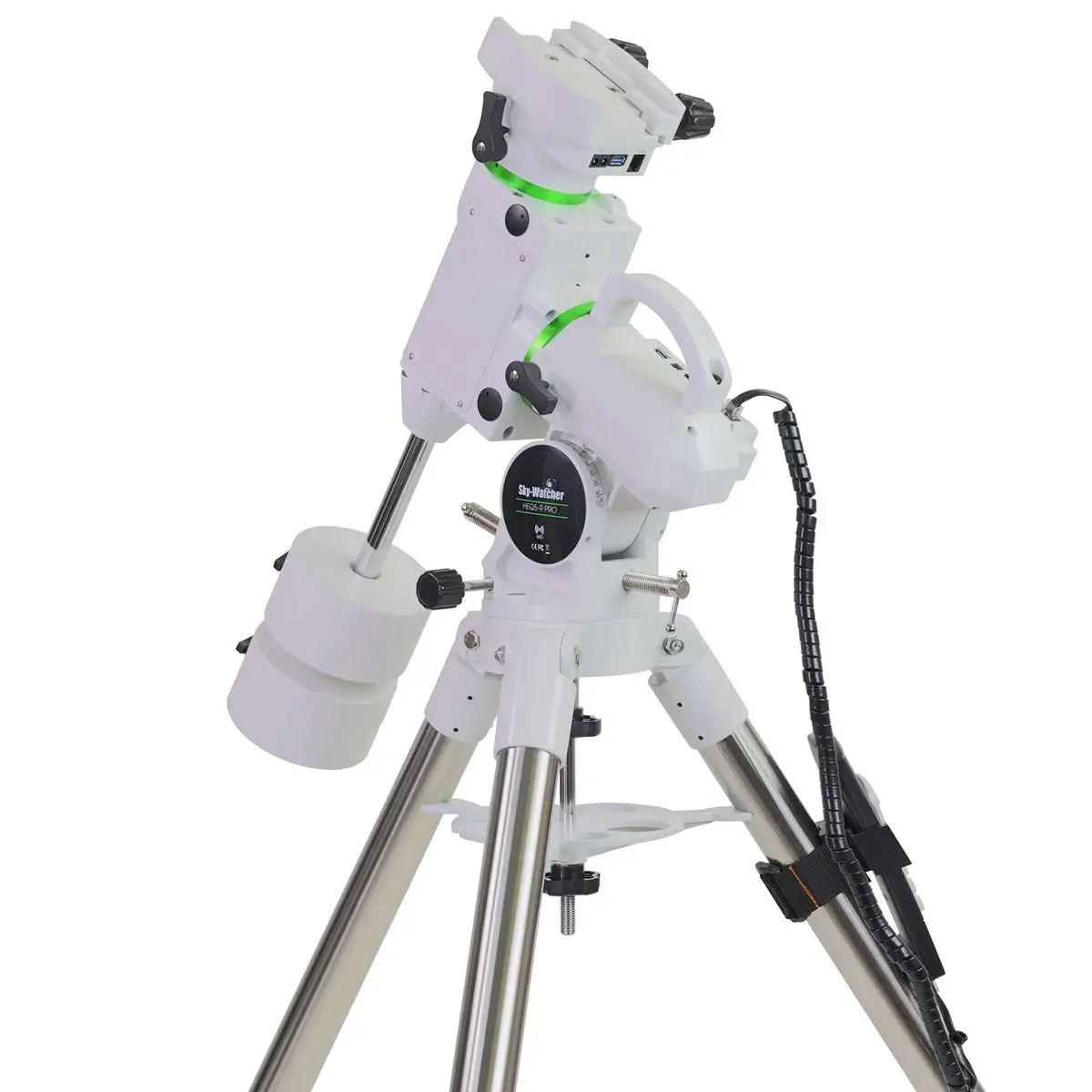
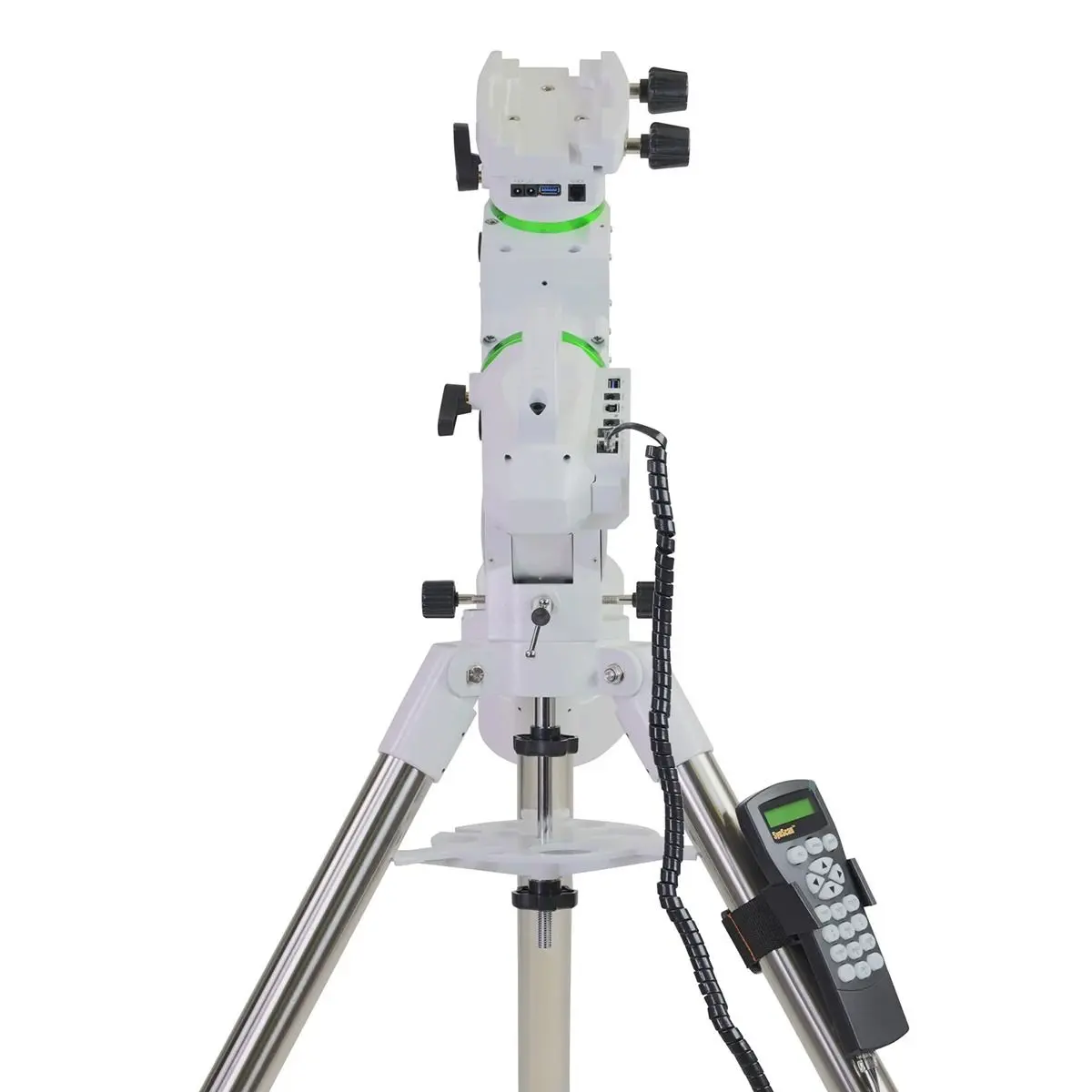
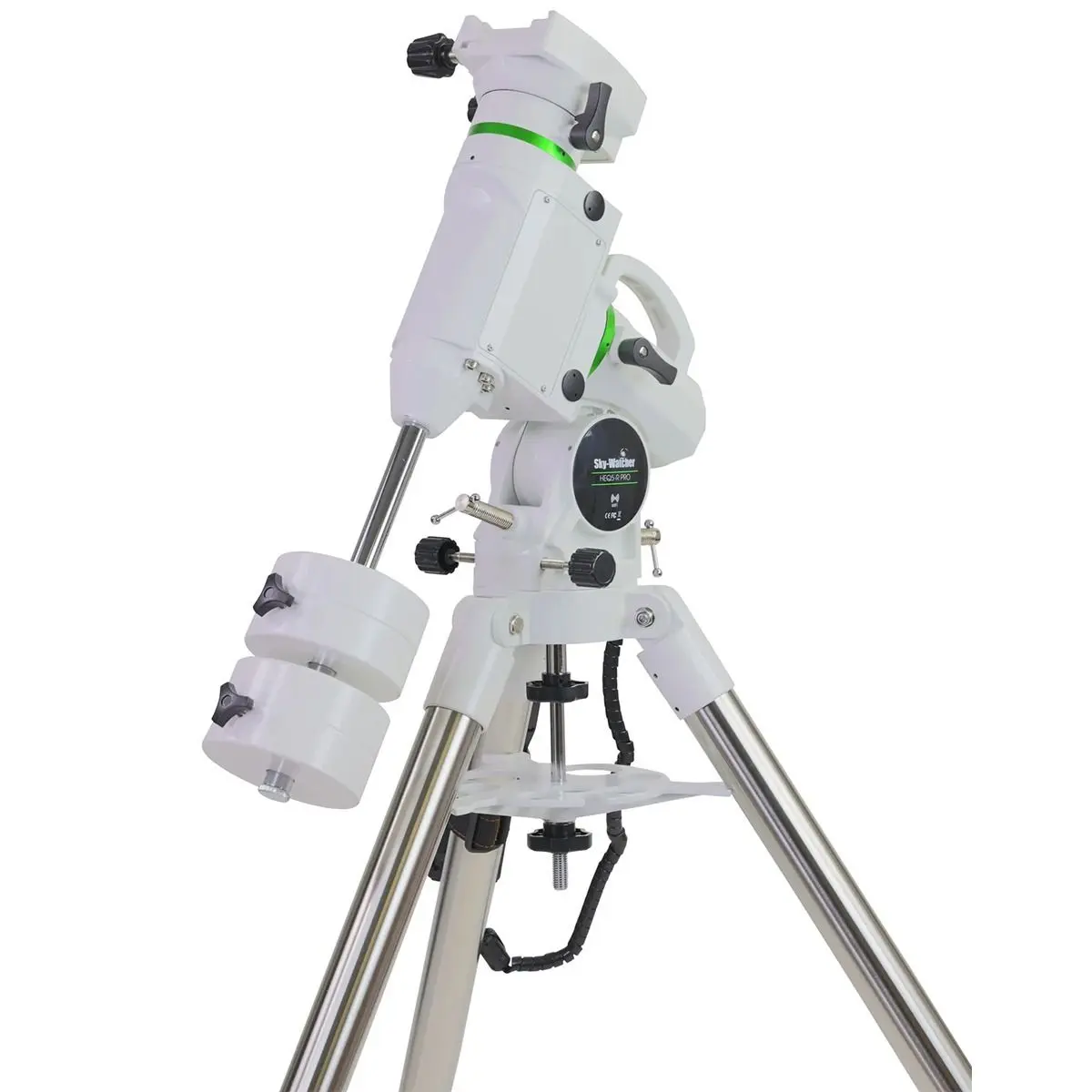
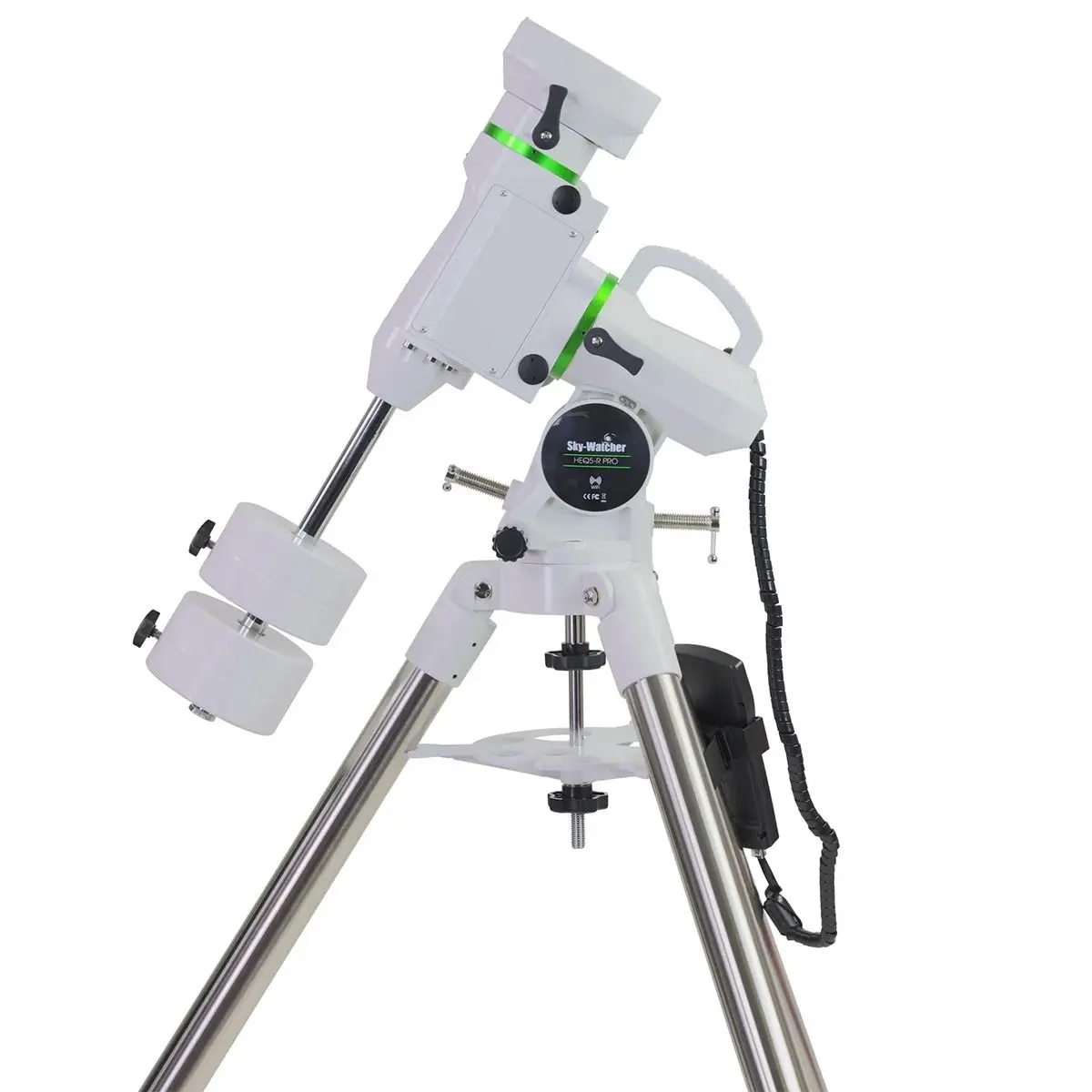
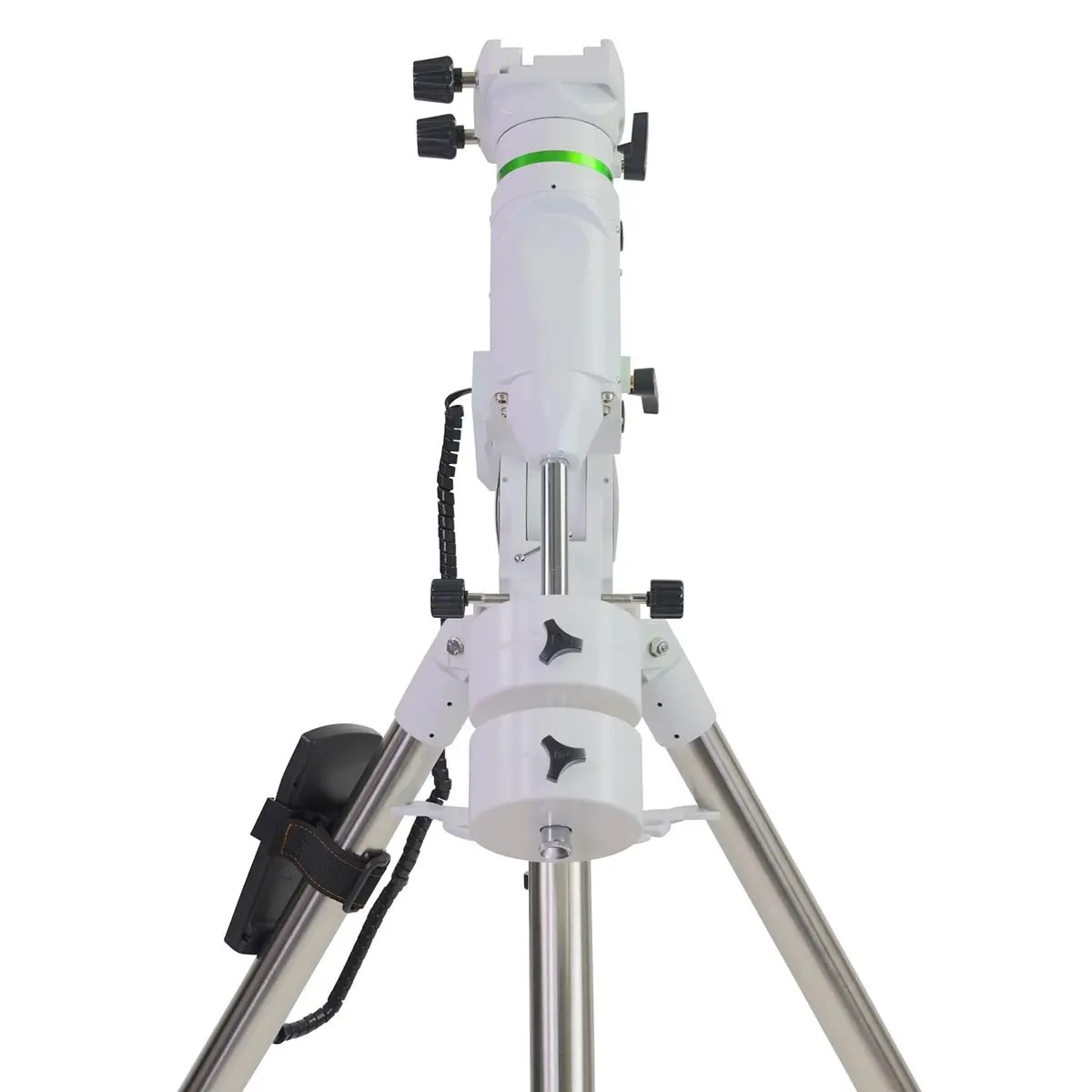
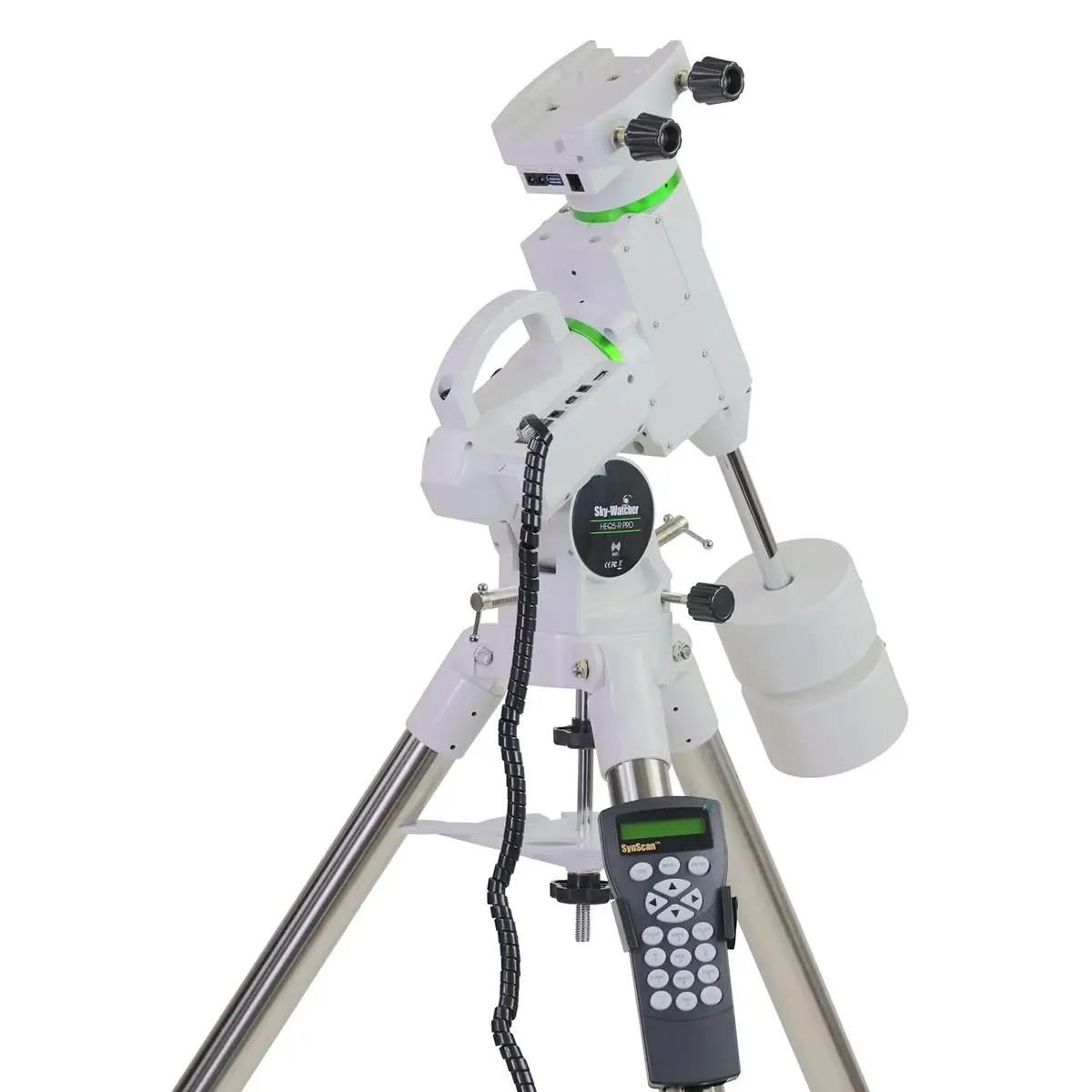
The legendary Sky-Watcher HEQ5 Pro has officially evolved into the HEQ5-R Pro, addressing the community’s call for refined mechanics right out of the box. While the previous generation often required third-party belt-drive modifications to silence gear noise and improve precision, this model integrates a synchronous dual-axis belt drive system as standard. This massive upgrade delivers whisper-quiet slewing, higher torque, and significantly reduced backlash. With beefed-up internal mechanics—including larger diameter worm gear axes—the HEQ5-R Pro now boasts a rugged 15 kg (33 lbs) payload capacity, providing immense structural stability for medium-sized optical tubes and imaging rigs.
The Sky-Watcher HEQ5-R Pro is a robust, heavy-duty setup built primarily for structural rigidity, featuring a heavy-metal mount head that weighs 12 kg (26.4 lbs). The beefy stock tripod adds another 5.6 kg (12.3 lbs) to the platform, and the kit includes two 5.1 kg (11.2 lbs) counterweights to balance larger telescope configurations. When fully assembled with both weights attached, the total operational weight comes out to a substantial 27.8 kg (61.1 lbs), making it a rock-solid anchor against wind gusts at the expense of pure grab-and-go portability.
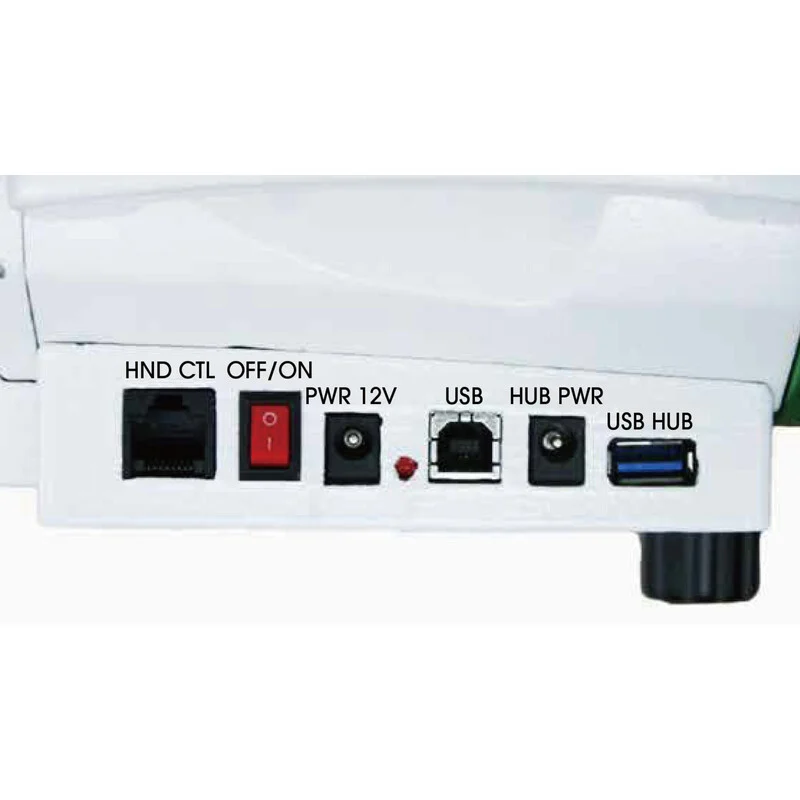
Beyond the mechanical overhaul, the HEQ5-R Pro modernizes your workflow with internal cable routing, a designated DEC passthrough interface, and a direct USB port on the mount base for effortless connection to mini-PCs or laptops. It also features built-in Wi-Fi for wireless control via the SynScan Pro app and includes Permanent Periodic Error Correction (PPEC) to keep tracking accurate through long imaging sessions. While the mount head remains a robust, heavy-duty piece of equipment at 12 kg (26 lbs), Sky-Watcher added a convenient carrying handle to make transporting it to dark-sky sites much easier. Though you may need to protect the upward-facing port bank from heavy dew, this modernized workhorse is a brilliant, future-proofed evolution of an industry-standard classic.
Mid-Range Classic GEMs: The Verdict
Choosing between these three mounts comes down to a clear trade-off between physical portability and streamlined electronics. While all three deliver whisper-quiet tracking thanks to their belt-driven designs, they split dramatically on weight and connectivity. The iOptron GEM28 and CEM26 are built for travel, with featherweight 4.5 kg (10 lbs) mount heads. The CEM26’s unique “Z-design” further improves stability by centering the payload over the tripod, though it requires a non-traditional balancing routine. However, their older electronic architecture makes remote control somewhat cumbersome. Whether connecting via Wi-Fi or USB to an ASIAIR or PC, the physical hand controller must remain plugged in to act as the hardware bridge, and Windows users must run iOptron Commander continuously in the background.
The Sky-Watcher HEQ5-R Pro takes the opposite approach by prioritizing modern, native connectivity over portability. At 12 kg (26.4 lbs), the mount head is significantly heavier to transport, but that extra bulk serves as a fantastic anchor against sudden wind gusts. In exchange for the extra weight, you get a seamless, modern workflow: the mount base features built-in Wi-Fi and a direct USB port. This allows you to completely ditch the hand controller and plug a single USB cable directly from a smart hub like the ASIAIR into the mount chassis. For PC users running software like N.I.N.A., a direct, native ASCOM driver links your gear instantly without requiring any clunky background helper apps.
Side-by-Side Comparison
| Feature / Metric | iOptron GEM28 | iOptron CEM26 | Sky-Watcher HEQ5-R Pro |
| Mount Head Weight | 4.5 kg (10 lbs) | 4.5 kg (10 lbs) | 12 kg (26.4 lbs) |
| Max Payload | 13 kg (28 lbs) | 12 kg (26 lbs) | 15 kg (33 lbs) |
| Mount Geometry | Traditional GEM | Center-Balanced (Z-Design) | Traditional GEM |
| Balancing Style | Standard | Non-traditional learning curve | Standard |
| Wireless/Wi-Fi Support | Built-in (Requires Hand Controller) | Built-in (Requires Hand Controller) | Built-in Chassis Wi-Fi (Standalone) |
| PC Connection Bridge | Hand Controller + iOptron Commander | Hand Controller + iOptron Commander | Direct USB (No background apps) |
| ASIAIR Plus Hookup | Required via Hand Controller USB | Required via Hand Controller USB | Direct to Chassis Port (Ditches Controller) |
My Top Pick
Sky-Watcher HEQ5-R Pro
Why choose this: You want a rock-solid, future-proof anchor against wind gusts and plan to automate your rig. It avoids clunky background software by integrating standalone Wi-Fi and a direct on-chassis USB port, allowing you to ditch the hand controller entirely and wire directly into smart hubs like the ASIAIR.
iOptron GEM28
Why choose this: Physical weight limits make a 12 kg mount head impractical for you, or you travel constantly to dark sky sites. It offers an incredible payload-to-weight ratio with a featherweight 4.5 kg head, delivering excellent tracking precision at the cost of requiring the hand controller as a tethered hardware bridge.
Beginner Strain Wave (Harmonic Drive) Mounts ($1450 – $1900)
Harmonic drive (strain wave) and hybrid mounts represent a massive leap forward for portable astrophotography. Instead of relying on heavy traditional gears, they utilize compact, high-torque robotic gears that pack incredible lifting power into featherweight bodies under 5 kg. With these next-gen telescope mounts, you completely enter a world where balancing your telescope is no longer required under standard loads. Because the mount heads themselves are so light and strong, they are absolute game-changers for travel. Most models can easily carry a telescope entirely counterweight-free, and many can even switch into a simple Altitude-Azimuth (Alt-Az) mode if you want to swap out the camera setup for visual observations. If you are looking for a beginner travel mount, five standout models currently dominate the market: the ZWO AM3N, the iOptron HEM15, the iOptron HAE18C, the iOptron HAE16C, and the Sky-Watcher Wave 100i.
However, beginners must be aware of a few critical real-world realities before buying. First, due to how these unique gears operate, they create fast mechanical fluctuations that require rapid autoguiding pulses—typically using short 0.5- to 1-second exposures—to keep your tracking completely smooth. Second, these systems are almost universally sold as a mount head only, meaning the hidden ecosystem costs hit hard. To actually get up and running under the night sky, you will need to purchase a matching high-capacity tripod, which adds up to about $350 extra. Furthermore, if you plan to push the mount to its maximum payload capacity with larger telescopes, you must buy the optional counterweight bar and physical weights, adding another $100 to $150 to the invoice. Realistically, you need to budget for an additional $400 to $500 over the listed base price just to complete the basic ecosystem and keep your top-heavy imaging rig from physically toppling over in a sudden gust of wind
⚠️ Beware of the Strain Wave Tax: Don’t forget that Strain Wave Mounts are often sold as mount heads only. Between a rock-solid tripod ($350) and an optional counterweight kit ($100–$150), you need to budget an extra $400 to $500 above the base price to safely run your rig!
#6: ZWO AM3N Harmonic Drive Mount
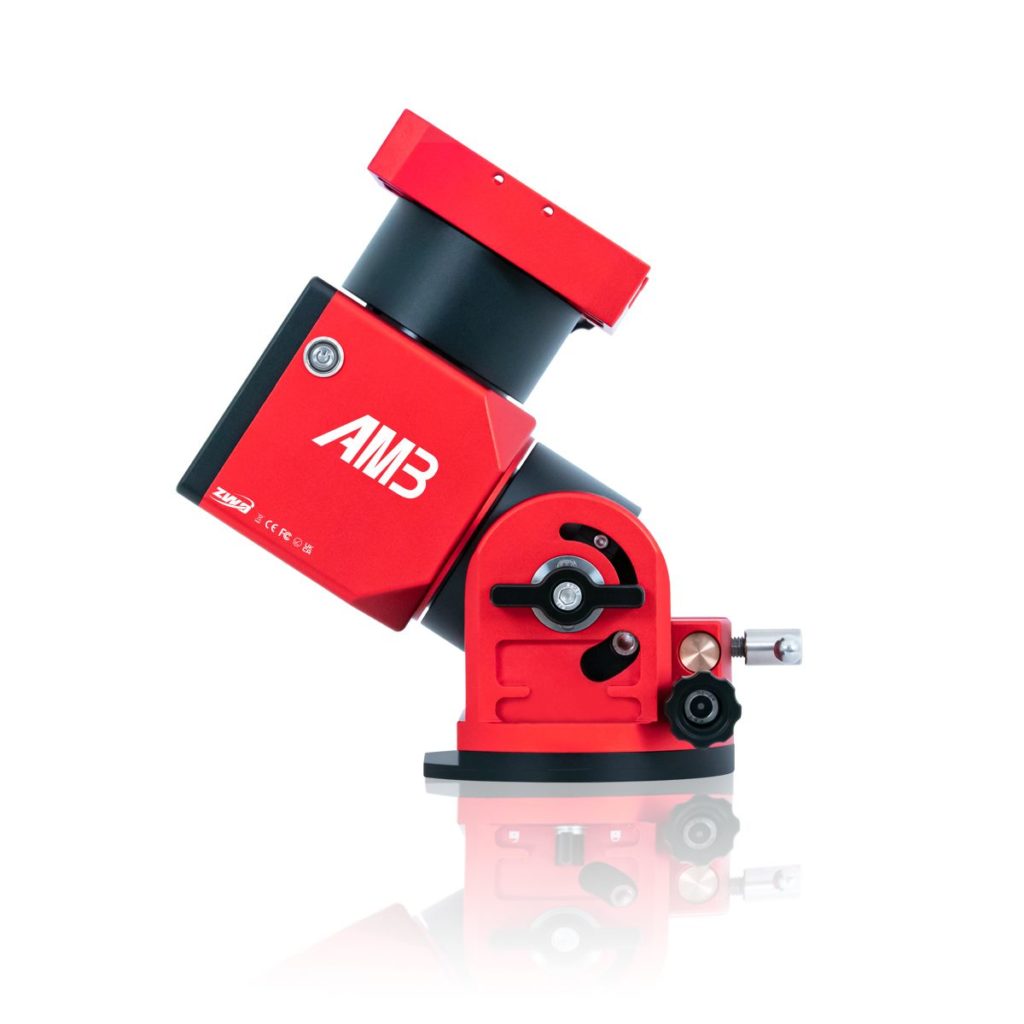
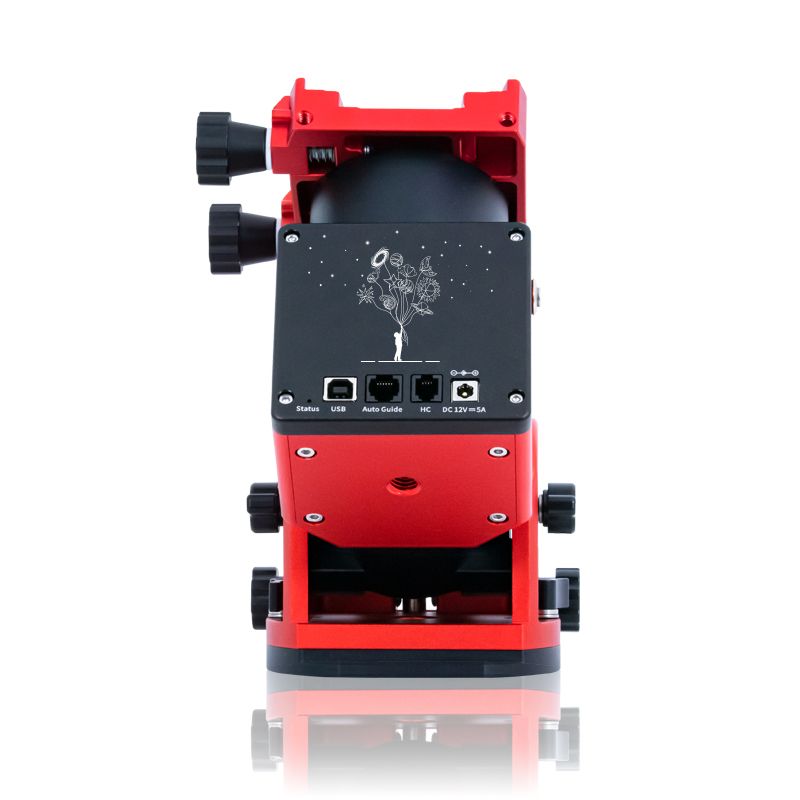
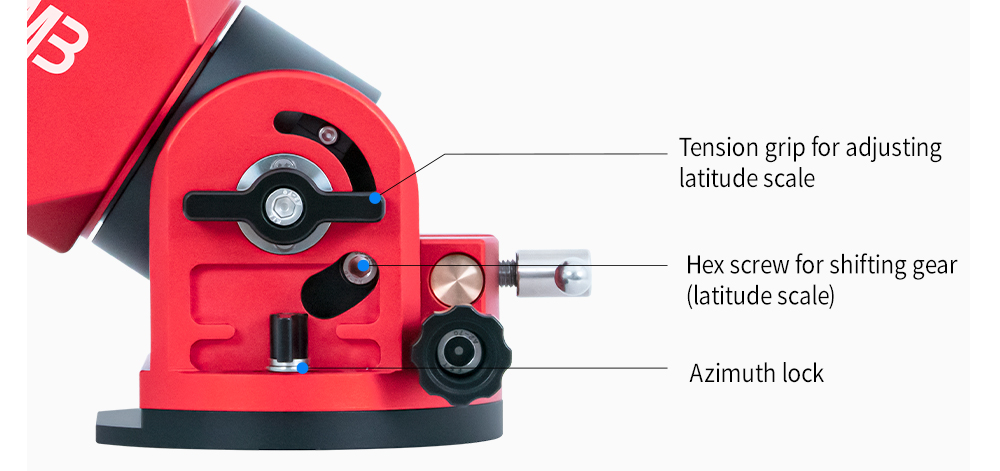
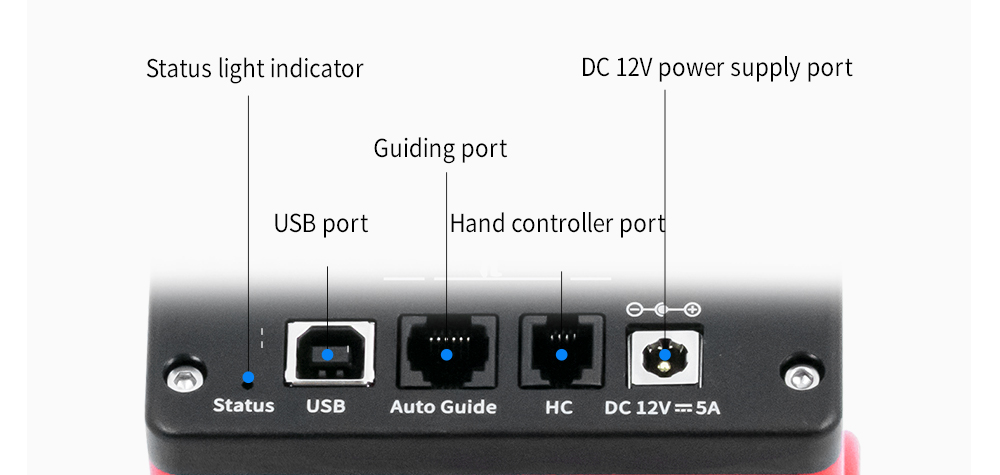
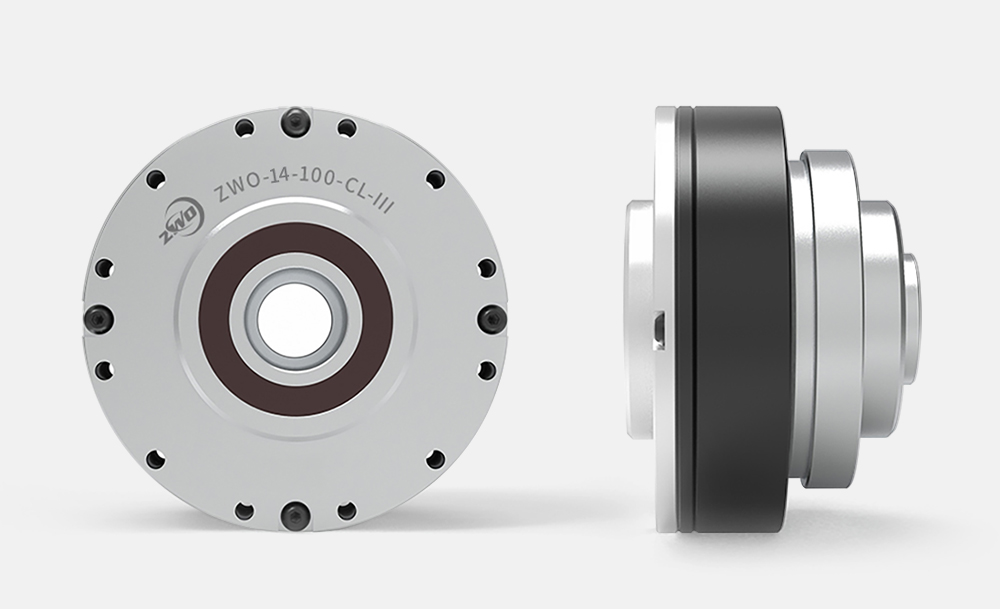
Building directly on the massive success of its predecessor, the ZWO AM3N Harmonic Drive Mount introduces highly anticipated, quality-of-life upgrades tailored for modern field astrophotography. Utilizing a custom strain wave gear reducer and a synchronous belt drive, this ultra-lightweight titan head weighs a mere 4.1 kg (9 lbs) and easily packs into a carry-on bag for air travel. Despite its featherweight footprint, it delivers massive torque and completely eliminates the need for balancing under standard loads. It can effortlessly carry double its own weight—up to 8 kg (17.6 lbs)—without any counterweights at all. When paired with an optional counterweight kit, its capacity jumps to an impressive 13 kg (28.7 lbs), giving it plenty of muscle to track medium-sized deep-sky imaging rigs.
What truly sets the “N” version apart is its dramatically overhauled layout. ZWO relocated the primary electronic interface to a fully powered Declination Hub right on the dual Vixen/Losmandy dovetail saddle, integrating native USB-C and 12V DC power outputs. This allows for beautifully clean, 360-degree tangle-free wire management that eliminates the risk of disastrous cable snags during meridian flips. Furthermore, the mount now features native Bluetooth alongside built-in Wi-Fi, completely removing the necessity of a physical hand controller. Real-world users report stellar performance, with autoguiding via PHD2 or the ASIAIR app regularly pulling tight total RMS tracking errors between 0.35 and 0.7 arcseconds. Seamlessly syncing into the automated ASIAIR ecosystem, the AM3N stands out as an absolute top-tier benchmark for portable, grab-and-go astrophotography.
#7 iOptron HAE18C Strain Wave Mount
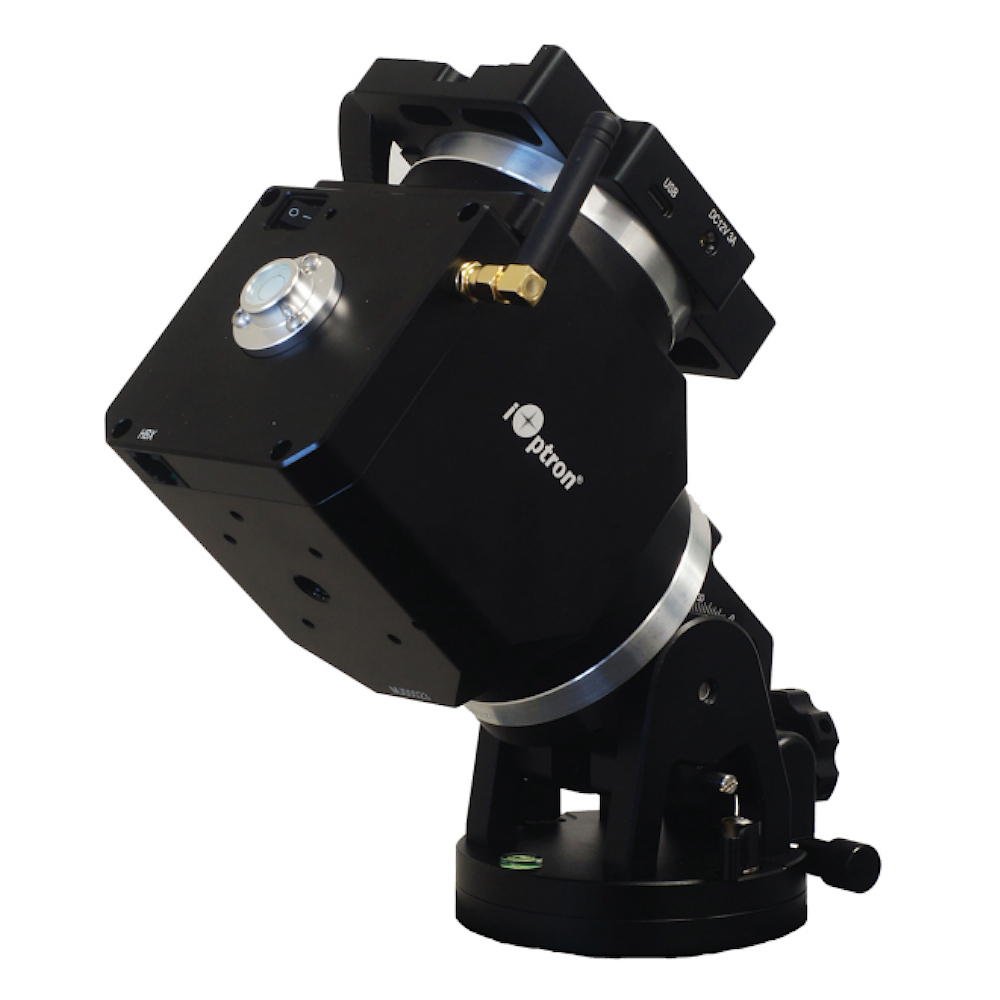
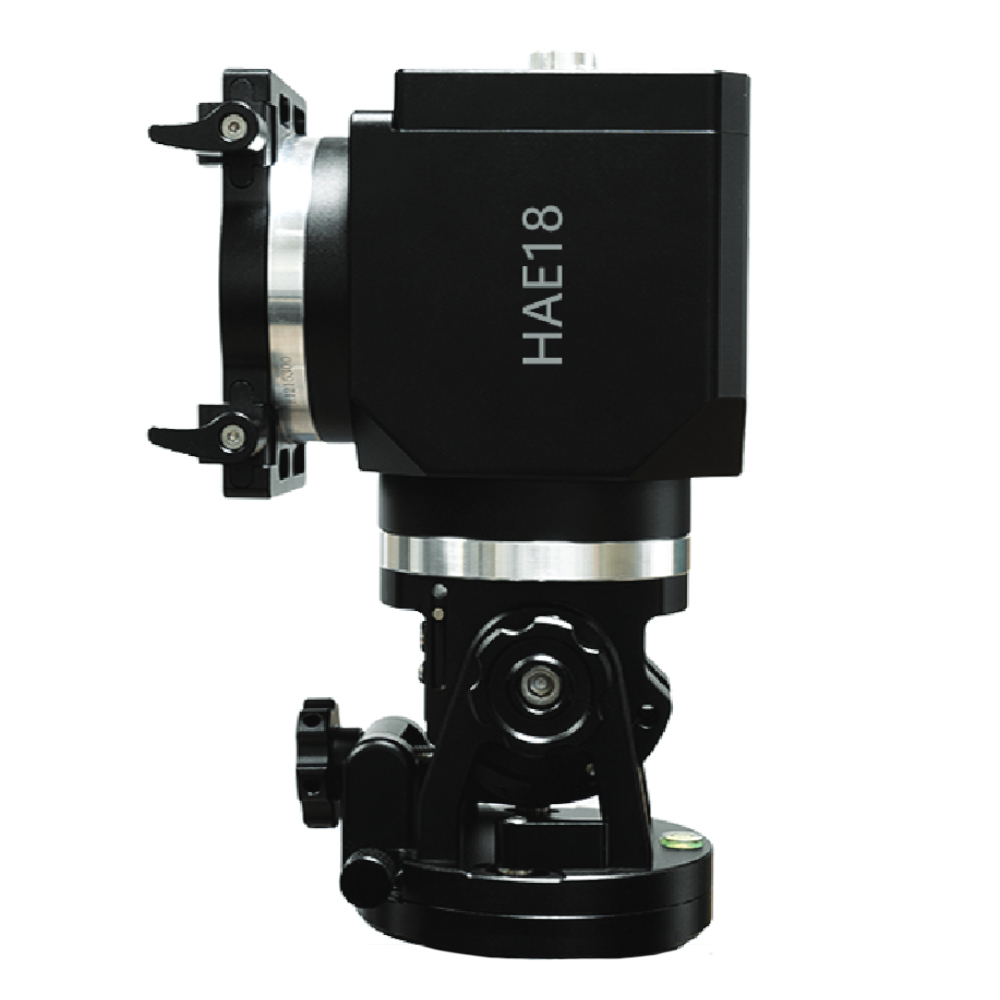
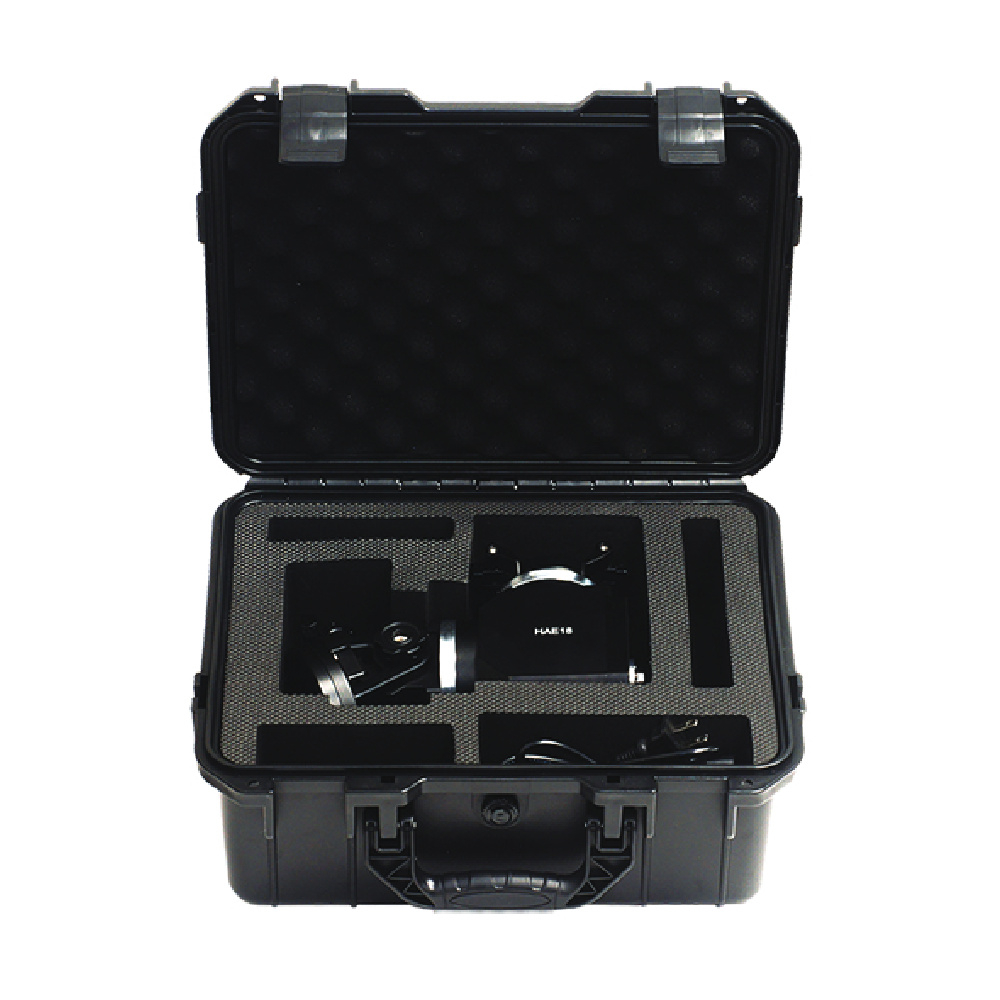
The iOptron HAE18C is an ultra-compact dual strain wave mount built for extreme portability, effortlessly packing full-blown robotic gear tech into a teacup-sized frame. Weighing just 2.8 kg (6.2 lbs), this travel-friendly titan operates in both equatorial mode for deep-sky astrophotography and altitude-azimuth (Alt-Az) mode for quick visual observations. Despite its featherweight CNC-machined body, it handles an 8.5 kg (18.7 lbs) payload entirely counterweight-free and without needing a complex balancing routine. If you attach an optional counterweight kit, that capacity scales up to 12 kg (26.5 lbs), giving it plenty of headroom to comfortably swing compact APO refractors. Control is completely modernized: thanks to built-in Wi-Fi and a direct USB-C port right on the mount chassis, you can completely ditch the optional hand controller and connect directly to third-party smart astrostations like an ASIAIR, or your preferred software running on a laptop, or a mini-PC.
On the tracking side, real-world community logs show impressive sub-arcsecond autoguiding performance, typically hovering between 0.5 and 0.8 arcseconds total RMS. To keep your stars perfectly round and tame the steep periodic error cycles native to strain wave gears, you simply need to configure your software aggressively with short 0.5- to 1.5-second guide exposures. While widely celebrated by backpackers and mobile imagers, the HAE18C does come with a couple of early-generation design quirks. First, the toolless altitude and azimuth locking wing bolts are made of smooth anodized aluminum, which can be slippery and difficult to cinch down in freezing weather. Second, the ASIAIR app can occasionally be picky with connection stability over the saddle’s pass-through ports, making it highly recommended to hardwire your USB cable directly into the USB-C port on the stationary mount base instead.
#8 iOptron HAE16C Hybrid Mount
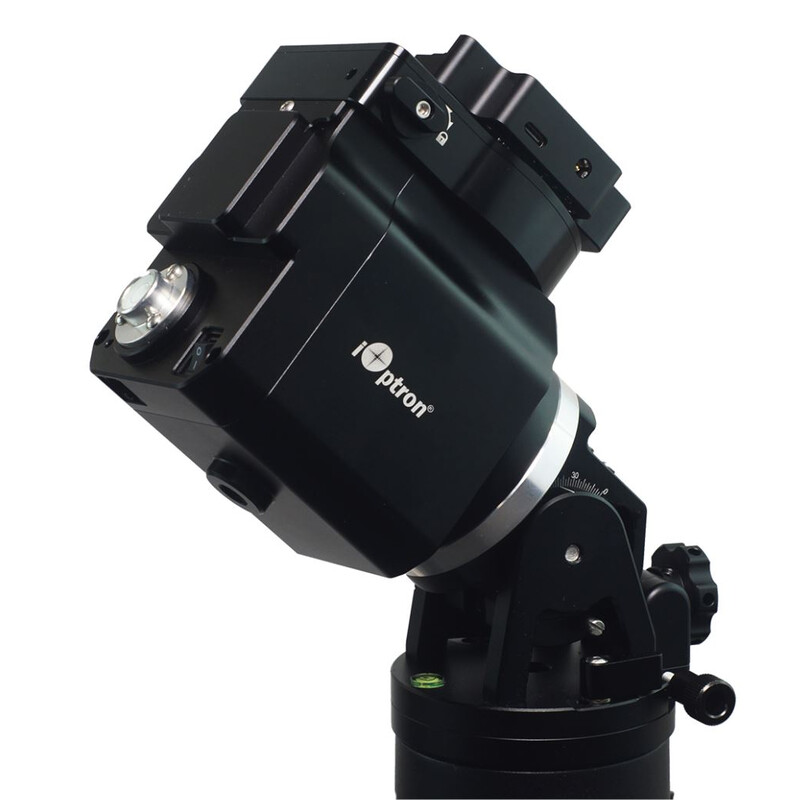
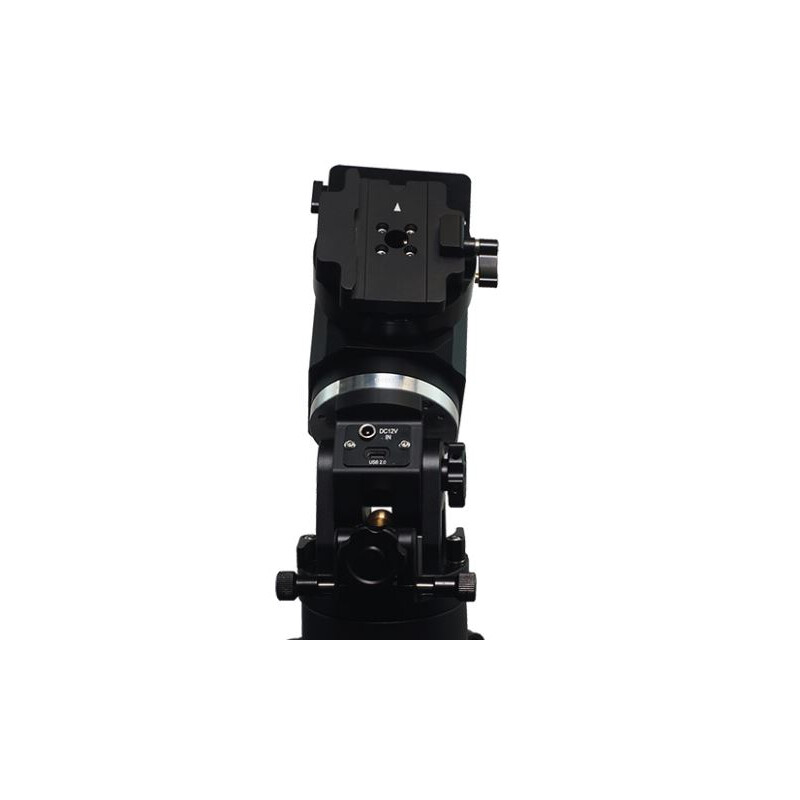
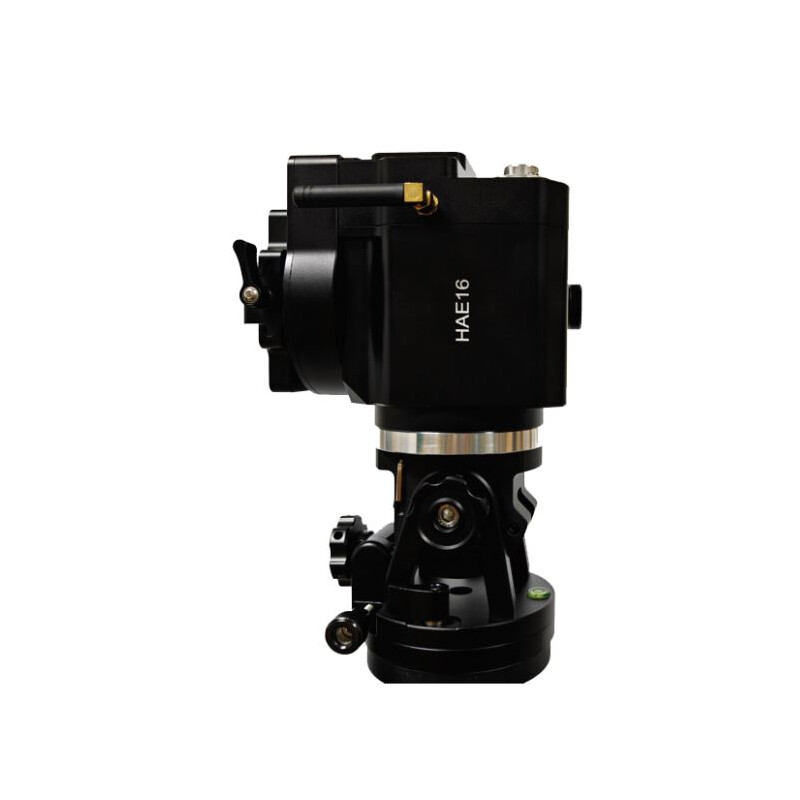
The iOptron HAE16C Ultra-Compact Hybrid strain wave mount is a versatile, teacup-sized tracking system engineered for both equatorial and alt-azimuth operations. Weighing an incredibly light 5.7 lbs (2.6 kg), this compact mount head provides a remarkable payload capacity of 18 lbs (8.2 kg) natively without requiring any counterweights, which can be expanded up to 26.5 lbs (12 kg) when paired with an optional counterweight shaft and weight. The main differene with its sibbling is its unique drive architecture, utilizing an advanced strain wave gear system on the Right Ascension (RA) axis paired with a traditional, backlash-free worm and belt system on the Declination (DEC) axis. This HYBRID dual-axis system is powered by ultra-quiet stepper motors and topped with a standard Vixen-style dovetail saddle. Just like its siblings, the HAE16C features a built-in electronic friction brake on the RA axis to prevent equipment crashes during sudden power loss. Control and connectivity are seamless and modern; the mount features built-in Wi-Fi and dual USB-C ports (located on both the base and the saddle), allowing astrophotographers to bypass an optional hand controller entirely and connect directly to smart hubs like the ASIAIR, Mini-PCs, or laptops.
Real-world performance discussions highlight the HAE16C has an exceptional value, especially for mobile imagers seeking strain wave portability on a tighter budget. Users tracking and imaging with small-to-medium refractors report that the hybrid configuration operates beautifully, with the RA axis coping effortlessly with demanding tracking cycles. Community tracking logs show that when properly calibrated, the mount consistently maintains highly accurate sub-arcsecond guiding, typically delivering a total RMS error hovering between 0.5″ and 0.8″ on nights with average atmospheric seeing. Real world users note that iOptron’s firmware updates have completely stabilized tracking behaviors, making it highly responsive to rapid 0.5 to 1.5-second guide exposures in software like PHD2. While users love its lightweight footprint for travel, some forum discussions point out minor operational caveats inherent to the hybrid design, noting that the DEC worm-gear axis requires careful backlash compensation settings in your software to match the instantaneous correction speed of the RA strain wave gear. Despite the slight learning curve in fine-tuning DEC axis settings, the community widely regards the HAE16C as a stellar performing grab-and-go solution.
#9 iOptron HEM15 Hybrid Mount
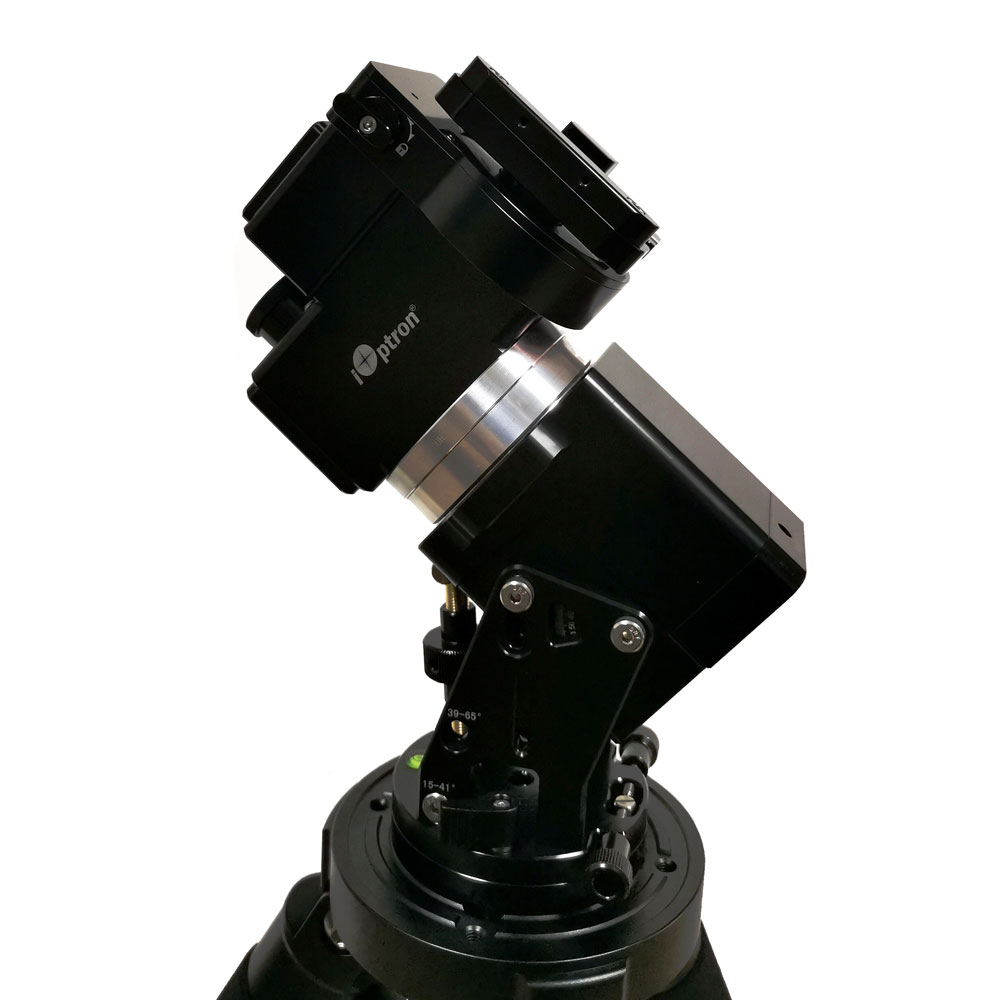
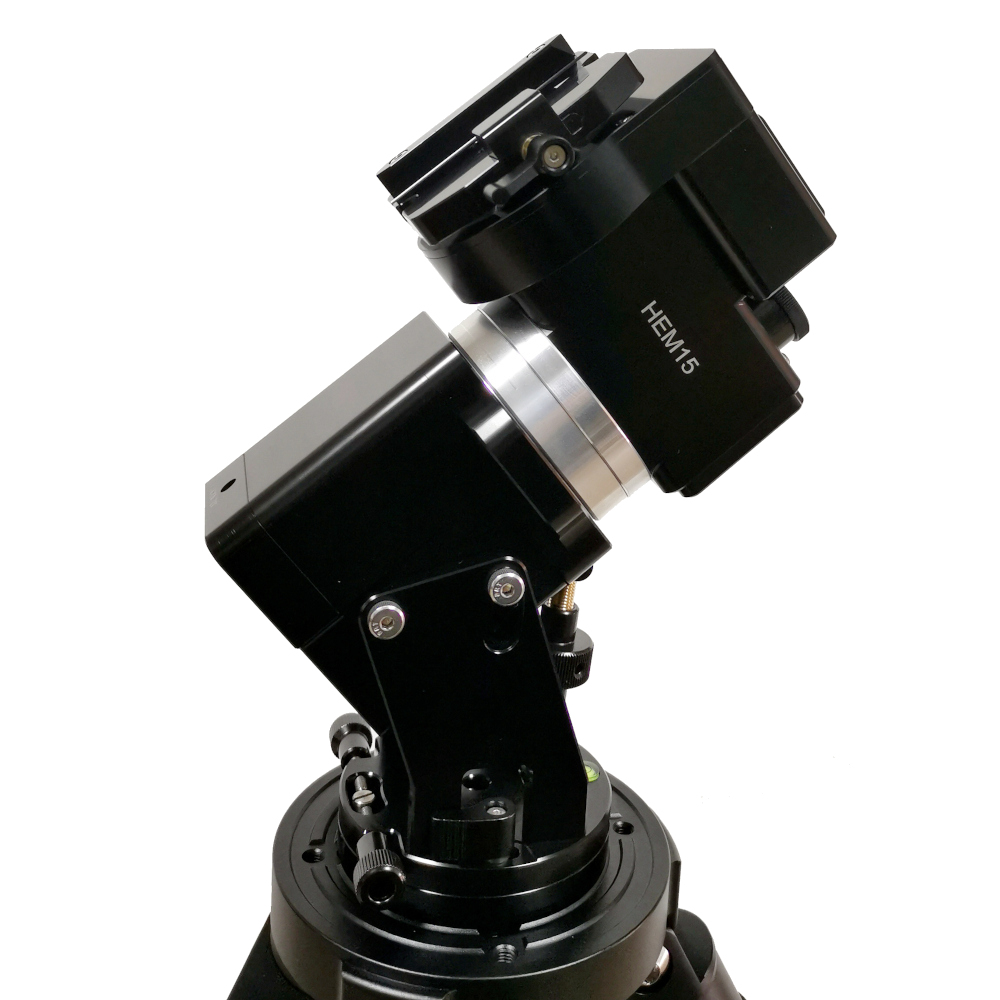
The iOptron HEM15 Hybrid Strain Wave Equatorial GoTo mount delivers exceptional grab-and-go performance in a featherweight package. The CNC-machined mount head weighs a mere 5.5 lbs (2.5 kg) yet manages an impressive native payload capacity of 15.4 lbs (7 kg) completely counterweight-free, which can be expanded up to 26.5 lbs (12 kg) by adding an optional counterweight shaft and weight. True to its hybrid designation, the HEM15 applies a high-torque strain wave gear on the Right Ascension (RA) axis combined with a traditional, backlash-free belt-driven worm gear on the Declination (DEC) axis. This model includes an integrated iPolar electronic polar alignment scope factory-installed directly inside the RA axis for fast, software-assisted alignments. Equipment mounting is handled by a standard Vixen-style dovetail saddle, and security is reinforced with an electronic friction brake that immediately halts the RA axis during unexpected power cuts. For remote management, the system includes the Go2Nova 8409 hand controller which acts as the data hub—allowing astrophotographers to tap into its built-in Wi-Fi or run a direct USB connection to stream iOptron Commander, ASCOM, INDI, or smart control hubs like the ASIAIR.
Real-world tracking and guiding feedback across Cloudy Nights and Stargazers Lounge confirms that the HEM15 is an incredibly accurate performer, particularly for wide-field imaging setups under a 500mm focal length. When paired with small travel refractors or camera lenses, users report smooth, effortless tracking that easily clears 5-minute exposures with perfectly pinpoint stars. In typical autoguiding tracking charts, the mount holds tight, steady numbers that regularly float between 0.5″ and 0.8″ total RMS on average nights. Community members note that because it uses a hybrid architecture, the settings in calibration software like PHD2 need to be tailored accordingly; the RA axis demands fast, frequent inputs via 0.5 to 1.5-second guide exposures to counter the mechanical slope of the strain wave gear, while the DEC worm axis benefits from a slightly higher minimum motion limit to bypass minor stiction. Though early adopters point out that the small stock altitude lock bolts can be slightly cumbersome to crank tight in cold conditions, the consensus among mobile astrophotographers is that the HEM15 is one of the most reliable and affordable ultra-portable alternatives to heavier legacy imaging mounts.
#10 Sky Watcher 100i Strain Wave
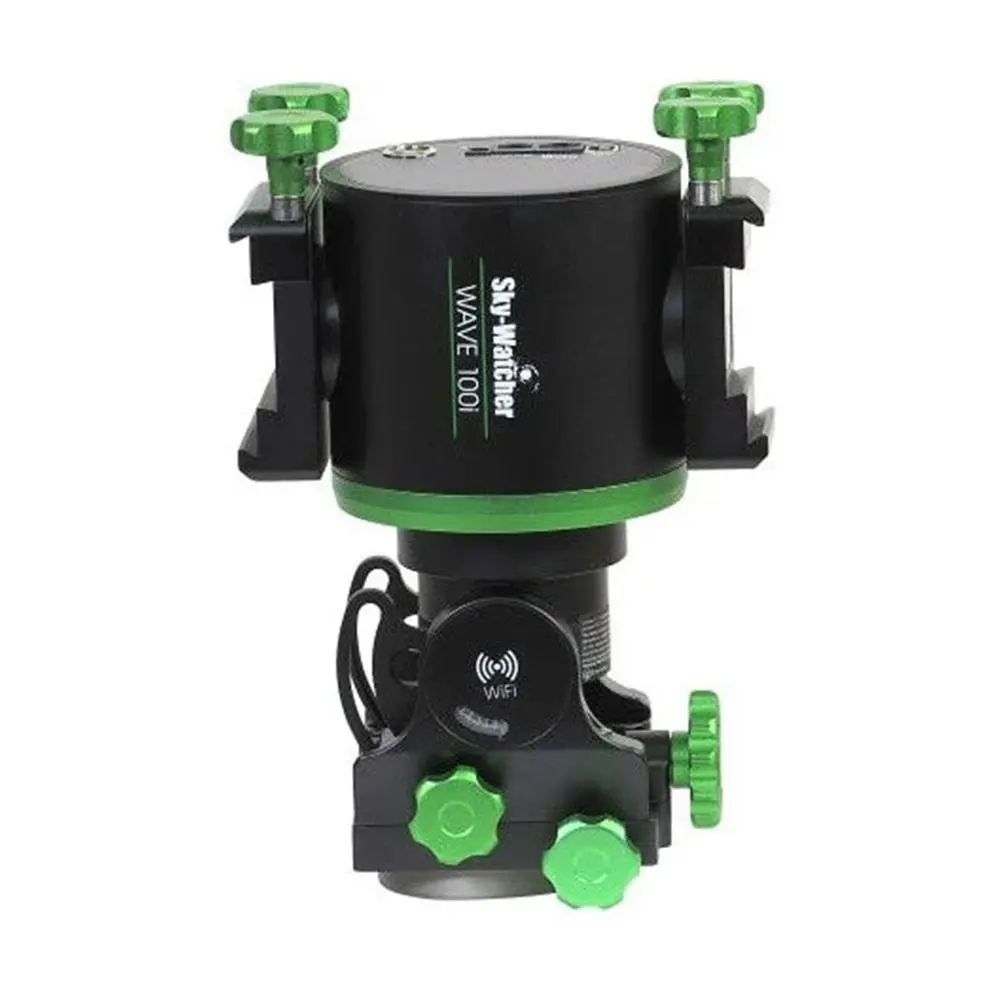
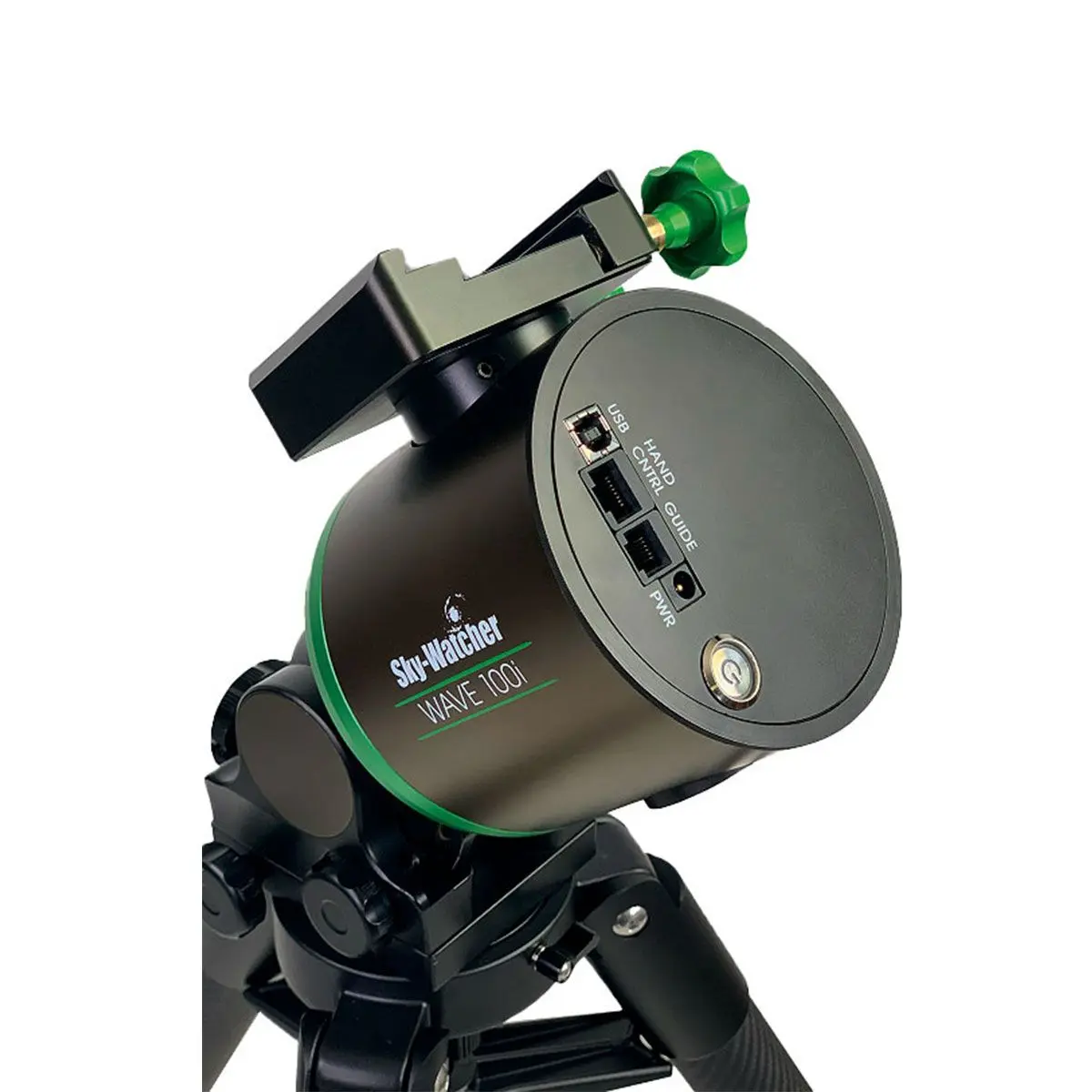
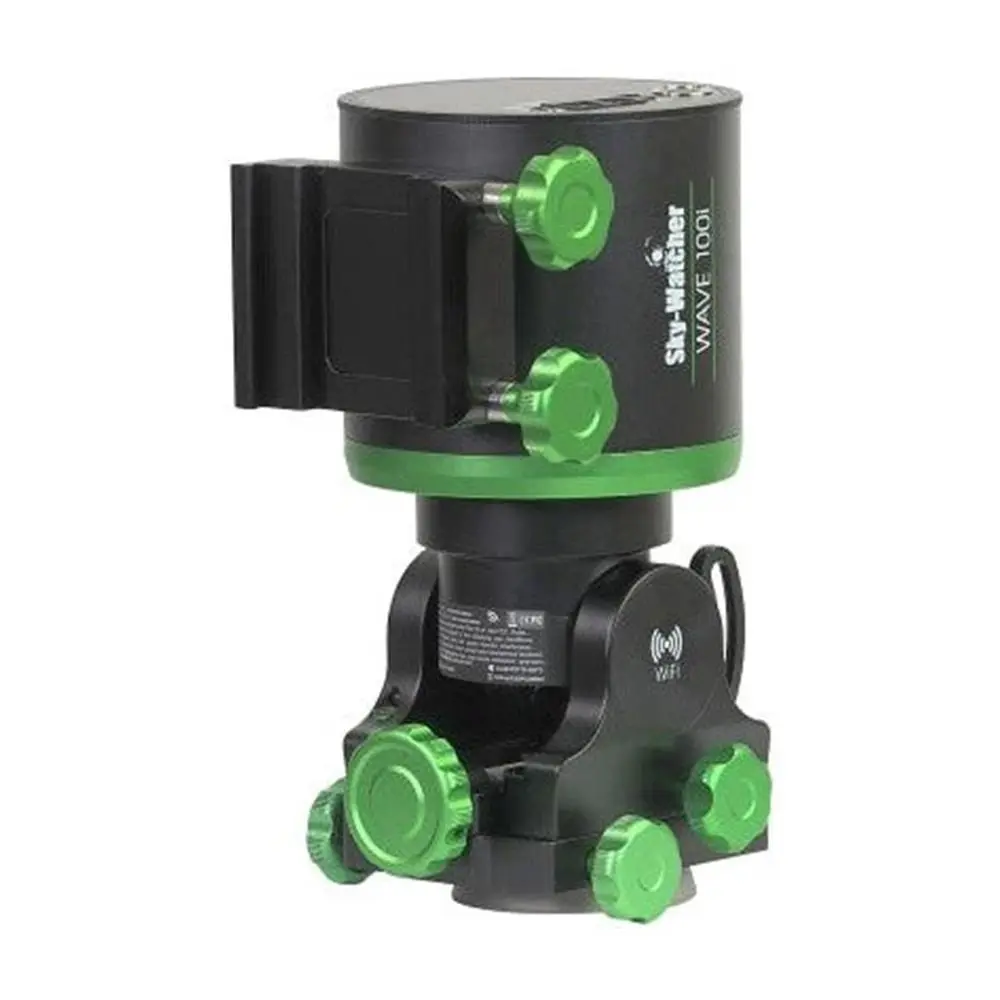
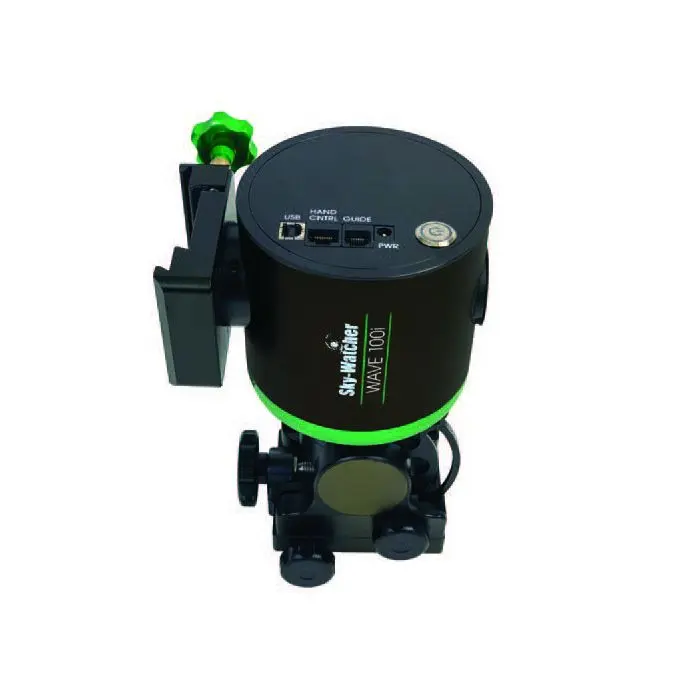
Entering the highly competitive strain wave market, Sky-Watcher introduces a formidable contender with the Wave 100i Strain Wave GoTo Mount. Weighing an ultra-lightweight 4.3 kg (9.5 lbs), this compact mount head uses custom strain wave gearing to completely bypass the need for traditional, heavy counterweights. In its standard configuration, the Wave 100i can support a hefty 10 kg (22 lbs) photographic payload. For astrophotographers with larger rigs, adding an optional counterweight bar and weight increases its total payload capacity to an impressive 15 kg (33 lbs). This mechanical muscle makes it highly versatile, easily managing everything from ultra-portable wide-field refractors to compact Schmidt-Cassegrain telescopes. Real-world user feedback highlights its exceptional autoguiding performance, with observers frequently reporting stable tracking accuracy that keeps total RMS guiding well under the sub-arcsecond mark when paired with modern mini-PCs or guiding software.
Beyond pure tracking capacity, the Wave 100i introduces several brilliant, community-minded design choices that make field operations much smoother. Sky-Watcher equipped the mount with an internal cabling architecture to eliminate potential cord snags during deep-sky imaging sessions, alongside built-in Wi-Fi and Bluetooth for reliable wireless control via the SynScan Pro app. It also boasts a highly praised electronic braking system on the R.A. axis to prevent equipment from dangerously slipping or dropping in the event of a sudden power loss. While early community adopters note that the manual altitude and azimuth adjustment screws require a firm touch when aligning under heavier loads, the inclusion of a dual-fit Vixen/Losmandy saddle and a dedicated red dot finder bracket for fast manual polar positioning makes the system incredibly user-friendly. For mobile astrophotographers searching for an ultra-portable, high-capacity tracking platform backed by a massive international support network, the Sky-Watcher Wave 100i stands out as a top-tier choice.
Best Beginner Strain Wave Mount: The Verdict
Stepping into next-gen travel mounts means leaving behind heavy counterweights, but choosing a model reveals two distinct internal designs. Dual Strain Wave mounts—the ZWO AM3N, Sky-Watcher Wave 100i, and iOptron HAE18C—feature robotic gears on both axes to eliminate mechanical backlash entirely. Meanwhile, Hybrid Drive mounts—the older iOptron HEM15 and the newer HAE16C—put a strain wave gear on the main tracking axis (R.A.) but a traditional worm gear on the Declination (DEC) axis. While highly budget-friendly, this hybrid layout forces you to manually balance your telescope on the DEC axis and tweak software settings to get the two gear styles to play nice. Connectivity also varies wildly: the legacy HEM15 requires a physical hand controller to act as a permanent hardware data bridge, whereas the newer HAE models, the AM3N, and the structurally beefy Sky-Watcher Wave 100i utilize standalone, direct-to-chassis USB and Wi-Fi data connections.
However, your final buying decision might be dictated entirely by where you live, as massive regional tax and import variations completely flip the value proposition. In the USA at the time of writing, the the ZWO AM3N is a shocking entry-level bargain at $1,499 in the USA —matching the hybrid iOptron HAE16C ($1,499) and undercutting the larger iOptron HAE18C ($1,599),the legacy iOptron HEM15 ($1,739), and the premium Sky-Watcher Wave 100i ($1,895). In Europe, the tables completely turn: the AM3N spikes to roughly €1,890, making it the most expensive option in its class and positioning the more muscular Wave 100i (€1,859) and the dual strain-wave HAE18C (€1,780) as far more competitive choices. If you are shopping on a strict budget in Europe, saving money means dropping to hybrid architectures like the iOptron HAE16C (~€1,490) or the older HEM15 (€1,840), whereas US buyers can bypass the balancing hassle of a hybrid altogether and grab a true dual strain wave system for nearly the same price
Side-by-Side Comparison
| Feature / Metric | iOptron HEM15 | iOptron HAE16C | iOptron HAE18C | Sky-Watcher Wave 100i | ZWO AM3N |
| Drive Architecture | Hybrid Drive | Hybrid Drive | Dual Strain Wave | Dual Strain Wave | Dual Strain Wave |
| Mount Head Weight | 2.5 kg (5.5 lbs) | 2.6 kg (5.7 lbs) | 2.6 kg (5.7 lbs) | 4.3 kg (9.5 lbs) | 4.1 kg (9 lbs) |
| Native Payload (No Weights) | 7 kg (15.4 lbs) | 8.2 kg (18 lbs) | 8.1 kg (18 lbs) | 10 kg (22 lbs) | 8 kg (17.6 lbs) |
| Max Extended Payload | 12 kg (26.5 lbs) | 12 kg (26.5 lbs) | 11.8 kg (26 lbs) | 15 kg (33 lbs) | 13 kg (28.7 lbs) |
| Saddle Power Hub | No | Yes (USB-C/12V) | Yes (USB-C/12V) | No | Yes (USB-C/12V) |
| N.I.N.A. Connection | Hand Controller Cable | Direct USB-C (ASCOM) | Direct USB-C (ASCOM) | Direct USB (ASCOM) | Direct USB (ASCOM) |
| ASIAIR Plus Hookup | Hand Controller Cable | Direct USB-C Port | Direct USB-C Port | Direct USB Port | Native Integration |
My Top Picks
ZWO AM3N
Why choose this: You want absolute, hassle-free integration with the ASIAIR / ZWO ecosystem. Its standout layout features a fully powered Declination Hub directly on the saddle clamp plate, which keeps your device lines running dynamically with your optics and cuts cable tangles completely out of your workflow.
Sky-Watcher Wave 100i
Why choose this: You prioritize raw physical muscle over a powered saddle and want to track heavier setups counterweight-free. It offers an upgraded 10 kg baseline load limit, an integrated R.A. safety brake, full internal cable routes, and a rugged dual-fit clamp configuration backing larger imaging rigs.
iOptron HAE18C
Why choose this: You prioritize minimizing back-breaking equipment weight over everything else. This teacup-sized travel frame scales in with an incredibly featherweight 2.8 kg profile while natively handling up to 8.5 kg completely counterweight-free, boasting an updated chassis with built-in wireless base communication.
I just replaced a SW EQ5 SynScan with an ES iEXOS-100 PMC-8 and Medium Duty tripod. The iEXOS-100 is lighter and cheaper and actually performs better than the EQ5 did with my image train at 5.5kg. I’m guiding consistently below 1.5 RMS ArcSec and sometimes below 1″ with an WO73 ApoII and a Nikon D750. I think the iEXOS-100 is worth consideration for beginners.
Thanks for sharing!
Great, good luck with your setup!
I have the Orion Sirius eq-g mount and love it. I use it with my Redcat 51 and Astrotech 72ed refractors. The only problem is the RA an Dec controls are a bit hard to adjust. But is useable.
Hi Wido,
I’m wondering if you have any experience with harmonic mounts like the new ZWO AM5. Would you recommend a harmonic mount over the traditional kind of mounts?
Thanks so much again for all the information you provide!
Greg
Not yet, but I’m thinking about buying one, so stay tuned :-).
About how much weight in addition to the optical tube should I expect to put on a mount?
cameras, filterwheels and guide scopes usually do not weigh more than one to three kilograms (max. 6 pound)